

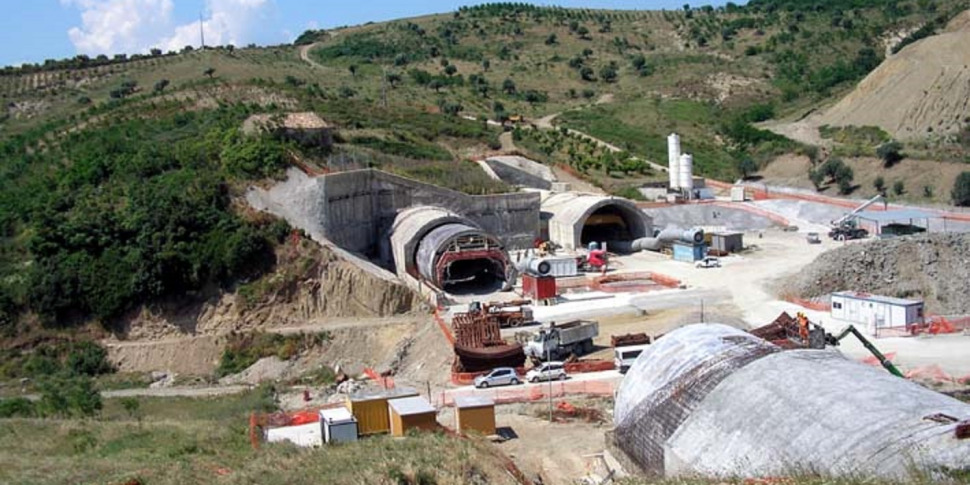
Today’s morning, the legality protocol relating to the last stretch of modernization work on the SS 106 was signed. The instrument follows those already signed last July and specifically concerns Lot SS no. 106. “Jonica” Connection works from the SS 106 (km 0+000) to the SS 106 Var/a (km 17+000) relating to the adaptation of the Provincial Road n. 16 for the strengthening of roads.
It was signed by the Prefect of Catanzaro, Castrese De Rosa, the Extraordinary Commissioner for the implementation of the infrastructural interventions on the SS 106 “Jonica”, Luigi Mupo, the designated Manager of Anas spa Roberto Piccinini, the Manager of the Labor Inspectorate Catanzaro – Crotone Annarita Carnuccio, the legal representative of the company entrusted with the works, Vincenzo Leone as well as the representatives of the trade union organizations Fillea CGIL, Filca CISL and Feneal UIL.
With this Agreement it is intended to extend the network of controls on the large Calabrian infrastructures of which Anas spa is the contracting authority, consolidating the already initiated regime of anti-mafia checks.
The objective, also with this agreement, is therefore to always ensure the paramount public interest in legality and transparency in the implementation of the work through the exercise of the monitoring and supervisory powers attributed by the Law, also for the purposes of prevention, control and contrast of attempts at mafia infiltration and verification of the safety and regularity of the work sites.
To guarantee higher levels of anti-mafia prevention in the execution of works, the anti-mafia information regime referred to in Article 91 of the Anti-Mafia Code is extended to all subjects belonging to the so-called “business chain” and to all contractual cases, regardless of the object, value, duration and any conditions and methods of execution.
In the event that, following these checks, elements emerge that refer to attempts at mafia infiltration against individuals in the business chain, the Awarding Entity undertakes to exercise the right of termination or to require its Contractor to exercise this right. We also pursue significant safety standards on construction sites as well as compliance with the worker’s employment conditions.
As part of the actions aimed at countering the possible infiltration of organized crime in the construction cycle of the work, the parties agree to pay particular attention to the methods of hiring the workforce, the related obligations required by labor legislation and the collective bargaining agreement for the sector, and to this end they undertake to define recruitment procedures of maximum transparency.
To have a complete picture of the operators, an IT database has been set up in which the data relating to the subjects who intervene in any capacity in the design and/or implementation of the work are collected.
The database guarantees:
– monitoring of the procedural and management aspects connected to the design and construction of the work;
– the connection with the Major Works Monitoring system (MGO), providing for the presence, implementation and management, in the established ways and times, of all the data provided for in Annex 2 of Cipe resolution 15/2015 adopted pursuant to Article 36 of Legislative Decree no. 90/2014;
– checking the safety conditions of the construction sites;
– verification of respect for the rights of employed workers;
– monitoring the workforce present on site, specifying the professional qualification for each unit;
– monitoring the supply of manpower, in any way organized and carried out.
The agreement then prescribes precise planning tasks. The maximization of the more general objectives of control over transparency and legality, as well as over the use of manpower, is entrusted to the preparation of a “Coordinated control plan of the construction site and sub-construction site”. The contracting entity, also in collaboration with the contractor for the works and, if present, the manager of the interference (meaning the entity other than the contractor in charge of removing any interference in the realization of the work, e.g. artefacts) takes care of the drafting of this Plan. The implementation and management of the Plan are the responsibility of the contractor and the interference manager who await it, each with their own competence, under the supervision of the contracting entity and the control carried out by the Police Forces and the Joint Forces Groups established at the Prefectures.
For the purposes of the Protocol, the anti-mafia information regime is satisfied through consultation of the BDNA (National Anti-Mafia Database) and is extended to all subjects belonging to the business chain, whether it originates from the contractor or from the manager of the interference (including the contractor himself and the manager of the interference).
The aforementioned regime applies to all contractual cases regardless of the object, duration, value of the thresholds and any conditions and methods of execution, including those relating to:
a) the supply and transport of water (excluding municipal companies);
a) canteen, cleaning and staff accommodation services;
a) the supply of manpower, in any way organized and carried out.
Specific precautions are introduced to prevent the risks of illicit interference for corrupt purposes and to counter attempts by mafia interference through the incorporation into the tender specifications of contractual clauses which oblige the contracting party, contractor and manager of the interference to report to the Prefect and the competent judicial authority any fact indicative of mafia interference or attempted corruption. Express sanctions and penalties apply to fraudulent conduct aimed at circumventing these obligations with the provision, on the other hand, of contractual termination measures to the advantage of those who report.
The monitoring tasks are entrusted to a table established in the Prefecture which meets periodically making use of the Anti-Mafia Joint Forces Group and the designees of the Territorial Labor Inspectorate based on the issues addressed.
Also taking part at the table are representatives of the contracting body and of the construction trade union organizations most representative and signatories of the Protocol.
“With this new Pact – declared the Prefect Castrese De Rosa – we extend the anti-mafia checks on the last lot of works on the SS 106 by strengthening the monitoring system and ensuring that every intervention is traceable and entrusted to safe operators given that there can never be development without a decisive affirmation of legality”.