

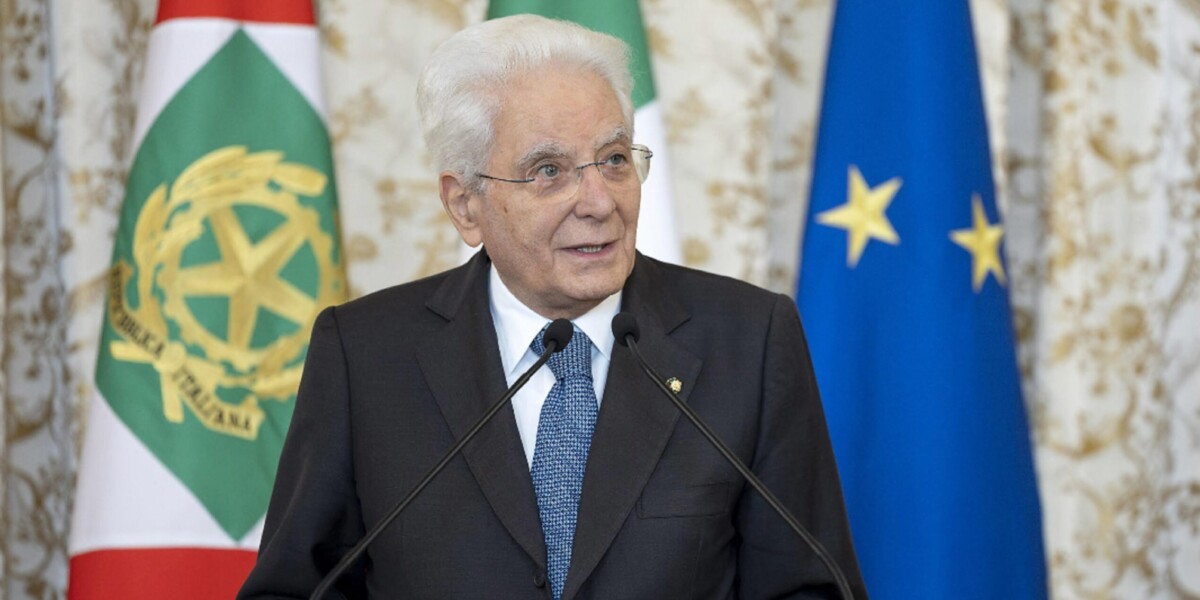
Give judicial powers, and therefore the possibility of making arrests, also to the military? Unthinkable. The Quirinale is shrouded in secrecy in the hours in which the government has announced the birth of a new decree to tighten safety regulations. But the President of the Republic certainly jumped out of his chair when he read the first rumors that spoke of transforming the soldiers involved in the “Safe Roads” operation into policemen.
The image of soldiers deployed in the streets and squares to arrest citizens – be they looters, vandals or protesters – many of whom were minors, immediately seemed excessive and not in line with the standards of Western democracies. The traditional interlocutions between the legal offices of the Quirinale and those of Palazzo Chigi have this time been forced to a rapid pace: the government has never hidden the urgency of immediate responses to the events in Milan and the response took the form of a decree that will arrive on Mattarella’s desk. The president will most likely sign it. Which would not have happened if the government had included in the measure the idea of giving judicial police powers to the military. Of course, there was little time for a thorough examination. It is also yet another security measure – from the very first on raves to those more aimed at public order – through which a series of new crimes are being created which certainly do not reassure the Quirinale and give the idea of a continuous emergency. But the green light will come after having defused the provision for the military which represented an insurmountable limit for the president.
The contested provision put back in the drawers of the right
The issue was probably resolved a few hours before the meeting of the Council of Ministers when the traditional liaison officer between Colle and the government, the undersecretary to the Prime Minister, went up to the Quirinale. Alfredo Mantovano in fact went up to Mattarella for a hearing scheduled for some time together with the Extraordinary Commissioner for Penitentiary Buildings, Marco Doglio. In all likelihood it was an opportunity to address the dossier on the new decree and, above all, to make the government understand that if the rule on military personnel had not been expunged, the decree would not have seen the presidential signature. And so it was: shortly after, the first rumors came out which, after a long session of technical meetings at Palazzo Chigi, assumed the disputed measure had been put back in the drawers of the right. The president, like everyone else, was disturbed by the images of the devastation of Milan, the looting and, above all, the very young age of the children who descended on the center of Milan. “An unacceptable violence”, he commented immediately from Imperia. But there was no lack of structured reflection that goes beyond the inevitable condemnation: “an intelligent and in-depth analysis is needed, careful vigilance capable of counteracting violence coming from unknown subjects.” “There are questions to reflect on from different angles,” he added. Perhaps he would have preferred a more thoughtful response, perhaps not only repressive, but he certainly understands that in Italy, but not only, there is a new emergency. The next step will be to understand it and identify its roots which could also be well planted far from our country.