

Add the Gazzetta del Sud as a source
It is called «The art of Nik Spatari, contemporary genius» and it is a permanent retrospective exhibition, which collects in 30 paintings, not yet exhibited, the creative journey of the Calabrian artist from Mammola six years after his death. The venue is the Musaba Foundation (Santa Barbara Museum), the exceptional complex between art and nature that Nik Spatari and his Dutch wife Hiske Maas created from nothing, after years of activity in Paris and Milan. An almost incredible place which can be defined as “Renaissance” in its overall vision and which, in turn, is a permanent exhibition of the creative genius of the artist, painter, sculptor and architect, who as a self-taught person (but also a pupil of Le Corbusier) was able to reach absolute heights such as the monumental “Jacob’s Dream”.
This exhibition, Hiske Maas, president of the Foundation, tells us, «is an important moment to restore attention to the many artistic expressions of Spatari who was, from the beginning of his childhood, a contemporary Renaissance genius. Nik could do anything and as a self-taught man he explored the world of the arts making many discoveries.”
Affected by deafness already in early childhood, Spatari was able to transform the handicap into a creative resource, establishing “a sensorial and tactile relationship with matter”. The exhibition collects works between 1940 and 2000 and recounts a constant creative and technical evolution, from oil on panel to material paintings up to nitro – removed from industrial use – on canvas. An inexhaustible search, often aimed at large companies with oversized works, which are the ones that have established the comparison with Michelangelo.
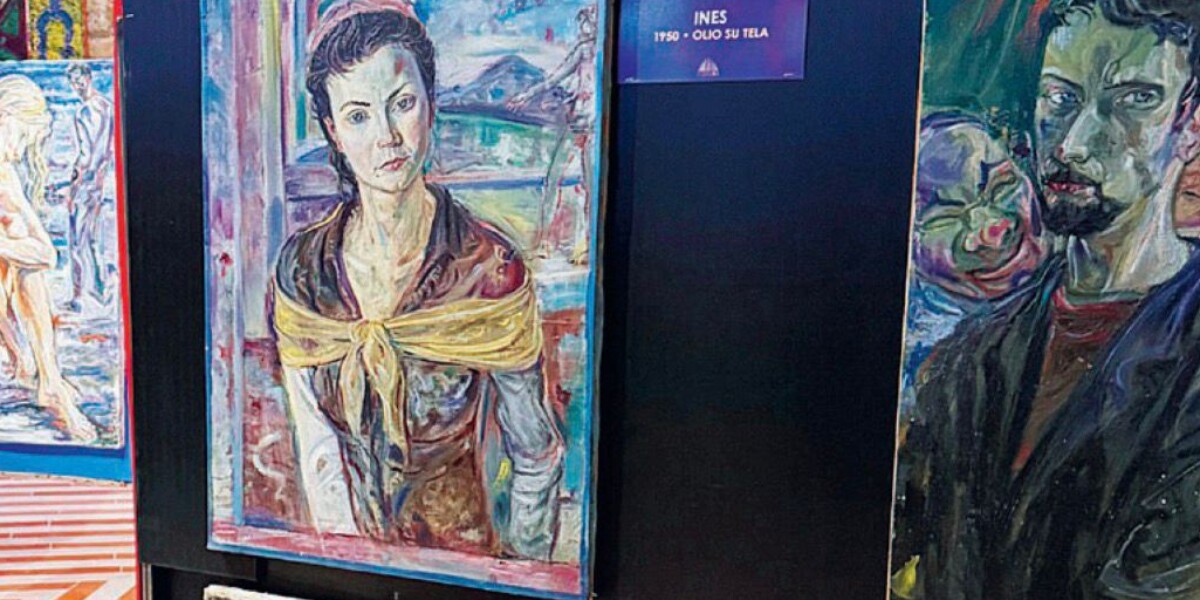
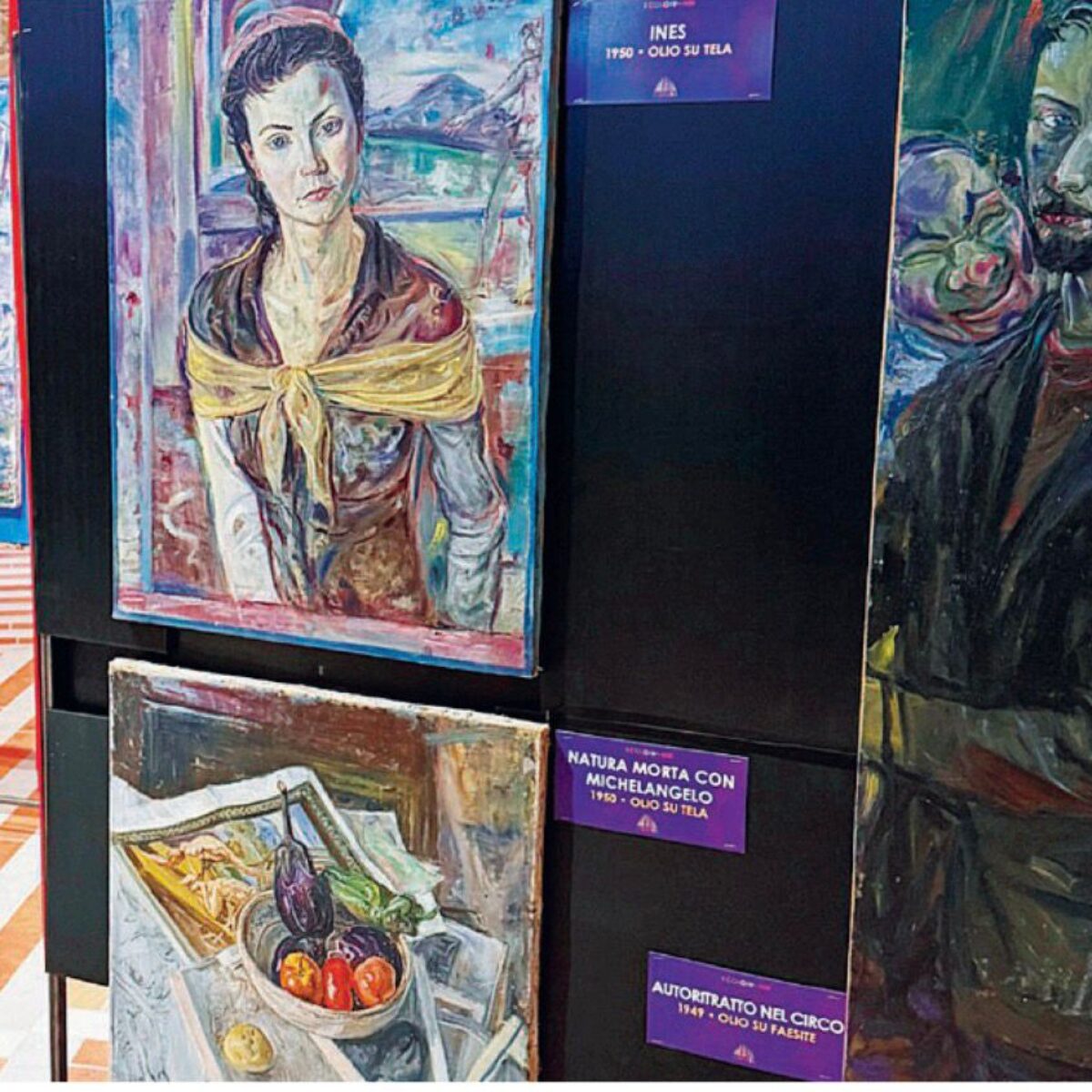
Already in the first canvases exhibited (from 1940) we can see Spatari’s attention not only to the themes of everyday life but also to introspection, which introduces the transition to the canvases of the 1950s such as «Ines», the portrait of his sister, and «Self-portrait in the circus». Continuing, the journey becomes more and more interesting as happens with the canvas «The Farewell» (1954), an example of an extremely modern chromatic research at the time, in which certain brushstrokes that may recall Van Gogh are brought towards an expressionist line of great visual impact. Immediately afterwards, the period of “prismatism” is witnessed, the pictorial style that Spatari created in Lausanne. «Vibrant polychromes» that seem to envelop the subjects of the canvases, such as «The Princess» or «The Fisherman’s Friend». In 1960 the artist experimented more with the use of colour, as in the paintings «Woman and Deer» and «Woman and Wolves».
In the last part of the exhibition itinerary you can see the period of material painting with the use of zinc, enamels and nitro. «Visi di donne e feti» from 1970 is a work that is striking for its acute symbolism, while «Infanzia di stella» (2000) is the demonstration of Spatari’s ability to dominate an element such as nitro to obtain brilliant and significant colours.
The exhibition is therefore another room that is added for visitors to the Musaba in Mammola, increasing the attractiveness of an already so special place. The relationship with the territory remains unresolved, both from an economic and logistical point of view and from an artistic one. Just as Hiske Maas’ desire remains that the retrospective can also be hosted in different places, such as the Archaeological Museum of Reggio.

Find out more in the digital edition
To read everything, buy the newspaper
or download the digital version.