

Google Discover

Preferred Sources
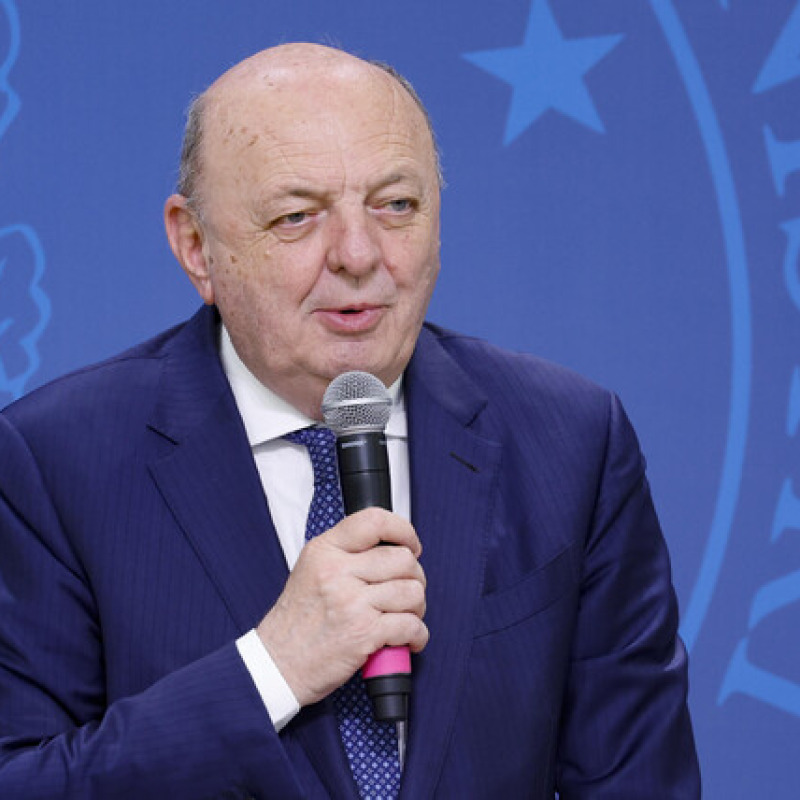
Green light from the Council of Ministers to the Bills decree law, with urgent provisions to reduce the cost of electricity and gas. The provision intervenes on the link between the price of gas and that of electricity, through a reimbursement mechanism intended for thermoelectric production. «Starting from January, overall, the measures of the decree will allow an average reduction of around 15 euros per megawatt hour», declared the Minister of the Environment and Energy Security, Gilberto Pichetto Fratin. An estimate that the minister defines as “a first concrete step to support our country system, consumers and the productive fabric”.
Meloni: “Benefits for families and businesses”
«We have chosen to tackle one of the most difficult issues of high energy prices: the mechanism that increases the price of electricity due to the cost of gas and weighs on the accounts of families and businesses». Thus Prime Minister Giorgia Meloni after the approval of the Council of Ministers to the bill bill. «The decree – underlines the prime minister – intervenes on this point, with three precise choices. The first: it establishes a cap on the gas used to produce electricity. When the price of gas exceeds 58.9 euros per megawatt hour, the mechanism envisaged by the decree is triggered to prevent the increase from being transferred entirely to the price of electricity”. «The second: making the benefits of energy produced at lower costs reach the bills – summarizes the Prime Minister -. Arera will set even more stringent rules against those who deliberately withhold production capacity to raise prices. Furthermore, we asked that the lower costs of renewables really translate into a benefit for families and businesses. Because if Italy produces more and more clean energy, then this must also mean cheaper energy for those who use it”, underlines the Prime Minister.
“We know that correcting this mechanism may displease those who have obtained very high incomes from it. But our task is to defend the interests of citizens. The third: to protect the savings intended for consumers. In the decree – Meloni continues – we set strict limits on the transfer of costs: those who are called upon to finance the mechanism cannot transfer them to the bills, beyond what is expressly permitted by the law. The measure will last eighteen months and provides for a gradual exit, to avoid sudden changes at the deadline.” “This intervention – says the head of the executive again – acts on the wholesale price of energy and its effects will take time. We expect important benefits, but estimates tell us that companies that have a self-production quota and consume the most electricity will be able to have the most significant savings. Benefits that could increase, in terms of gas bills, if we also add to this mechanism the cut provided by the decree of over 850 million euros on system charges”.
Reimbursement of gas costs to produce electricity
According to what Mase explained, the decree provides for a temporary reduction in the cost of electricity for families and businesses through the reimbursement of a portion of the costs of natural gas used in thermoelectric production. The objective is to contain the impact of the price of gas on the cost of electricity. The measure was defined through a discussion with the European Commission. Arera collaborated in the work, for the aspects within their competence, and the Energy Markets Manager, which provided technical support for the construction of the mechanism and for the simulations requested by Brussels.
Pichetto: «Support families and businesses»
«With the decree-law approved today by the Council of Ministers we complete the path of the Bills Decree, with the aim of reducing the cost of electricity for families and businesses», stated Pichetto Fratin. The minister recalled the difficulties linked to geopolitical tensions and their repercussions on energy prices. The intervention, he underlined, is part of the government’s initiatives to contain costs, protect consumers and support the competitiveness of the production system.