
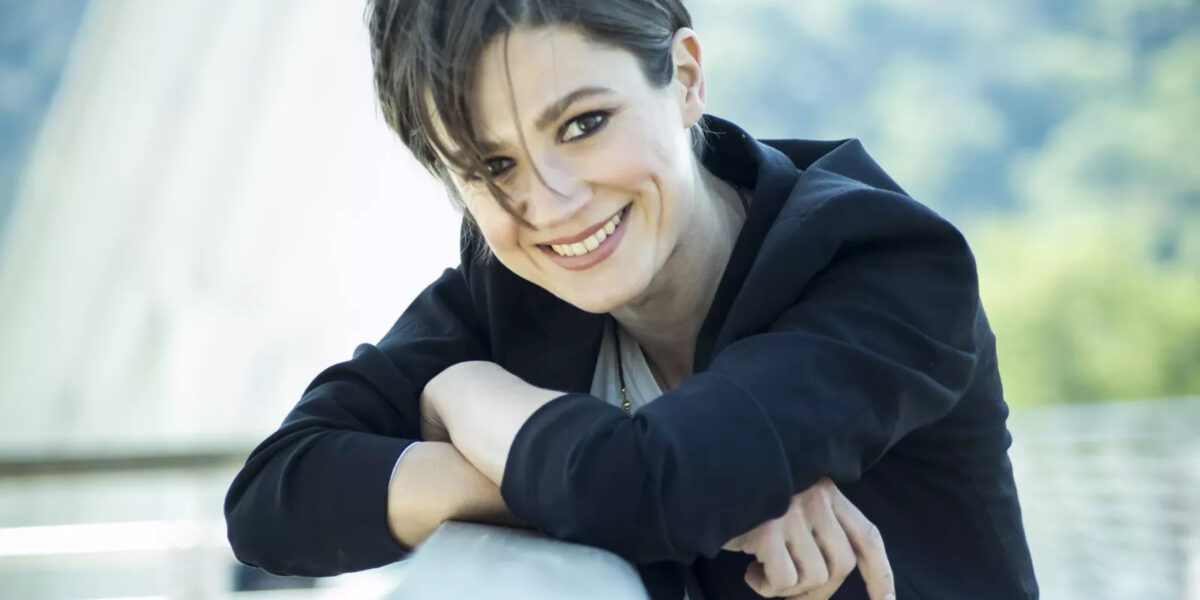
Scientific journalist, writer, author and radio and television presenter, Silvia Bencivelli will be the protagonist of two interesting events, tomorrow at the University of Calabria. A day dedicated to the story of science organized by the STAR research infrastructure which takes the name of “Narrations. Natural and artificial stories”.
Divided into two moments – “Interrogating the machines” and “Who is the first” – it is the first communication initiative of STAR-X, the three-year project to strengthen the infrastructure which aims to be a bridge between research and the production system aiming at scientific excellence in Europe.
This is the programme: at 3pm, at the University Club, a multi-voiced reflection on how artificial intelligence is changing science communication. Bencivelli will talk with four professors of the university – Riccardo Barberi, full professor of Applied Physics and manager of Star; Elena Cantone, full professor of Otolaryngology and director of the homonymous unit of the Cosenza Hospital; Francesco Scarcello, full professor of Computer Science and director of the Department of Computer Engineering, Modelling, Electronics and Systems Engineering; Domenico Talia, full professor of Computer Engineering at Dimes and essayist – who look at AI from different perspectives.
At 7pm, at the Piccolo Teatro Unical, the lesson-show on the lives of scientists who, out of pride, madness or desperate love for humanity, used their bodies for medical experiments. Bencivelli will reconstruct the most human and surprising details of each undertaking, as already done in his books – “Heroic, crazy and visionary” and “Three strokes of genius and a very bad idea” – from which the show draws its inspiration. With her on stage, double bass player Carlo Cimino will act as a counterpoint to the story.
«Telling science – explains Raffaele Agostino, director of the STAR infrastructure – is part of the research work. We chose to start with artificial intelligence, a technology that makes it easy to produce credible texts and images and which poses to those who communicate science the problem of verifying them and establishing who is responsible for them. In the evening we will change tone with the lesson-show where the stories of doctors who have experimented on themselves will remind us that science also advances through trials, errors and risks. This too deserves to be told.” Entrance to the meetings is free upon reservation.