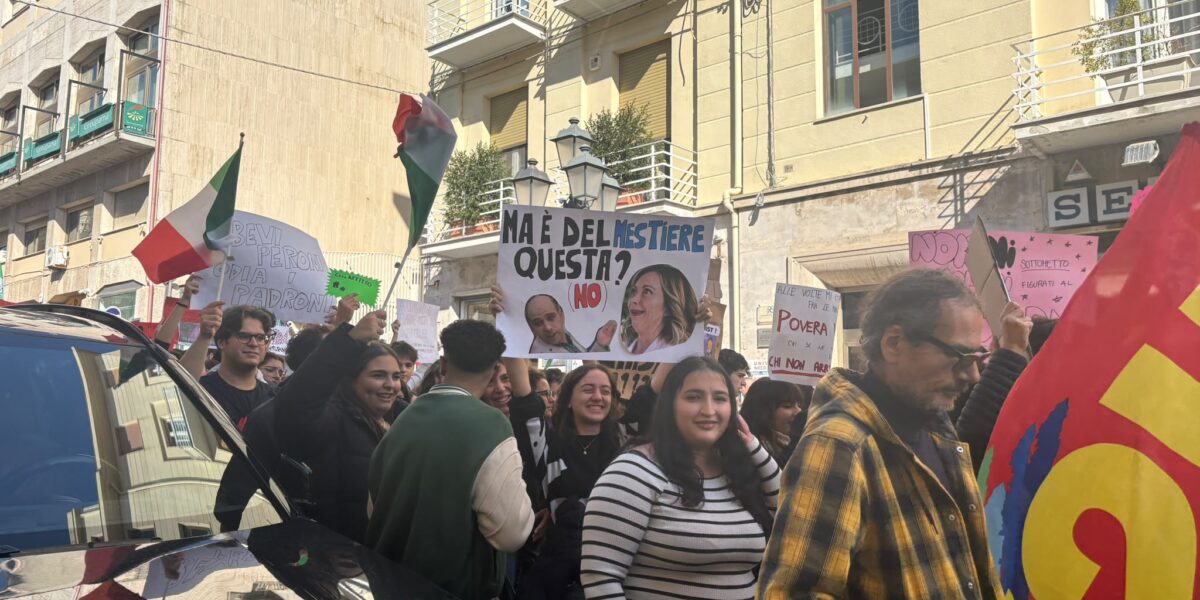
Even taking to the streets for a strike has costs. Direct and indirect, but still costs. Of course, those who promote it and those who participate in it are willing to make this sacrifice in the name of a higher objective, of a claim to be asserted. Therefore going on strike – in addition to being a right also recognized at a constitutional level – also becomes a sort of “investment” in the future. In short, whoever does it takes the risk (like a business), puts in their capital (unpaid working day) and is confident of obtaining a positive result, with a future improvement in their position. However, the costs borne by the country system must also be considered, which are not small when reading the estimates proposed by the CGIA of Mestre whose research office, with regards to last Friday’s national strike, estimated that the work stoppage cost the country around 800 million euros, almost touching a billion if indirect costs are considered. The CGIA is also keen to clarify the importance of being able to strike and carry forward one’s demands. What he proposes is not in fact an analysis to question the democratic value of abstention from work but to explore its various repercussions for cognitive purposes.
Even in Calabria, therefore, this possible loss can be observed which, according to the CGIA estimate, would be around 13.7 million euros, assuming a participation of around 20% of employees (who overall account for 66.6% of the total employed). The loss would therefore be on the daily added value produced, which in our region is worth just over 102 million euros.
The full article is available in the print and digital editions