

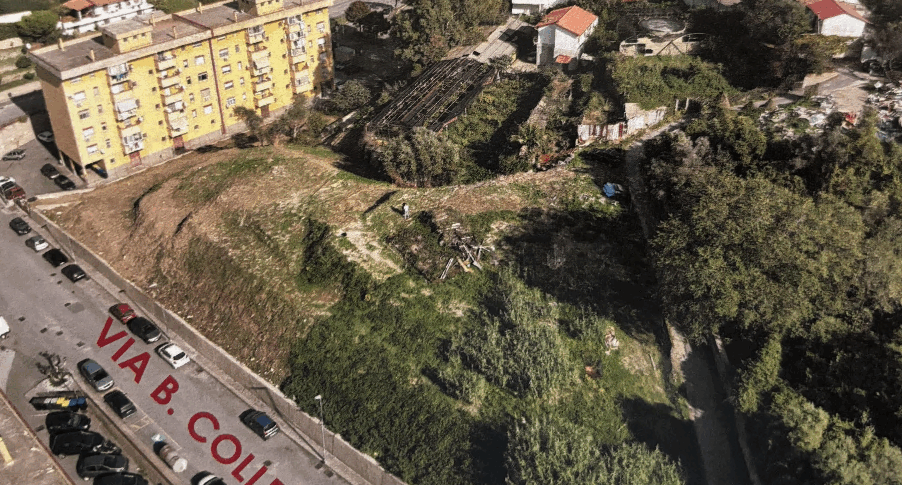
A few hours after the municipal council meeting dedicated to the Zanklon operation on the student residences in the city, a clear position arrives from the president of the second Municipality, Davide Siracusano, regarding the project planned in Minissale, for 504 beds. “According to what was also reported by the press, the orientation of the political majority seems to converge on the approval of only one of the three projects presented by the Zanklon company, namely the project called “Policlinico”, which involves the construction of 504 beds in Minissale.
The other two projects, “Centro” (255 beds in via Catania) and “Archimede” (1,080 beds distributed over three twelve-storey buildings), would instead be destined to be rejected. The undersigned expresses strong doubts and concerns regarding this orientation, which seems to ignore the urban, economic and social critical issues already present in the Minissale district. These problems require an in-depth evaluation and a conscious choice by the entire City Council, as repeatedly requested by various institutional subjects and citizens”.
Siracusano underlines that “the village of Minissale, already densely populated, is served by only one road (via Bartolomeo Colleoni), subject to serious vehicular problems which also affect via Adolfo Celi”. Hence “the strong opposition to the proposal to create student accommodation in the area, already seriously penalized by questionable urban planning and logistical choices. The neighborhood is crossed daily by hundreds of heavy vehicles linked to the works for the Messina-Catania railway doubling, causing serious inconveniences to traffic and accidents, including the tragic death of a cyclist”. But above all, according to Siracusano, “these choices, made without any discussion with the Municipal Council, contribute to treating the territory as a dormitory, a warehouse or a landfill, ignoring its urban vocation and the needs of the citizens”.