

Add the Gazzetta del Sud as a source
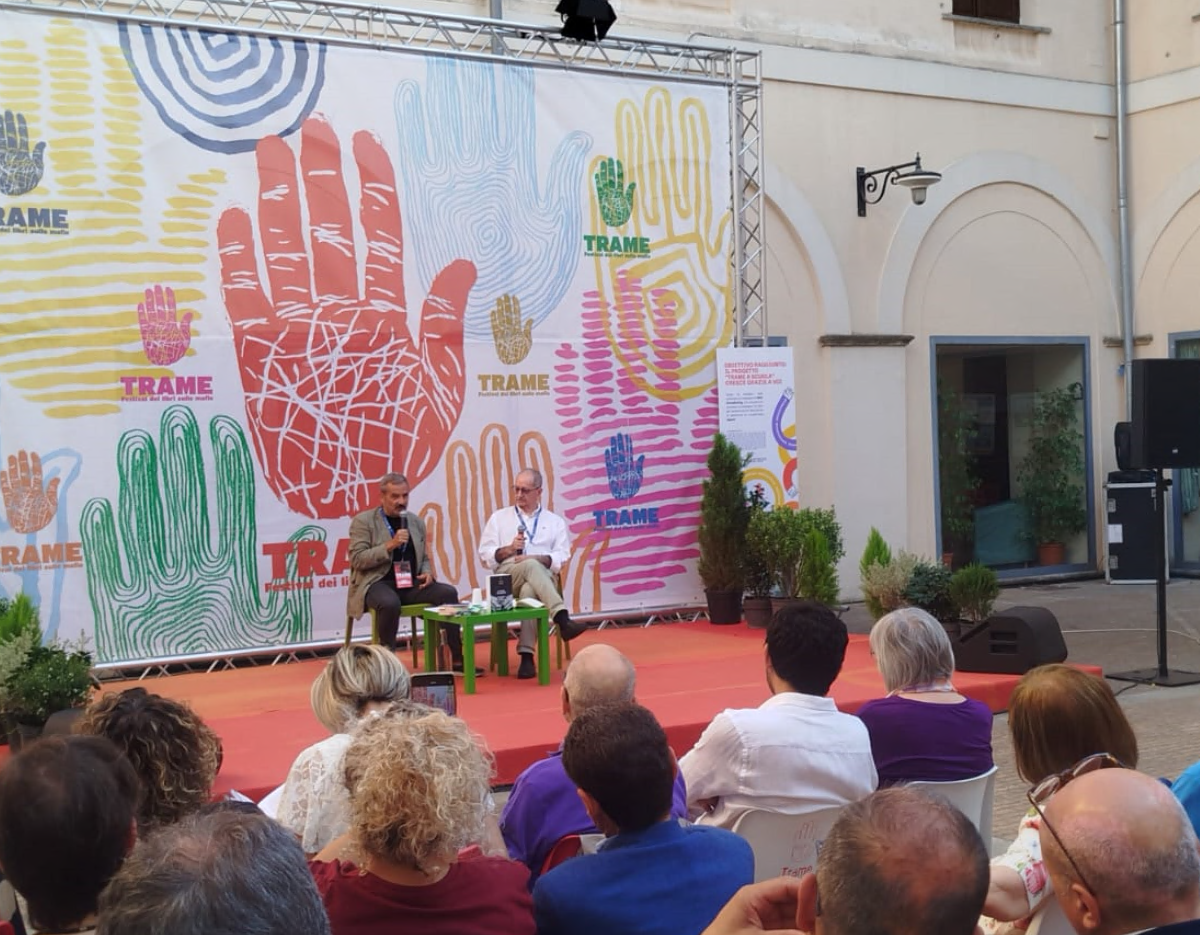
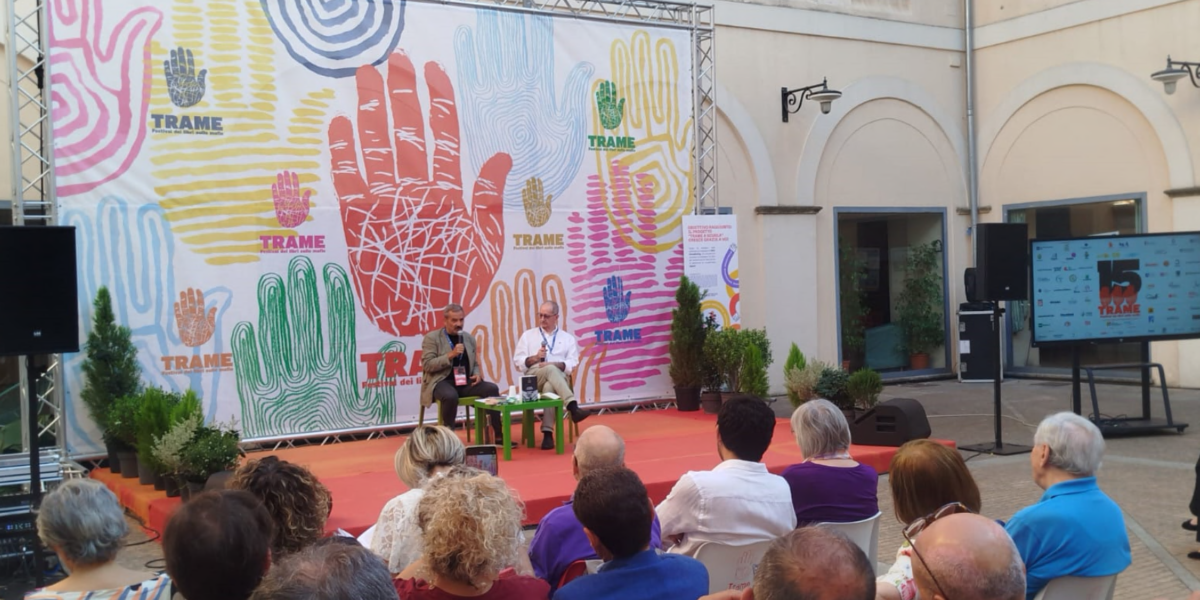
Staying also means having imagination, being inventive, it means looking for a new connection with the earth, with nature, it means taking care of this landscape.” Without mincing words, and with the usual passion that distinguishes him, the anthropologist Vito Teti captured the audience of Trame, the festival of books on the mafias which in Lamezia Terme continues to broaden its horizons every day by proposing focuses on our current affairs, on politics, on social and cultural problems and on the development prospects of our entire country.
Teti himself, in fact, in dialogue with Goffredo Buccini of the Corriere della Sera, in addition to recalling “his” Restanza, developed a sociopolitical excursus starting from the new edition (for Meltemi) of his well-known «The cursed race. Anti-Southernism, separatism, racism.” «Meanwhile, the stigma for southerners has never completely disappeared – he points out with irony – a few days ago in Turin a southerner was attacked with the insult of “southerner”». And speaking of the purely party experiences of the last decades, «when the League becomes a government party it must evidently use the “two ovens” tactic, it must speak in an institutional manner (even if this is becoming less and less today) and it realizes that immigrants from Africa were arriving in Italy, these become the new “terùn”, from here we arrive at those who today should be “remigrants”. The game of always finding a new enemy – adds the anthropologist – has always been part of xenophobic groups. What worries me is that there are Calabrians who have been called inferior and are happy to be called that.”
Regarding the more stringent “political” dynamics, Teti has no doubts: Vannacci is “the racist par excellence”. Ideas also on Differentiated Autonomy, a true “secession of the rich” as Buccini defines it, but also starting from the responsibilities of the left. «Starting from Title V – Teti recalls – my book was initially born from another book, then it became “angry” in the Bossi period, when the Northern League invented the “updated” theory of the cursed race. Slowly we gave in to the illusion that the League was normalizing and now we see how it has proliferated.”
Thus, as always with Teti, we speak naturally from one theme to another, with underlying attention always aimed at the complexity of social phenomena. La Restanza, for example, «helps us to rethink the southern question in different terms, a form of resistance that this time does not have an enemy in the northerners, to whom we also polemically addressed the stupid term “polentone”, but instead starting from the same common problems, from the same demographic crisis that involves everyone, from this seeing ourselves deprived of essential goods. They chased us away, saying that the mountains were not productive, that the hills are backward, to go to the factories of the North. Now we have lost both the factories and the mountains and today in this disorder of the world we don’t know who we will end up with. In the best case scenario, in conclusion, we will continue to resist with madmen who threaten to throw atomic bombs like toys.”
Delving deeper into the “geographies” offered by Trame on its fifth and penultimate day, an overview of the «Nuova Tangentopoli», starting from the essay by Vincenzo Bisbiglia and Marco Grasso «La Repubblica delle mazzette. The new Tangentopoli that corrodes Italy” (PaperFirst): the Gazzetta journalist Antonio Ricchio led the authors to draw a disturbing map of corruption, a true cancer of democracy.
And again, we get to Afghanistan with Angela Iantosca’s beautiful book «Women. Resistence. Freedom. Stories of twenty-one Afghan women fighting for life” (ed. Paoline), in which the author manages to bring out an enormous sense of dignity and humanity, of courage in the strictest and most concrete sense of the term. Women, these twenty-one Afghans, who in various ways flee abroad where they continue to struggle in the paradoxes of the West. Like Sediqa, for example, a midwife who refuses a job in a private Roman clinic because she is “blackmailed”, and who prefers to do cleaning to live with less comfort but with more dignity. Iantosca’s interesting operation, among other things, is to connect the resistance of these women with that of our Republican Mothers, the twenty-one women who were part of the Italian Constituent Assembly (to whom the author has in fact dedicated another book), as well as to always keep high alert on the tragic world of gender violence and on affectivity, increasingly current themes, even in these days after the approval of the Valditara Bill.
«The absence of “no” is harmful to our generations – explains Iantosca – if I raise my children protecting them from failure I will raise people who are not capable of living. If I avoid them when I encounter difficulties, I will have problems later. And in fact the first “no” that many guys receive today is that of their girlfriend.”
The Trame evening, as usual, always ends with artistic ideas, be it music or theatre. And this time it was the turn of the engaging «Liberi semper», by Michela Ponzani and Valerio De Filippis (on stage, with Marco Capparelli, Marcello Lardo, Nicolò Pagani, Andrea Borrelli), a show dedicated to the 80s of the Republic, with the beautiful narration of Ponzani and De Filippis and musical nuances that gave spectators back the senses and emotions of a History of which, fortunately, there is always something to be proud of.