

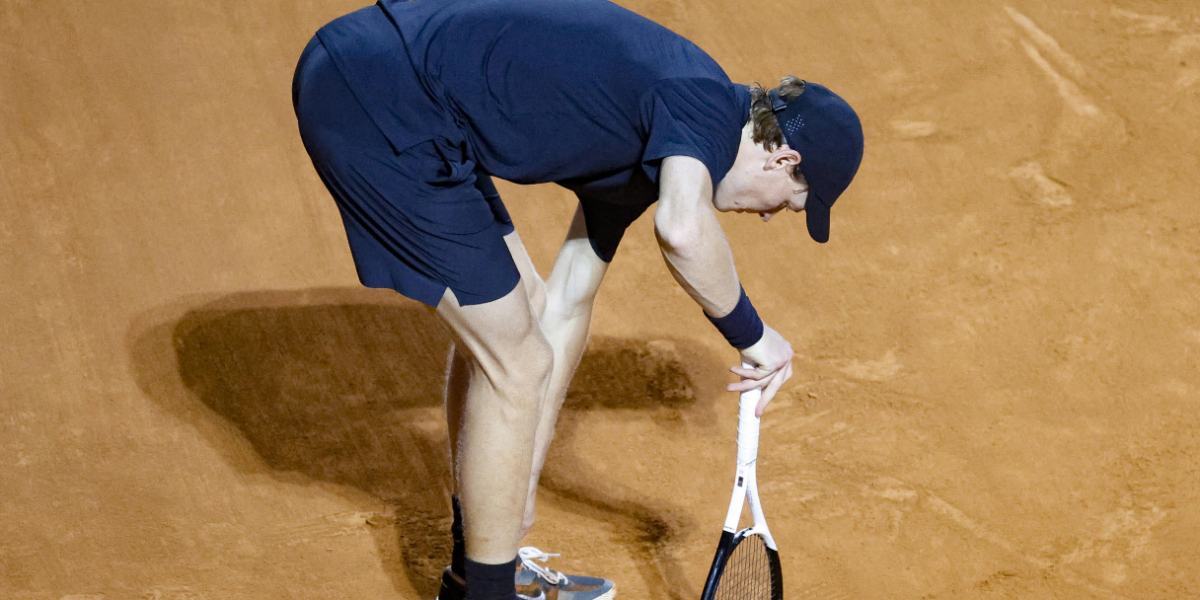
Today Jannik Sinner announced that to treat and resolve the knee problem he will have to sit out until the end of the season, also missing the ATP Finals. In one place on Instagram he announced that he will return only next year. Although there is no official confirmation, the rumor seems increasingly credible that the problem that has been plaguing Jannik Sinner for over three months is iliotibial band syndrome, commonly known as “runner’s knee”. To understand more what is happening to the talent of San Candido, AGI spoke to Dr. Daniele Mazza, specialist in Orthopedics and Traumatology and doctor of the National Under 21 men’s football team, renowned specialist in orthopedics and sports traumatology.
What is an iliotibial band?
What is an iliotibial band? «The iliotibial band is a robust structure of connective tissue that runs along the external side of the thigh, from the hip to the top of the tibia. Contributes to the stability of the limb during movement. When the region near the outside of the knee becomes painful under repeated load, it is called iliotibial band syndrome, also often called “runner’s knee”. The mechanism is more complex than the simple “rubbing” of the band on the bone: local tissue compression, load management and movement control may be involved.” How does it manifest itself? «The typical symptom – explains the expert – is a pain well localized on the external part of the knee. It can appear after a certain amount of time of activity, increase with repetition of movements and attenuate by reducing the load. In some cases the area is painful to pressure and the discomfort becomes intense enough to force you to stop training. It is not a problem exclusive to runners: it can also appear in other sports that require repeated movements and high loads on the lower limbs.”
How is it treated?
How is it treated? «The treatment is predominantly conservative – adds the doctor – and must be adapted to the person and the sport practiced: 1) Temporarily modify the loads that cause pain. 2) Set up active physiotherapy, with strengthening of the hip and lower limb muscles and work on movement control. 3) Gradually resume sporting activities, observing the response of the symptoms during the activity and in the following hours.”
When should surgery be performed?
«Surgery is only taken into consideration in selected cases – explains the orthopedist – when an adequate conservative procedure has not given results. The duration of recovery varies: it depends on the symptoms, the loads required and the response to rehabilitation, so it is not possible to deduce it from the news about the case of an individual athlete. However, generally we are talking about recovery times of around six months.”