

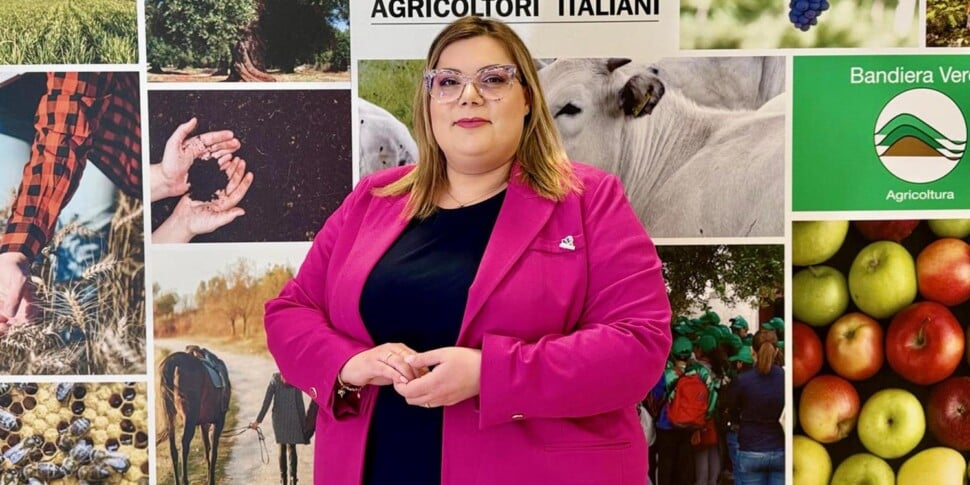
The Calabrian agricultural entrepreneur Dr. Agr. Emanuela Milone is the new president of the Italian Floriculture Association promoted by Cia. The proclamation took place today in Rome, at the Giuseppe Avolio Auditorium, during the national elective assembly.
Profile and professional path
Originally from Lamezia Terme, 38 years old, graduated in Agricultural Sciences, Milone represents the fourth generation of a historic family of nurserymen. At the helm, together with her sisters, of a highly innovative company spread over approximately 30 hectares, she stands out for the production of citrus fruits, fruit trees, olive trees and ornamental species, as well as for the development of certified plants from the “zero phase” through advanced micropropagation techniques, with constant attention to quality, resource efficiency and environmental sustainability.
Founding member and former vice-president of the Association since 2022, as well as member of the Flowers and Plants Group of Copa-Cogeca for Cia since 2025, she will lead the Italian horticulturalists for the next four years, succeeding Aldo Alberto.
Floriculture as a strategic asset of Made in Italy
“I thank everyone for their trust and I accept this role with pride and responsibility – declared Milone – aware of the value of the companies in the sector. Italian horticulture is a strategic asset of Made in Italy, with around 24 thousand companies, a turnover of almost 3 billion euros and over 100 thousand specialized employees. We are the starting point of fundamental supply chains: from agri-food to urban greenery, up to reforestation. Without a nursery there is no production, there is no future sustainable”.
Objectives of the mandate: legal identity and competitiveness
The new president has placed the theme of political recognition of the sector at the center of her mandate: “The time has come for this economic value to translate into real political weight. Starting with the full implementation of the law on floriculture: without a clear legal identity we cannot create a system, nor access resources in a targeted way to innovate and compete”.
Among the priorities indicated, the reduction of costs and the strengthening of competitiveness, with structural interventions against the cost of energy and the increase in raw materials, together with a more efficient and uniform national phytosanitary system. The theme of water resource management and climate resilience is also central, with investments in infrastructure, precision technologies and innovative solutions to make production cycles more sustainable, in addition to the push towards self-production of energy from renewable sources.
European challenges and sustainable innovation
On the European front, Milone highlighted the need to guarantee adequate tools to face the challenges of the transition, starting from the development of new genomic techniques and the reduction of pesticides, reiterating the role of the sector in environmental protection and CO₂ sequestration. In the debate on the packaging regulation, he also underlined the importance of recognizing the jar as an essential means of production.
Assembly formation and conclusions
Attention also to strategic supply chains and human capital, with a commitment to the protection of industrial hemp and to the strengthening of training courses, in order to attract young people and enhance qualified skills in a sector increasingly oriented towards science and innovation.
The Assembly, in the presence of Masaf undersecretary Patrizio La Pietra, concluded with the speech of the national president of Cia, Cristiano Fini, who wished the new president good luck in her work, underlining the strategic value of floriculture for the competitiveness of the country and the need to guarantee the sector concrete support and a long-term vision.