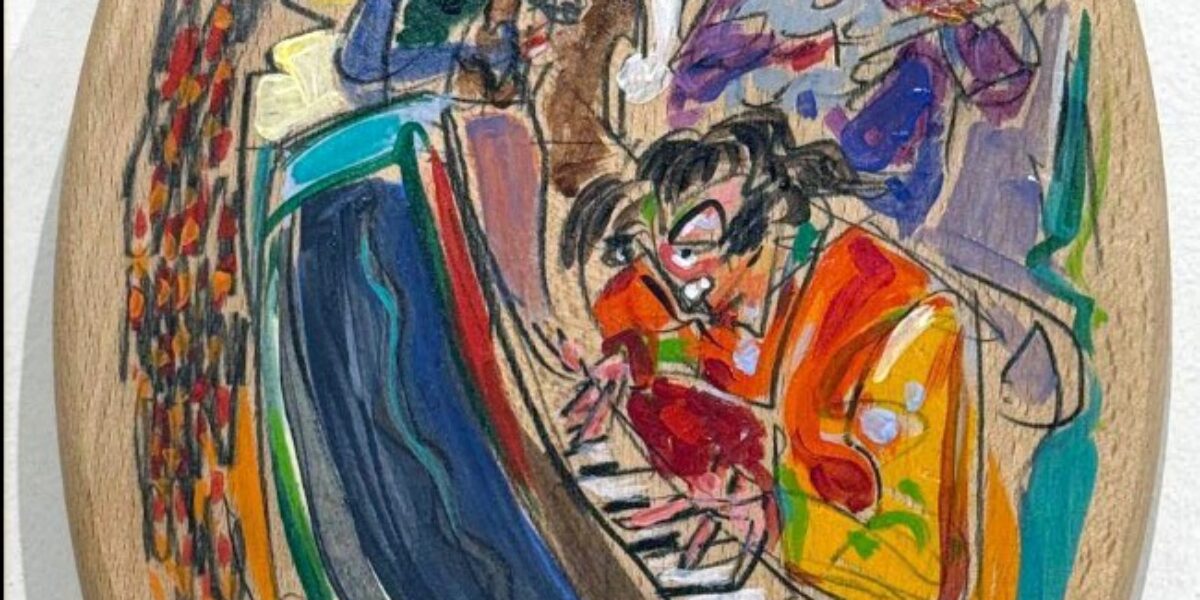
When a landscape is seen by an artist, it transfigures, modifies, expands, changes its connotations which become mutable, with mobile boundaries, they can seem almost thinking. In art they are obvious, obvious concepts. Yet there are those who always renew and renew themselves and exalt what could be old in new pictorial thoughts. It happens – always – with the landscapes (and not only) of Nino Attinà, the Calabrian painter born in Reggio in 1953, who has lived and worked in Milan since 1977, always carrying his region in his heart.
The artist has titled his new exhibition (in the Zecchillo studio, formerly the studio of the famous Piero Manzoni) «Situations and hypotheses of landscape» and it is not just a way to get your hands on things. If anything, Attinà determines in the “spectator” of his paintings a desire for investigation. Its signs and colors of Mediterranean expressionism, at the same time so evident and so hidden, tell us about a reality that each of us can investigate in our own way. Canvases, therefore, which seem like a bait that introduces us to Attinà’s imaginative “journeys”, where it is always the color that commands, it shows us the way, if necessary it becomes a metaphor, and not just a “portrait”, of the lands of the South.
“The hypothesis”, as he calls it, is proposed like this, poised between reality and dream, as if to create a sort of new balance (at least the pictorial one on the canvas), always full of movement, which induces thoughts towards new destinations. Attinà does not stop at landscapes (they are just one of his artistic connotations), he also transfigures the “situations”, to which the title of the exhibition refers. He does this by using wooden ovals, in which he portrays women and men we might meet every day, to whom the painter gives, through never complete lines, a dynamism that makes us become accomplices in their activities, such as playing the piano, walking the dog or embroidering.
They are small glimpses of life and everyday life that seem to explode thanks to the richness of the color and the light that illuminates the gestures. In the limited space of the oval and using only essential features, Attinà manages to create a rich and striking movement, to the point of building a kind of dynamic attraction that takes us inside his inspiration. That pianist, for example: we seem to hear him playing so much that it makes us want to follow the rhythm with our legs. Because, sometimes, painting sounds…