

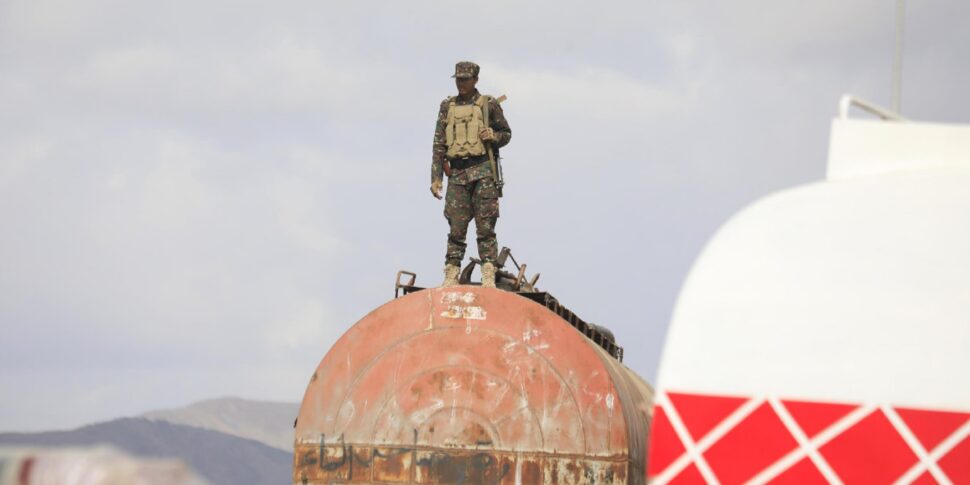
The Houthis enter the Middle Eastern conflict for the first time: the Yemeni rebel group supported by Tehran launched a missile against Israel during the night. Israel confirmed the attack and added that the missile was intercepted in the early hours of the morning. The Shiite rebels justified the attack as a response to Israeli raids in Iran, Lebanon, Iraq and the Palestinian territories, adding that operations would continue until the end of the “aggression” on all fronts. The Houthis, who control much of Yemen, said they had their “finger on the trigger” and were ready for “direct military intervention” if new allies joined the United States and Israel in the conflict.
Iranian raids in the Gulf and international tension
Meanwhile, Iranian raids against targets in the Gulf continue. An attack on a base in Saudi Arabia left 15 American soldiers injured, 5 of them seriously. Drones hit Kuwait airport, damaging its radar, and the important port of Salalah, Oman. Six people were injured in the Emirates when debris fell during a missile intercept, and Emirati authorities said defense forces intercepted missile and drone attacks from Iran. And in the hours in which Ukrainian President Volodymyr Zelensky is carrying out his mission in the Gulf countries (Saudi Arabia, Emirates and Qatar) Iran declared that it had targeted a depot of Ukrainian anti-drone systems in the United Arab Emirates, which would have been used to support US forces. But Kiev flatly denied it, calling the news “a lie”.
Diplomatic efforts and military movements of the United States
On the diplomatic front, Pakistan is preparing to host talks with officials from Saudi Arabia, Türkiye and Egypt with the aim of ending the war. The foreign ministers of the four countries will meet in Islamabad tomorrow. Pakistan has not said whether US or Iranian officials will also be involved. Pakistani Prime Minister Shehbaz Sharif spoke to Iranian President Masoud Pezeshkian, with whom he had “extensive discussions”. Pezeshkian was briefed on Pakistan’s diplomatic efforts to engage the United States, Gulf countries and other Islamic nations during the conversation, which lasted more than an hour, the Pakistani prime minister said. According to Secretary of State Marco Rubio, the United States expects the war to end within weeks, not months, as the influx of US troops into the region continues. Thousands of U.S. Marines aboard Navy amphibious ships, belonging to the 31st and 11th Expeditionary Units, have been deployed to the Middle East from Asia. Another 2,000 paratroopers from the 82nd Airborne Division are arriving in the area of operations.
The Lebanese front and the escalation with Hezbollah
The Lebanese front also continues to be hot: Israel carried out dawn air raids on several cities in southern Lebanon, while Hezbollah announced attacks against Israeli forces. The IDF has issued a new evacuation order for residents of several villages near the southern Lebanese city of Tyre, telling them to leave the area and move north. Among the three Lebanese journalists killed in the attack that targeted their car was a correspondent from a Hezbollah-affiliated broadcaster, a military source told AFP. Al Shouaib, of Hezbollah’s Al-Manar channel, and Fatima Fatouni of Al-Mayadeen, considered close to the Iranian-backed movement, were killed in Jezzine, along with Fatouni’s brother, a cameraman, the source said. Al-Mayadeen and Al-Manar confirmed the deaths of their journalists.