

Add the Gazzetta del Sud as a source
«Either there is trust or the world is lost. And then, the seed of society, of international relations, is precisely trust. Without trust there is no more world. Therefore this Taormina festival is so important and I really hope with all my heart that all the words said in these days can surpass the space of this square, the space of the ancient theatre, the space of Sicily and Italy. Either trust or barbarism”: this is the message of hope that the great French intellectual Bernard Henri-Lévy, in Piazza IX Aprile, in Taormina, where he said he was very happy to be (“immersed in bliss”), shouted in his clear French, which Paolo Noseda’s precious translation immediately brought to life. An appeal that deeply moved the audience present, embodying one of the most intense moments of the entire event.
Henri-Lévy had responded to the last question from Paolo Valentino, journalist from Corriere della Sera and member of the scientific committee of Taobuk, who, paraphrasing Dostoevsky, had asked him: “Will trust save the world?” And trust, confiance, this word so harmonious and rounded, Henri-Lévy often pronounced it in his lectio, between hope and disenchantment, and pain, for this value so vilified, as he observes, “with his soul of a free man”, in his lucid gaze as an intellectual, a philosopher and a reporter in the places he goes to (“international law suffers from very serious problems – he says – practically everyone has violated international law”).
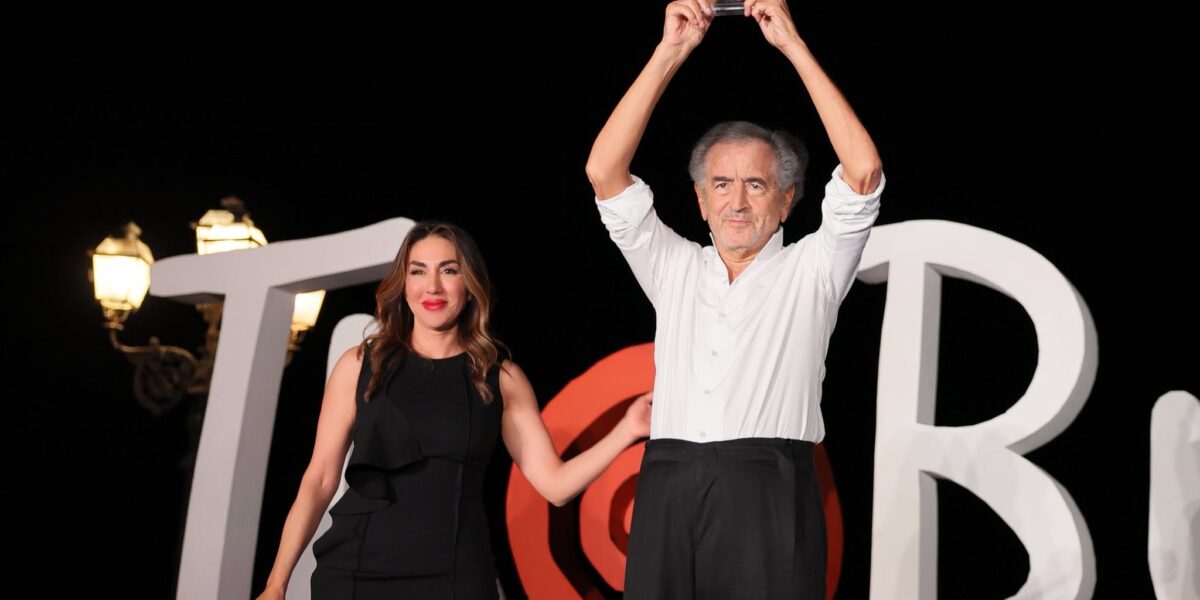
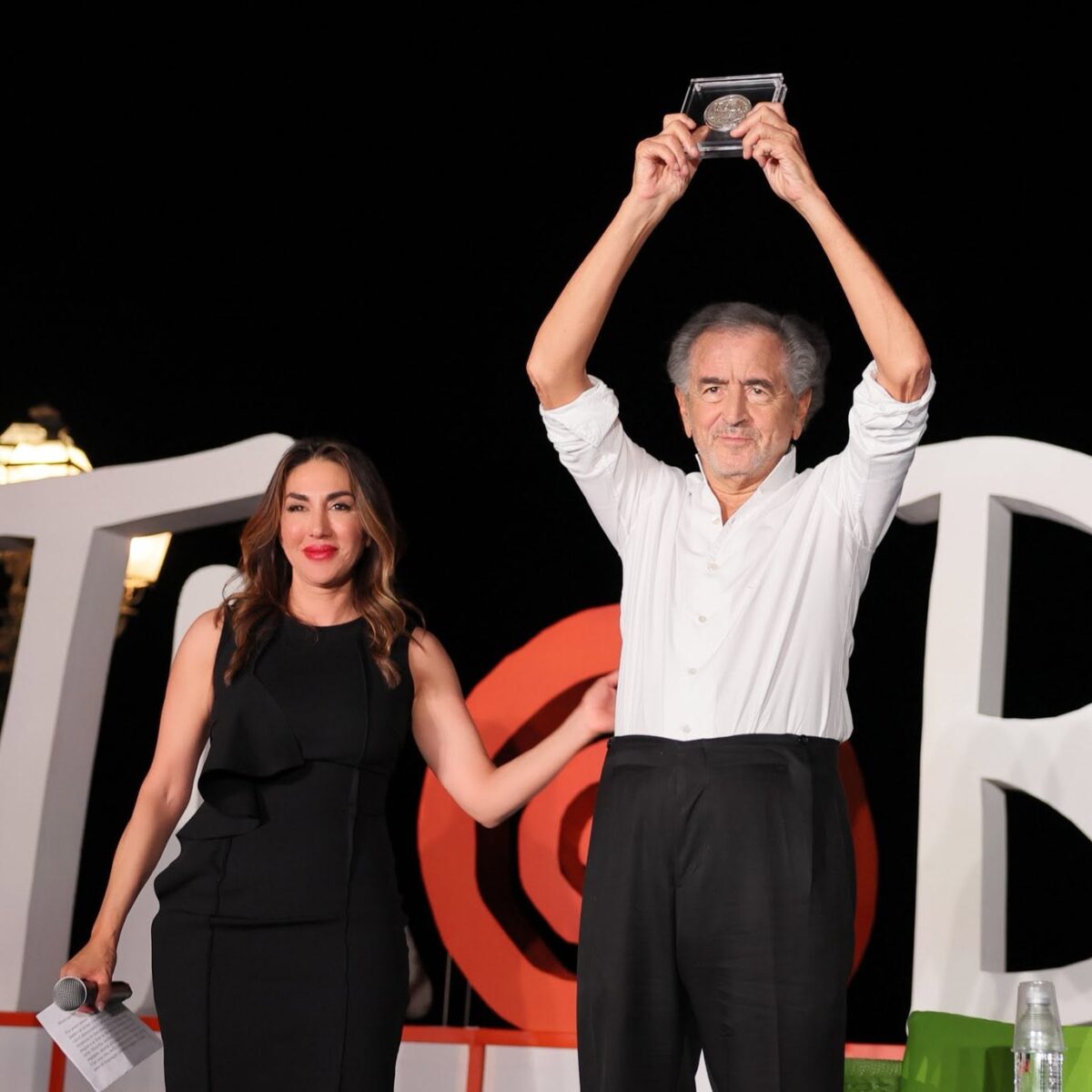
He well deserved the Taobuk Award for civil commitment and critical thinking and which he displayed with pride; and the motivations, pronounced by Antonella Ferrara, tell the story of the man who «in defense of freedom, dignity and democratic values with the duty to speak clearly in their name, combined philosophy, writing and reportage in a single form of commitment attentive to the moral and civil needs of the present, a voice that in the confusion of our time restores weight to public language and foundation for trust».
And Bernard Henri-Lévy spoke with sharp clarity, between quotes from Rousseau, Hobbes and Freud and notes on politics, including French politics, of yesterday and today, about everything we see before our eyes every day, about the evil that some in today’s history, as in the past, consciously choose. «There is evil everywhere, in the Rwandan and Cambodian genocides, in terrorism and also in the desire to do evil for evil’s sake when it becomes a passion for oneself, evil as a general project, this is radical evil. My philosophical gesture for decades – he says – is to take the question of evil seriously, to try to see the radicality and “positivity” of evil, not in the sense that it is positive but that it has a consistency, a reality.”
«Evil is the human condition, civilization is a layer of paint – he continued – and beneath this surface there is evil, what traditional philosophy has often failed to understand. It’s about looking evil in the face without having a pretext to excuse it, without giving evil a political or metaphysical meaning.” And for someone who has dedicated much of his life to the defense of liberal democracy which has always been fragile, and has chronicled the forgotten wars, from Bosnia to Kurdistan, from Burundi to Ukraine to Sudan to distant theaters of war, this means being a committed philosopher, “committed to the place where I go, taking up my pilgrim’s staff”, he reiterated. «With a fixed idea: that the worst injustice of all is that which considers that being born in a certain part of the earth is considered a blessing and in another a curse, this for me is the absolute injustice. The fact is that we no longer believe in the unity of the human race and that there is a two-speed humanity, this for me is atrocious. I believe that there is only one humanity.”