

In his sixty-year career he has spoken about racism, religion, sex, hunger, the death penalty, war, anorexia, violence. Photographs, used as weapons of denunciation, have always been stronger than any slogan. «Kiss between priest and nun» of 1999, «Three Hearts White/Black/Yellow» of 1996, «No-Anorexia» from 2007 with the model Isabelle Caro, 31 kilos, who died a few years later. And then many shots for the world of fashion, such as the famous close-up of Donna Jordan’s butt with the writing «Whoever loves me should follow me» for the 1973 Jesus Jeans campaign, which earned him his first major scandal but also international fame.
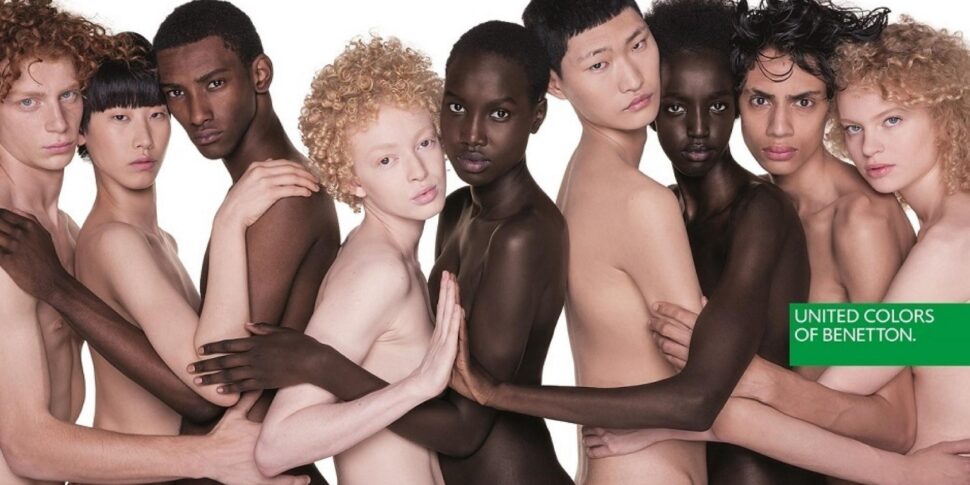
Oliviero Toscani, who has died at the age of 82, signed campaigns capable of sparking debate and criticism for their crudeness or non-conformism. After working for magazines of the caliber of Vogue, L’uomo, Harper’s Bazaar, in the 1980s he signed a collaboration that forever marked his career, the one with Benetton, collaborating with the brand from 1982 to 2000 and then from 2018 at the beginning of 2020. For Benetton, Toscani created, among other things, in 1992, Angelo-Diavolo, an incredible shot featuring a child white with blond hair – similar to a cherub – and a black child with a hairstyle that simulates small horns on his head to recall the figure of the devil. The photographer admitted that he had searched for years for the right subjects to represent this strong concept of contrast, linked to the theme of racism. In 1992, the advertising subject of another campaign for Benetton was a mafia murder. Toscani has repeatedly provocatively played with the contrast between black and white, a reference to the theme of racism. Without forgetting the frames of the shock commercial against the Saturday night massacres produced by Toscani in 1997. And again the three human hearts with the words “White”, “Black” and “Yellow”: the theme was racism and the objective was to convey to the observer the concept of union and equality that distinguishes every people in the world without distinction. In 1999, he chose a bloodstain as the logo of Benetton’s global campaign to support the refugees from Kosovo. In 2018 he caused controversy for his choice to use a photo of recently rescued migrants disembarking from a ship as the image of a new campaign for the fashion house: a squalid operation, Salvini branded the shot, calling for a boycott of the brand. Previously, the series of shots, also taken for Benetton, featuring some people sentenced to death in the United States, had caused a scandal: Toscani was accused by the State of Missouri of fraudulent forgery for having portrayed them by deception, without specifying his purpose. For the weekly Donna Moderna, Toscani created a campaign against violence against women starring a naked boy and girl next to the words “executioner” and “victim”. In 2009, banana and pea were the protagonists of a campaign against bullying financed by the Province of Bolzano in the context of an initiative against all forms of extremism. Debate and criticism also for the posters featuring used condoms and a newborn. A curious anecdote is linked to the unconventional style of his photographs: in 1965 Toscani was called by Vogue to create a portrait of Carmelo Bene, who arrived at the studio soaked from a storm and stood in front of the camera with his jacket all askew and trouser fly almost open. An image captured by the photographer as a symbol of alternative beauty, outside the box.