

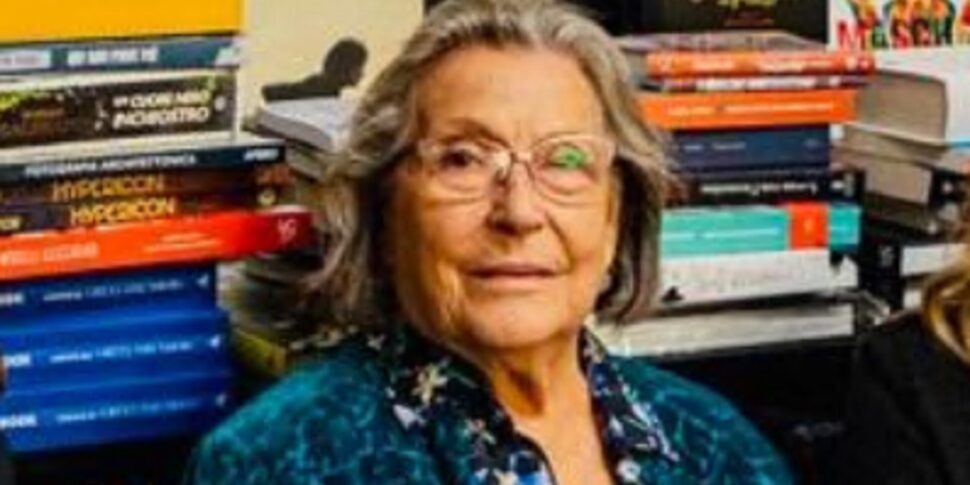
Professor Lia Fava Guzzetta, a woman of great human thickness, cultural, religious who has never forgotten her city of Messina, where she taught at the university and then moved to the capital, died on Wednesday night in Rome. In Rome he was the owner of the chair of Italian literature contemporary at the Lumsa. His research focused mainly on authors such as Svevo, Manzoni, Ungaretti and Sicilian writers of the twentieth century such as Verga and Pirandello.
His academic activity is intense, tirelessly his commitment to the international conferences and collaboration with colleagues, many who have become friends, with whom he promoted study and high -profile Italian Italian events, from the United States to many European countries. Networks and skills that he often brought back to Messina as in the case of the study day he walked on in 2024 for our university “Life and spectacularization of life. Towards the centenary of the” Quaderni di Serafino Gubbio Operator of Luigi Pirandello “. The professor had grown in Messina, committing herself in the university years inside the rifle together with her brother Nuccio Fava, a student, who became a director of TG1 Tg3.
Her husband, Francesco Guzzetta, was an ordinary of child neuropsychiatry at the University of Messina and from 1996 to the Gemelli Polyclinic. But like him, Lia Fava, he remained very close to our city and his experience as Councilor for Culture of the Municipality in the 90s (under the Provident junta), sent during which he promoted projects such as the Vara Commission and the opening and enhancement of spaces such as the Coral Garden, Monte di Pietà, the Gesso Museum.
His relationship with Messina continued in the capital with the Antonello da Messina Association of which he was a member of the board and with which he shared conferences, book presentations and the homonymous prize that is conferred on the Messina and Sicilian excellence in the world, both in Rome and in Messina, a city that he loved deeply from a sentimental and civil point of view of which he followed the chronicle daily and where he returned every summer in the family.