

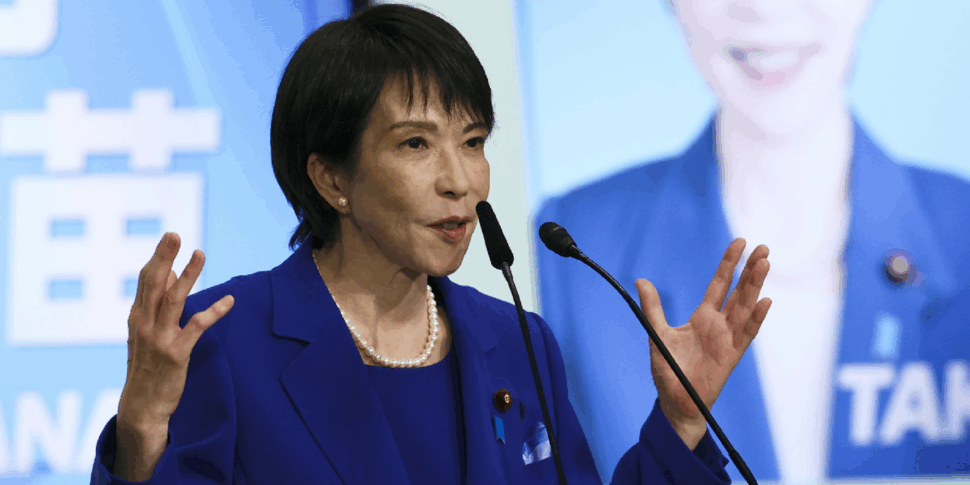
Sanae Takaichi, conservative “Thatcherian” intransigent and security supporter, is ready to become the new Prime Minister of Japan, as well as the first woman, taking on the guide of the country, fourth world economy, in a moment of unusual political instability, increasing prices and growing tensions in the Asia-Pacific region.
64 -year -old television journalist then spent in politics and with high -level government positions, today he defeated four other candidates, all men, winning the leadership of the Democratic Liberal Party (LDP) to the Government. This is his third candidacy at the helm of the party.
She is ready to become prime minister by the end of the month, succeeding Shigeru Ishiba, who last month announced his resignation after less than a year of his mandate, following two overwhelming parliamentary defeats that cost the Liberal Democratic Party (LDP) to the government for a long time the majority of coalition in both legislative chambers. It would be the fourth prime minister in five years.
Takaichi is an anomaly in Japanese politics, dominated by generations of politicians who followed the footsteps of their fathers and grandparents. Native of Nara, in western Japan, he played the battery in a Heavy Metal band during the college years and loves to go by motorbike and make underwater dives. It was elected to Parliament in 1993 and held several high -level government positions, including that of Minister of Economic Security from 2022 to 2024.
Takaichi is known for his hard positions on national security, defense and immigration. It is a protected of the former Prime Minister Shinzo Abe, the Japanese Prime Minister who has remained in charge longer and creator of the “free and open and open-soapying initiative that promotes Japan how to counter the economic and military ascent of China.
After the assassination of Abe in 2022, Takaichi became a point of reference for the most aggressive wing of the party. According to experts, its nationalist position risks complicating relationships with China and could undermine the country’s recent efforts to improve relations with South Korea.
In relations with the US, the point of the greatest dispute may concern the commercial agreement reached last month by the Trump and Ishiba administrations. Takaichi suggested that it may want to reopen the talks on the tariff agreement, such as Japanese investment commitments for $ 550 billion in the United States.
“If, during the implementation, elements that damage the national interest of Japan emerge, then renegotiation is a possibility,” said Takaichi during a debate on Fuji TV last month.
Takaichi is supported by the members of his party who want to see Japan less dependent on the United States. He claims that Japan should have greater defensive skills. He also promoted a debate on the authorization to use US nuclear weapons in Japan in case of emergency.
During a debate among the candidates last month, Takaichi said that Japan should strengthen its alliance with the United States and increase cooperation with South Korea and the Philippines. He claimed to feed concerns about China, but he hopes to be able to continue the dialogue with Beijing.
Takaichi, who has the former British prime minister Margaret Thatcher as a model, has broken the highest crystal ceiling of public offices in Japan, becoming the first woman leader of an Asian nation dominated by men and patriarchate. But it is not known to be a supporter of gender equality. He fought against permission to married couples to have different surnames and against permission to members of the maternal line of the imperial family to go up to the throne: two fundamental evidence to evaluate the position of politicians on gender issues. Supporters of gender equality have criticized Takaichi’s position on women’s rights and said that his victory does not necessarily have a significant impact on the future political and professional progress of Japanese women.
Takaichi, nationalist, would clearly move Japanese politics to the right. While believing in a solid safety alliance with the United States, he underlines the importance of a foreign policy “Japan First”, in which Tokyo acts primarily in his national interest. He criticized the negotiations on Tokyo’s duties with the United States, stating that the agreement presented unequal aspects. He will become prime minister in a moment of marked geopolitical volatility for Japan. The Asia-Pacific Region is undergoing a profound transformation due to China’s rise. The transactional approach of President Donald Trump to tariff negotiations with Japan, an important ally on safety, has left many Tokyo officials perplexed. The Russian war against Ukraine has nervous Japanese leaders, worried that it can encourage China to attack Taiwan and drag Japan into the conflict.
His diplomatic skills could be immediately put to the test: Trump could visit Japan later this month, when he will take part in the Apec forum in South Korea.