

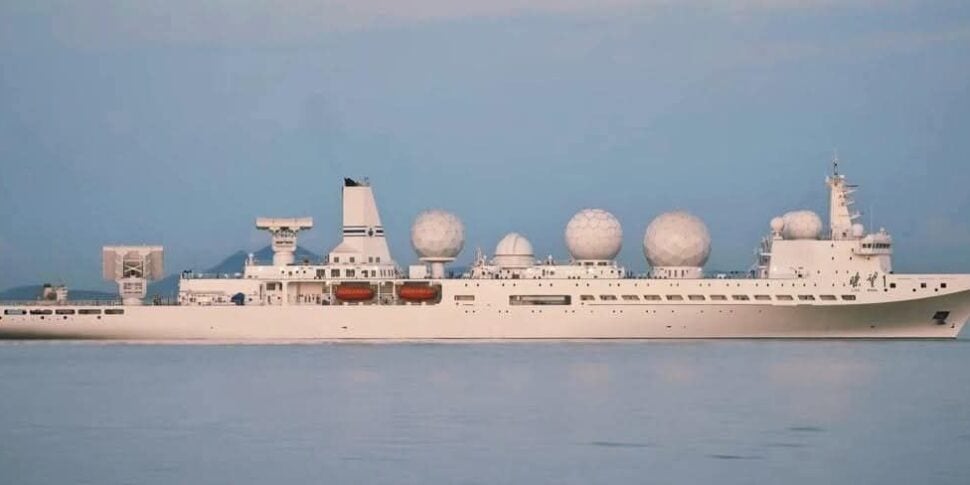
The Chinese technological supership that arrived in the Strait of Hormuz is called LIAOWANG-1: 225 metres, 30,000 tonnes, it is part of the fleet that assists China’s development and space missions. It has a data collection and processing capacity that is measured in thousands of petabytes (a petabyte is a million gigabytes): it can cover up to 6,000 kilometers of distance with its radars, detecting missiles, launch bases, aircraft and aircraft carrier activities. Its ability to collect electronic intelligence (ELINT) and monitor foreign launches allows for espionage and targeting of adversary space assets, but in this case it is able to track and monitor ongoing activity in the war between the US-Israel and Iran.
Surveillance for defensive purposes?
It is not known if and how much of this information will be passed on to the Iranians and above all which ones. The surveillance will probably be dedicated to defensive purposes, i.e. monitoring missile launches and the pauses between one wave and another. More detailed information (position of ships and aircraft carriers, for example) may not be provided because it is considered a hostile act, triggering a reaction, at that point legitimate, against the ship.
The LIAOWANG-1 is escorted by a cruiser and a destroyer, but has no weapons on board. Launched in 2023 by the China State Shipbuilding Corporation at Jiangnan Shipyard, this 225-meter, 30,000-ton vessel, operated by the People’s Liberation Army (PLA) Aerospace Force (ASF), completed sea trials between December 2024 and January 2025 and entered service in April 2025. Unlike its Yuanwang predecessors, which mainly focused on telemetry, tracking and control (TT&C), the Liaowang-1 introduces multi-mission capabilities, integrating early warning, command and potential counterspace functions.