

Much more than an Architecture book. It is a fascinating journey “Into the unlimited terraqueous edge”, the one undertaken by Clara Stella Vicari Aversa, with her volume published by “Le Penseur”, in the series “Apet-Architecture, landscape and territory”. «This publication – writes in the introduction the architect from Messina, researcher at the Mediterranean University of Reggio Calabria –, which has been knocking for some time asking to come to light, was conceived and created thanks to a series of profitable and engaging relationships that have been favorably and pleasantly intertwined over the years, between Life and Architecture».
In the preface to the book (over 400 pages, but the reading is so exciting as to make the length light), Marcello Sestito gives a precise interpretation key to a work that is destined to become a cornerstone in studies suspended between Sea and Architecture: «Perhaps because born right on the edge, in the Strait of Messina, where tumultuous waters meet-collide, which have not escaped the myth, the work of Clara Stella Vicari Aversa has the double merit of analyzing, without preconceptions, what happened between these worlds, starting from two places, apparently distant geographically, such as the Strait of Messina and San Sebastian, united in the research”.
The introduction bears the signature of a great Catalan architect, Cesar Portela Fernandez-Cardon, one of the most prestigious names at an international level, who came to Messina in 2001 and worked together with the architect. Vicari Aversa to a project which, if realized, would have transformed (25 years ago!) the Messina trade fair citadel.
Some of the most beautiful European cities live in an unprecedented light, where the Sea-Architecture dialogue is decisive, such as San Sebastian, Barcelona, La Coruna and Messina “between Lands and Seas”.
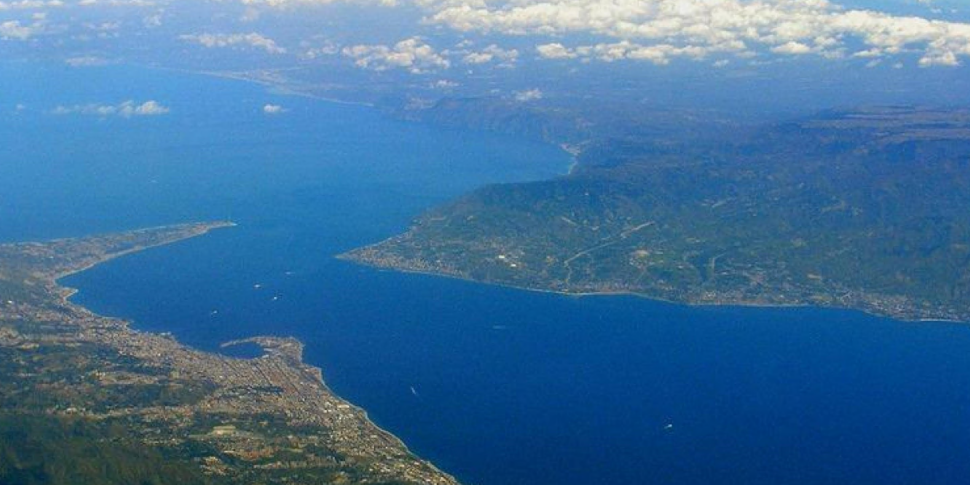
A chapter is entirely dedicated to the city of the Strait, which begins with the quote from Fernand Braudel: «On a map of the world the Mediterranean is nothing but a fissure in the earth’s crust… Fragments, faults, subsidences, tertiary folds have created very deep liquid trenches, and on the other hand, almost as if to counteract those abysses, interminable garlands of young mountains, very high and with rough shapes… Such mountains push towards the sea, sometimes strangling themselves up to reduce it to a simple corridor of salt water: think… of the Strait of Messina with the swirling whirlpools of Scylla and Charybdis… It is no longer the sea: they are rivers or even simple sea gates”. It is from here that Clara Stella Vicari Aversa begins the scrupulous investigation into that “permanent dialectic” between the land and the sea, between the Peloritani and the Strait. Messina is a “unicum”: «On the Italian peninsula the city is located precisely at the delicate crossroads between these two faces. It is the meeting place of two seas, divided and disputed by two lands. which here know each other, are defined and finally unite and merge.”
More than “the door to Sicily”, Messina, in its history and in the future that will have to be designed, is “the key to Sicily”. Quoting the many travelers on the Grand Tour, “it is the land of fairy tales”, “an immense and superb lake covered with boats”. And the whole city, writes the architect, «seems enveloped and almost controlled by a continuous tension between land and sea». A point of contradiction emerges which makes Messina a different reality compared to San Sebastian or the other cities mentioned: «The continuous gaze turned to the land, the insistent search for it while flying over the sea, is almost the most widespread and recognizable gesture and habit of the city, so that, curiously, the land seems to be almost the continuous reference, even if paradoxically in a seaside place. Exactly the opposite of what happens in other seaside cities, where any place on earth seems constantly invited to head towards the vibrant infinite surface of the sea.”
Yet in Messina there would be no shortage of opportunities “to finally bring the stimulating and variable extension of the sea towards the interior of the city”. Because “along its entire coastal edge the city, closed and protected behind it by the mountains, cannot avoid casting continuous glances towards the sea”. But “what is incredible is that these gazes are never satisfied but seem to seek something else, in the sense that they participate in a continuous game of echoes, references and mirrors, with the Strait in the middle”.
As a native of Messina and an architect, Clara Stella Vicari Aversa knows what is really at stake, for the present and future of Messina: «The sea front becomes the important place on which to reflect and identify processes of urban redevelopment and recovery of a new identity for the city». Reflect on a fact that characterizes Messina perhaps more than almost all other cities: «There are not many – explains Vicari Aversa – those who, by combining a landscape condition with the same name, manage to remain so “closely” linked to a natural fact, to a sign as strong as the Strait of Messina, known throughout the world, of large scale and of exceptional beauty».
The book, in some of its passages, also becomes a guide both for the people of Messina and for those arriving from outside, a series of itineraries that touch the main nodal points of the city, and with them, the architecture of Messina rebuilt after the earthquakes and bombings of the Second World War.
A detailed map of a journey which, however, takes us back to the initial reflection: admiring the beauty of this city, with its ancient heart and modern spirit, we are then left with a regret, a bitter aftertaste. «Unfortunately in Messina, despite the continuous, wonderful and obstinate appearance of the sea, almost as if it were overflowing from all sides, the sea itself appears almost forgotten; an attitude that inexplicably characterizes some traits of the certainly varied “intermittent” seaside promenade, which is found along the maritime front of Messina, from south to north”.
It is more of a journey into the present, rather than into history and myth. Clara Stella Vicari Aversa, in her detailed description of the waterfront – the city with the largest portion of coastline in Italy – refers to the competitions of ideas, the projects, the works started over the last decades, the hopes linked to some ongoing redevelopment processes. Another prestigious Catalan architect, Joan Busquets, asked himself, after an in-depth visit to the banks of the Strait: «Messina’s project for the next ten years? It’s everyone’s project, if we only respond to small individual problems, we don’t respond to the city’s problems. What is the scale, the scope of these projects, here as in Barcelona? It must be a collective and ambitious project to manage… In every project you can find the quality of the space. And in Messina there is plenty of space to open the city to the sea. There are very few cities that have this possibility… If cities have projects on this scale, the money comes…”.
The journey between the lands and the sea of Messina, in reality, as the author admirably writes, “never has a real end”. We start from the sea and return to the sea, and it is from there that the lines of urban regeneration must be drawn, not the other way around. It is the sea that must metaphorically invade the city, heal it, redevelop it, removing the ugliness and unbearable stratifications of decades of self-defeating choices, purifying it from that mortal sin, which has marked its recent history: having turned its back on the Strait.
Clara Stella Vicari Aversa, in presenting the example of San Sebastian, indicates a route: «In this case, as the city of San Sebastian can magnificently teach us, it is strongly necessary to have a clear perception of the elements that characterize the face and image of the city in order not to disfigure it or, on the contrary, to increase its already high potential, but also not to “make it up” too much and unnecessarily, especially when it would be sufficient to simply identify the elements capable of highlighting its natural beauty».
And the chapter ends with the words of Gesualdo Bufalino: «Climb aboard this triangular stone ark that floats on the waves of millennia: it has survived many storms, it will survive missiles… And put a Greek dictionary in your pocket: you could meet Aphrodite emerging from the waters and wanting to have a chat».
“Architecture in the unlimited terraqueous edge” then continues its journey, from San Sebastian to La Coruna, comparing the “architectures between land and sea”, citing the “Maritime Theatre” of Messina, up to the final part, between visions and perspectives. And in the afterword, written by Xabier Unzurrunzaga Goicoechea, the importance of this study is summarized, the result of «continuous and rigorous research in these 30 years of teaching and professional activity… cultural heritage of great value as a support for future research and urban and architectural design works of cities located in maritime and river territories».