

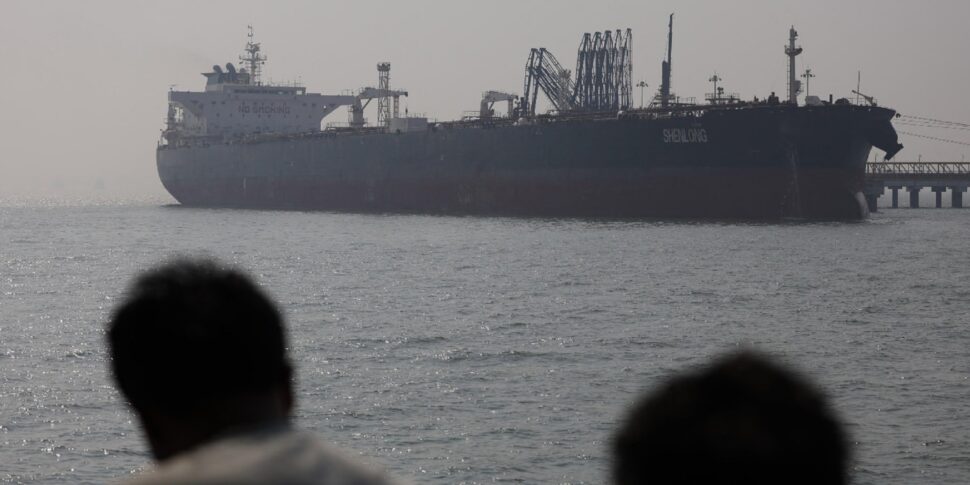
The perimeter tightens and the willing of Hormuz are born. Paris, London, Berlin, Rome, The Hague (basically the European defense big names) plus Tokyo say they are ready to «contribute to the initiatives aimed at guaranteeing a safe passage through the Strait» and “welcome» the commitment of the countries «that are starting preparations». A joint statement issued while the European Council – which has a discussion on the Middle East on the agenda – is in full swing. The devil however, as always, is in the details.
It is essential that the fighting ends first — and that is an unchanged position, despite the well-known glossary on the point. Iran, not surprisingly, threatens: whoever helps the United States and Israel will be “accomplices” to the aggression. With all the consequences of the case.
Foreign Minister Tajani specifies that there will be no military intervention, the Defense that any mission could only take place under UN auspices.
Escalations and de-escalation requests
The situation is more than complex and dramatic. Therefore the initiatives are intertwining, along different lines. French President Emmanuel Macron, arriving at the EU summit, branded as “reckless” the escalation which involves “for the first time” the gas production infrastructures in Iran and other neighboring countries.
«We – he declared – defend the idea of a moratorium on civil infrastructures and civilians, as well as a rapid de-escalation. The region enters a period of religious holidays: everyone should calm down and the fighting should end at least for a few days to try to give the negotiations a new chance.”
In practice a ceasefire between the end of Ramadan and Easter. The six, in the statement, also recall that freedom of navigation is “a fundamental principle” of international law, also pursuant to “the United Nations Convention on the Law of the Sea” and urge “all States” to respect it and defend the fundamental principles of international prosperity and security.
Diplomatic pressures and the role of NATO
Macron also spoke with Britain’s Keir Starmer and NATO Secretary General Mark Rutte and all three highlighted the need for “a sustainable plan” to reopen Hormuz. “The allies agree that it cannot remain closed as it is fundamental for the world economy,” Rutte remarked during a press point with the Romanian president. The former Dutch prime minister is working hard to mend the rift with Donald Trump, furious at NATO’s great betrayal.
“I am confident that the allies, as always, will do everything possible in support of our common interest and therefore we will find a way out,” he assured, anticipating, in some way, “the intense discussion with the United States and among themselves on the best way to address this enormous security challenge.”
The Tycoon, for his part, recognized that “the allies are becoming more willing” in their commitment to the Strait of Hormuz although, he added contemptuously: “Now it is too late.” But as we know, the US president is flexible in his judgements.
Internal divisions within the European Union
The fact remains that the Iran dossier is highly divisive and within the framework of the European Union, therefore at 27, finding a meeting point – for example by keeping together the hyper-pacifist Pedro Sanchez and the maximalist Viktor Orban, the only one to block sanctions against violent Israeli settlers – is an almost impossible mission. So much so that in the draft conclusions of the summit on the part dedicated to the Middle East there is not even a mention of the United States or Israel in the context of the war in Iran.
EU High Representative Kaja Kallas said in black and white that the conflict “has no basis in international law” and at last Monday’s Foreign Affairs Council the EU countries reiterated that they “have no intention” of being involved.
The challenge now is to bring the entire crisis back into the realm of international cooperation. It is a very narrow road but it is, in fact, one of the directions on which we are working behind the scenes, perhaps reviving an institution considered defunct: the UN.
Possible UN intervention
“If the Gulf countries present a draft resolution written in the right way it would not be impossible to obtain the approval of the Security Council,” explains a diplomatic source.
And this would provide the legal framework for an international intervention in the waters of Hormuz, provided, however, that hostilities cease. “It is time for diplomacy to prevail, it is time for the force of law to prevail over the law of force”, urged Secretary General Antonio Guterres from the halls of the European Council. “The EU and the United Nations – he added – enjoy exemplary cooperation, which is fundamental for multilateralism”. In the current climate, dinosaurs among asteroids.