

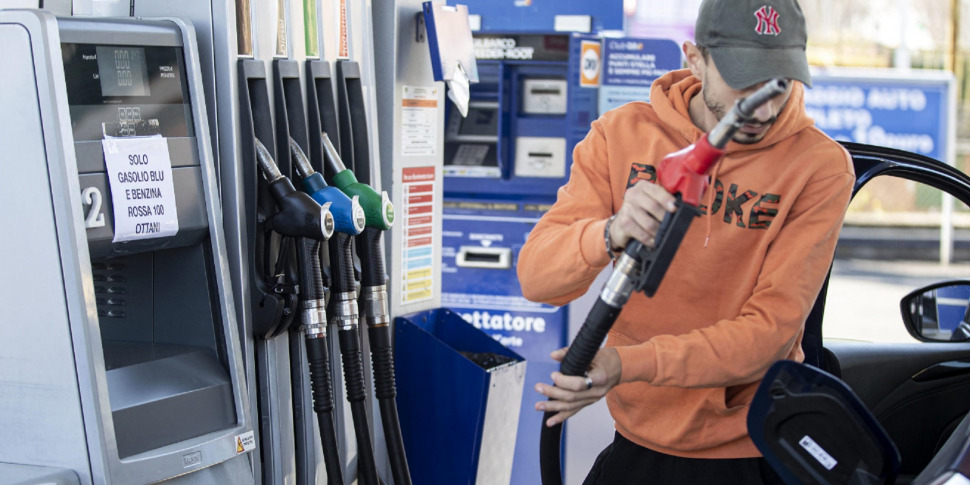
The prices of petroleum products have skyrocketed since the beginning of the conflict in the Middle East, with diesel in the lead: in an already restricted market before the war, Europe is paying dearly for its dependence on imports of this fuel, the most consumed.
Oil and gas exports from the Gulf are affected by attacks on infrastructure and the blockade of the Strait of Hormuz. This exacerbates pre-existing strains on Europe’s diesel supply, which has brutal consequences on pump prices and threatens inflation in many sectors.
Diesel is more affected than petrol because diesel is everywhere: it powers cars, road freight and passenger transport, but also agricultural and construction machinery, as well as fishing and part of the maritime sector. Despite gradual electrification in the European Union, diesel still accounted for 86% of road fuel consumption in Latvia, 73% in France, 66% in Germany in 2024, but only 50% in the Netherlands, according to a report by FuelsEurope, which represents the refining and fuels industry.
On Thursday, the price of European diesel surpassed $200 a barrel, a level not seen since March 2022 and the aftermath of the war in Ukraine. Before the conflict in the Middle East, “the supply/demand balance for diesel” globally “was much tighter than that for petrol”, which then translated into a “sharp increase in diesel prices” in markets while it “remained relatively tight” for petrol, Susan Bell, commodities specialist at Rystad Energy, told AFP. (AGI)
In France, the price of diesel has increased by 32.7% since February 27, the day before the first Israeli-American attacks on Iran. That’s far more than the 16.86% increase in SP95-E10, the most consumed gasoline in the country, according to an AFP calculation of prices reported by about 9,600 stations on a government website. As of March 30, the weighted average pump price in the EU was 2.07 per litre, compared to 1.87 for the Super95. Diesel has long been cheaper than petrol, but this has not consistently been the case in recent years, due to geopolitical tensions and tax recovery.
An industrial and fiscal legacy has led Europe to be a net exporter of petrol, but a net importer of diesel. The “dieselization” of the car fleet, encouraged 25 years ago by tax incentives and car manufacturers, has sent demand for diesel soaring while refineries, historically focused on gasoline, have failed to keep up. The result: a surplus of gasoline exported particularly to the United States and Africa, and a structural deficit of diesel.
The dependence on the Middle East, then, has a very specific reason. Russia was the EU’s main diesel supplier until the 2022 invasion of Ukraine and the package of sanctions against Moscow that prompted Europe to diversify its contributions, from India, Turkey, the United States and Saudi Arabia. The average? Orient supplied just over half of Europe’s diesel imports in 2025 (554,000 barrels per day out of a total of 1.06 million), according to Rystad Energy data provided to AFP. About a third of this Middle Eastern diesel passed through the Strait of Hormuz, flows that are difficult to replace.
“The most efficient and economical way for Europe would be to get diesel from Russia,” said Susan Bell, but the European Union has no intention of canceling its sanctions against Moscow. Postponement of refinery maintenance, the use of strategic reserves and a reduction in consumption appear to be the only levers to partially absorb the imbalance, she concluded.
According to analyst Davide Tabarelli (Nomisma Energia), we are experiencing a perfect storm, greater in intensity even than the oil shocks of the 1970s. If at the time the problem was the availability of crude oil, today the real critical issue concerns the finished products: there is a lack of already refined fuel ready to be put into the tanks.1. The Rise Numbers:
Photography on April 3rd
Data from Mimit (Ministry of Business) outline an alarming picture for average national prices in self-service mode: Fuel Road Network Motorway Network Diesel €2,096/litre €2,137/litre Petrol €1,763/litre €1,822/litre The real impact: Since the start of hostilities between the US-Israel bloc and Iran, diesel has increased in price by 31 cents per litre. Translated into daily costs, an average 50-litre tank today weighs 12 euros more on families’ pockets than just a month and a half ago.
The extreme scenario
Without the recent cut in excise duties (25 cents + VAT), diesel would already be close to 2.40 euros. Analysts do not rule out the psychological threshold of 3 euros if the Strait of Hormuz were to be totally blocked, transforming a theoretical hypothesis into a dramatic reality.
The Council of Ministers has launched an emergency decree (signed by Meloni, Giorgetti and the competent ministers) operational from 8 April to 1 May 2026. Investment: 500 million euros. Coverage: 200 million deriving from the extra VAT revenue and 300 million from the European ETS funds (CO2 emissions).
Extra benefits: 28% tax credit for transporters and farmers, usable by the end of the year
Despite these measures, Codacons highlights a paradox: in regions such as Bolzano, Calabria and Friuli Venezia Giulia, prices have already exceeded 2.10 euros, making the state discount almost imperceptible for the end user.3.
Focus Sicily: The hub of logistics and agriculture
Sicily emerges as the most exposed area due to its insular nature and dependence on transport: Agriculture on its knees: Agricultural diesel fuel has skyrocketed to €1.38/litre (+60%), while the cost of urea (fertiliser) has increased by 40% in thirty days. Vital logistics: Since 88% of goods on the island travel by road, any increase in diesel is immediately reflected in the shopping cart.
Risk of Paralysis: The stoppage of truck drivers scheduled for April 20th to 25th threatens to further isolate the territory, interrupting supply chains from the continent.4. Towards Austerity? The European Directives While Italy focuses on subsidies, Europe is preparing for the worst. Energy Commissioner Dan Jørgensen, following the guidelines of the International Energy Agency (IEA), already suggests measures to contain demand: incentives for smart working and carpooling. Reduction of speed limits and non-essential flights. Strengthening of public transport. Although current supplies prevent immediate rationing, the duration of the conflict in the Middle East remains the decisive variable. For JP Morgan, the global energy system is a “time bomb” ready to explode if trade routes are not secured by the summer.