

Add the Gazzetta del Sud as a source
That’s not good! Although there is an unprecedented international crisis, the EU Commission confirms that it does not intend to take any step backwards on the Cbam, the Carbon Border Adjustment Mechanism, and on the Ets, the European market for carbon dioxide emission quotas from fertilizers.
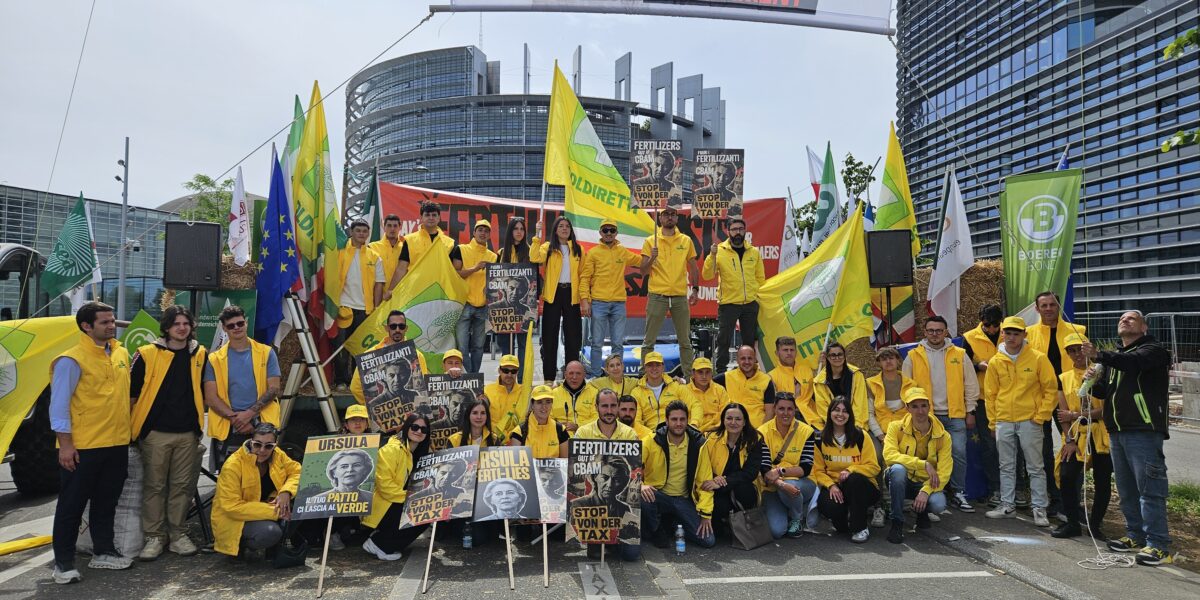
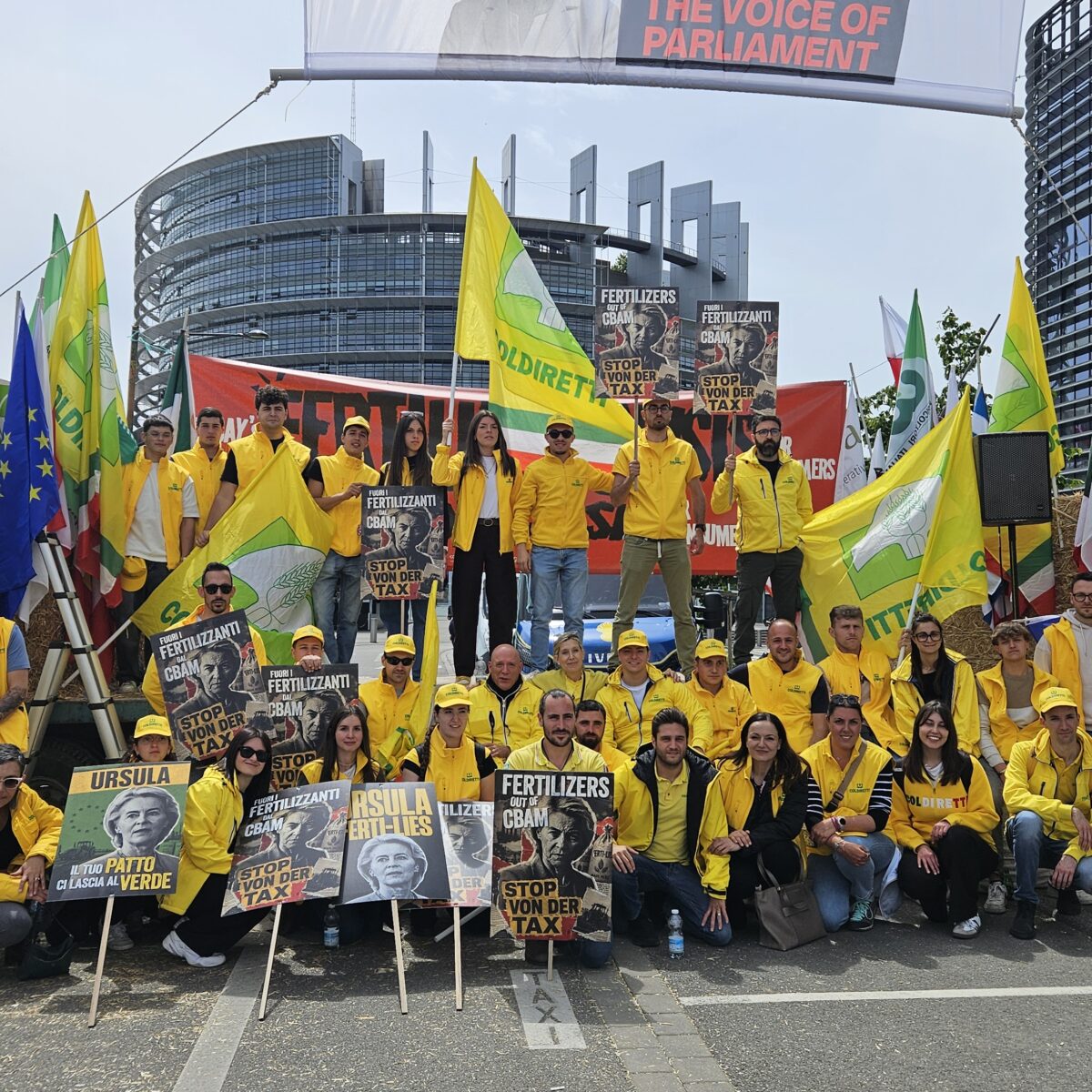
Two climate tools of the Green Deal that are negatively impacting production costs for farmers and food prices for consumers and which should be suspended immediately. This is Coldiretti’s complaint to the European Commission during the event that saw the young farmers of the main organization in Italy and Europe in Strasbourg.
In addition to the suspension of Cbam and Ets on fertilizers, Coldiretti calls for the creation of a truly extraordinary European fund to compensate for the expensive fertilizers without drawing on CAP resources, and to immediately liberalize and simplify the use of agricultural digestate. Due to the conflict in Iran and the closure of Hormuz, the prices of fertilizers such as urea have risen by 81% compared to a year ago, endangering crops, one with the increases in agricultural diesel. The result is increases of up to 250 euros per hectare which reduce farmers’ incomes beyond the warning level
The young people of Coldiretti, led by the national delegate Enrico Parisi and the president of Coldiretti Piemonte Cristina Brizzolari, displayed signs and slogans such as “Fertilizers out of CBAM”, “Stop Von Der Tax”, “Ursula your deal leaves us broke” and “Ursula ferti-lies”. Once again, the absence of a true European strategic vision for agriculture is weighing on the stability of the productive fabric. The European Commission continues to rigidly defend the same climate and industrial logic inherited from the Green Deal, shifting the burden of the situation onto the States and leaving farmers alone to face the price of the crisis and the transition. And the fertilizer plan prepared by the Commission is its clear representation. Although fertilizers account for up to 24% of intermediate inputs in companies with arable land, we continue to focus on industrial resilience, decarbonisation and “Made in EU” production, devoting little to agricultural income and the risk of reducing food production. No new resources are foreseen but, on the contrary, they will be drawn from those of the Common Agricultural Policy, effectively once again taking money away from farmers to deal with the crisis.
The only positive note is represented by the openness on the use of digestate, the organic fertilizer obtained from the recovery of livestock waste and agricultural biomass that Coldiretti has been pursuing for years at national and European level. In this regard, Enrico Parisi declared that: “Europe cannot continue to pass on to farmers the cost of an international crisis and bureaucratic choices that are putting food production at risk. We ask for the abolition of taxes on fertilizers, the allocation of an extraordinary fund for farmers and above all the simplification of the regulatory body for the use of digestate. Immediate measures are needed to support agricultural businesses and guarantee production continuity in a phase of strong pressure on company costs and incomes.”
Digestate represents a concrete alternative to chemical fertilizers – Coldiretti reiterates in conclusion – as well as a tool to reduce dependence on foreign countries and strengthen the circular economy. The draft Plan opens up to a simplification of some rules, a step forward, but it will be necessary to intervene to implement them, given the severity of the crisis and the level of costs that are affecting European agricultural businesses today. We now need an acceleration of the activation process to immediately give farmers a real possibility to use digestate, which doesn’t just remain on paper.