

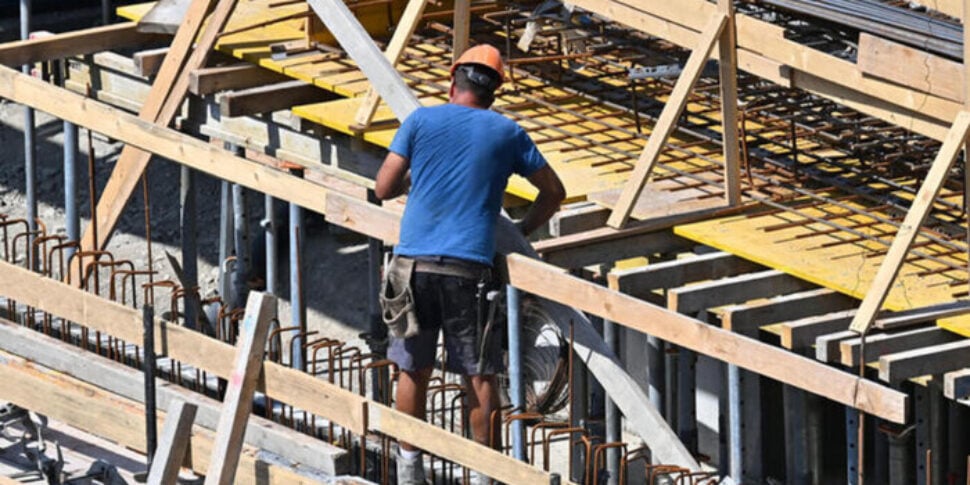
The scenario continues to deteriorate. Oil remains too expensive, because the truce in the Middle East has not reopened Hormuz. Confindustria notes this in the note on the flash economic situation in May.
As this shock continues, its impact on the economies is widening: inflation is also growing in Italy, family confidence falls even further and the decline extends to that of businesses, and the credit channel risks being blocked. Therefore, consumption and services are at risk of slowing down, while the only driver for industrial production remains, for now, the investments of the PNNR.
The closure of the Strait, with the transit of ships still at their lowest levels, “keeps the price of oil high” Brent: 105 dollars a barrel in May, just above April levels (103). It is confirmed that “this war, unlike the one in Ukraine, has less impact on the price of gas”, which in May (46 euros/mwh) remains below the March peak (53), but at much higher values than at the end of 2025 (28 euros).
Pnrr spending data
Pnrr spending continues to consolidate. The financial progress of the Plan is “high”: the activated procedures concern 191 billion (98% of the 194.4 budget); the financial commitments reach 174.5 billion (90%), to which 12 billion should reasonably be added, out of 23.8 total, belonging to measures included in financial instruments which to date have not yet been committed. This was noted by Confindustria in the note on the May flash economic situation.
The spending already carried out is slightly lower, equal to 113.5 billion in February 2026 (58%), of which approximately 9 billion since the beginning of the year; but monitoring suffers from persistent delays and misalignments in uploads to the REGIS platform. The latest CSC estimates forecast spending for the whole of 2026 at 35 billion: therefore, PNRR investments continue to be the main driver of GDP growth. The unused resources, or those deriving from spending savings, will first be set aside in the State Treasury and then, after 30 June, they can be reallocated to finance new interventions or to refinance and reprogram existing measures, according to priorities already defined. 2026: the most delicate phase of implementation of the PNRR.
This year focuses on the administrative closure of the Plan, the completion of the works still in progress and the final reporting to the European Commission. After the revisions that took place in 2025 and the first months of 2026, the Plan has now entered its final phase, characterized by very limited time margins and a strong increase in implementation pressure on administrations and implementing entities. In fact, the 159 goals and objectives linked to the tenth installment (28.4 billion euros) must be completed by 31 August, while 30 September is the deadline for formally submitting payment requests to the Commission. On a formal level, Italy is among the EU countries with the best state of progress. As of 29 April 2026, 416 goals and objectives out of 575 have been achieved, over 72% of the expected total, compared to an average of 50% for the other beneficiary countries of the EU program (excluding the smallest). With the payment of the ninth instalment, now in the final approval phase, by May, the resources collected would rise to 166 billion euros, over 85% of the Plan’s overall allocation (compared to 53% in other European countries).
However, the final phase of implementation appears more complex than the previous ones, as it mainly concerns infrastructure investments and interventions characterized by longer implementation times and with greater operational criticalities. The next few months “are decisive”. The data available on the Italia Domani portal show that “over half of the projects, in numerical terms, are formally concluded”; but the main share of the financial resources of the Plan remains associated with interventions still in progress. In fact, approximately 70% of the resources committed concern projects not yet completed, indicating that the success of the final phase of the Plan will depend above all on the ability to transform the financial commitments into actual achievements, within the European deadlines.
The EU Commission has strengthened ongoing monitoring. In recent months, requests for preventive verification of the progress of individual goals and objectives have increased, with continuous dialogue between EU institutions and national administrations. The objective is to avoid an excessive accumulation of checks in the final phase of 2026 and accompany the closure of the most complex measures. The “substantial” evaluation of the Plan remains open. The first positive evidence of a reduction in the implementation times of projects and investments is beginning to emerge, thanks to the impact of the PNRR.
The mechanism based on goals and objectives has, in fact, favored implementation capacity. However, the tools for evaluating actual outcomes and structural impacts on GDP, productivity, quality of public services, territorial and social gaps remain weak. The final phase of the Plan, therefore, will also be decisive in verifying the ability of the measures implemented to produce lasting results in terms of economic growth, administrative efficiency and reduction of gaps in the country.