There are many ways to “memory”, meaning with this term the desire to remember an event for what it represents, for the value it conveys, so that it does not lose its meaning.
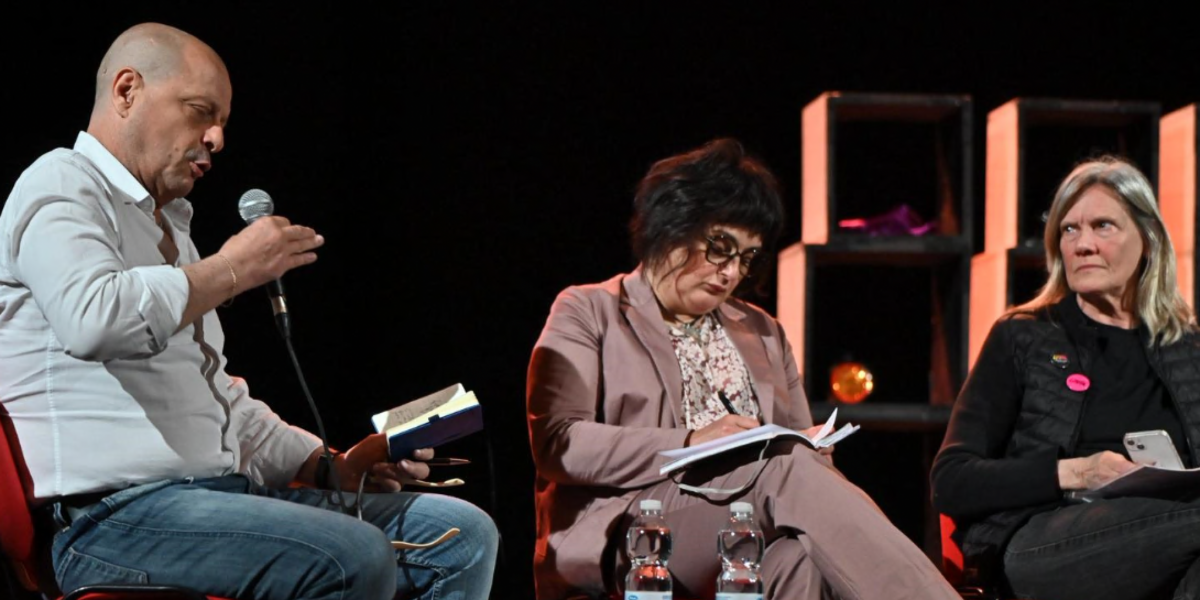
A few days after the anniversary of the Capaci massacre, in which Giovanni Falcone, Francesca Morvillo and the escort agents Antonio Montinaro, Rocco Dicillo and Vito Schifani lost their lives, the Teatro Rossosimona company, together with the Department of Political and Social Sciences of the University of Calabria, at the Presidio Libera of Cosenza urban area, wanted to organize a moment of reflection dedicated to the themes of legality and the fight against mafias which took place in the spaces of the Piccolo Unical Theater in the presence of Giap Parini, director of Dispes, the deputy mayor of Rende Fabio Liparoti, Donatella Loprieno, professor of Public Law Institutions, and the Gazzetta journalist Arcangelo Badolati.
The inspiration was given by the performance of the show “In the wrong place. Stories of children who are victims of the mafia”, taken from the book of the same name by Bruno Palermo, intensely interpreted by the actor Francesco Pupa, who also took care of the dramaturgical adaptation and direction.
A story that intertwines historical events and popular songs in a powerful narrative, in which tragic events – such as that of the killing of Dodò Gabriele in Crotone – become collective, changing the history of Italy.
A strong point of the company founded and directed by Lindo Nudo, who, at the opening of the meeting, underlined how Rossosimona has always considered civil theater an important part of its artistic path.
But “remembering” is not at all simple, as Donatella Loprieno explained in the debate that followed the show: “There is the risk that it will become bureaucratized – she stated – and that the tired repetition of commemorative days will be emptied of meaning, or that even some events will become divisive rather than being the heritage of a community”. And so the moments in which we think about the “duty of remembering” are welcome, in which, as shown by Giap Parini, “the theater allows us to keep our gaze alive, awakens our sensitivity and, in doing so, questions our responsibility in the face of those facts”.
There are many names of the innocent victims of the mafias that Arcangelo Badolati mentioned in his speech, starting with the magistrates Falcone and Borsellino, contextualizing them in the historical period in which the criminal events occurred, without neglecting shortcomings and hypocrisies that concerned them.
Fabio Liparoti instead focused on another magistrate, who told a little-known story about the crime of Rosario Livatino, not limiting himself to the institutional role to embrace the spirit of the initiative. The deputy mayor explained the civil heroism shown by Federico Nava who found himself by chance witnessing the murder of the magistrate. «It was he who called the police and testified before Giovanni Falcone. It was he who testified in the trials and this courage forced him to live under protection forever and to change his place of residence for security reasons. A virtuous example of a citizen that we must remember.”