

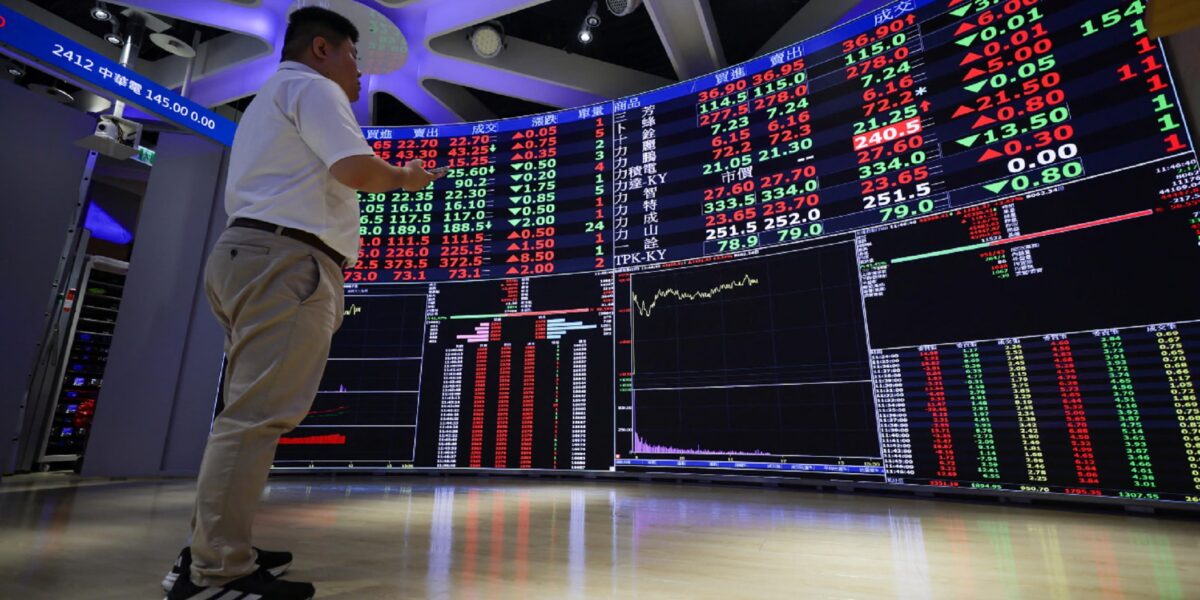
Markets are celebrating the preliminary peace agreement between the US and Iran, which provides for the reopening of the Strait of Hormuz on Friday. The stock markets rise – with Wall Street at new records – and government bonds rise, while oil and gas collapse. Fears of a slowdown in world economies and new energy pressures on inflation are thus receding, leaving room for bets that the Fed may not have to raise rates at the end of the year. The dollar, sought as a safe haven during the three and a half months of war in the Middle East, is also weakening again.
Oil and gas in sharp decline
The imminent green light for ships to pass through Hormuz has caused crude oil prices to drop by more than 5%. The WTI fell to 80 dollars a barrel, the lowest since March, and Brent towards 82 dollars: well below the 125 dollars reached in April, but still far from the 60 dollars pre-war. Gas lost 9.5%, to 42 euros in Amsterdam, although it remained 30% above the prices before the attack on Tehran. However, caution prevails: analysts estimate that it will take several months for seaborne trade to return to normal, both for LNG and crude oil. And we will have to wait a little longer before we see prices falling at petrol pumps.
The stock exchanges and the sectors
The stock markets, which anticipate trends, are pushing airline, cruise and tourism stocks higher, destined to benefit from the drop in fuel prices. The sales instead hit oil companies – such as Eni on Piazza Affari – and utilities, the latter due to the prospect of lower electricity costs. Milan touched its highs with a gain of 0.66%, surpassed by Frankfurt (+1%) but not by Paris (+0.4%) nor by London (-0.39%). Wall Street is more toned, with the Nasdaq closing the session up by more than 3%, thanks to the surge of SpaceX (+20%). The greater risk appetite also supports Bitcoin, towards $67,000.
Dollar, rates and spreads
Ahead of the Fed meeting on Wednesday, which is expected to leave rates unchanged, attention shifts to moves after the summer. Bets on an ECB hike in September remain alive, while the opposite orientation prevails for the Fed. The yields of Treasuries and European government bonds are thus reduced, with the BTP-Bund spread decreasing.