

Add the Gazzetta del Sud as a source
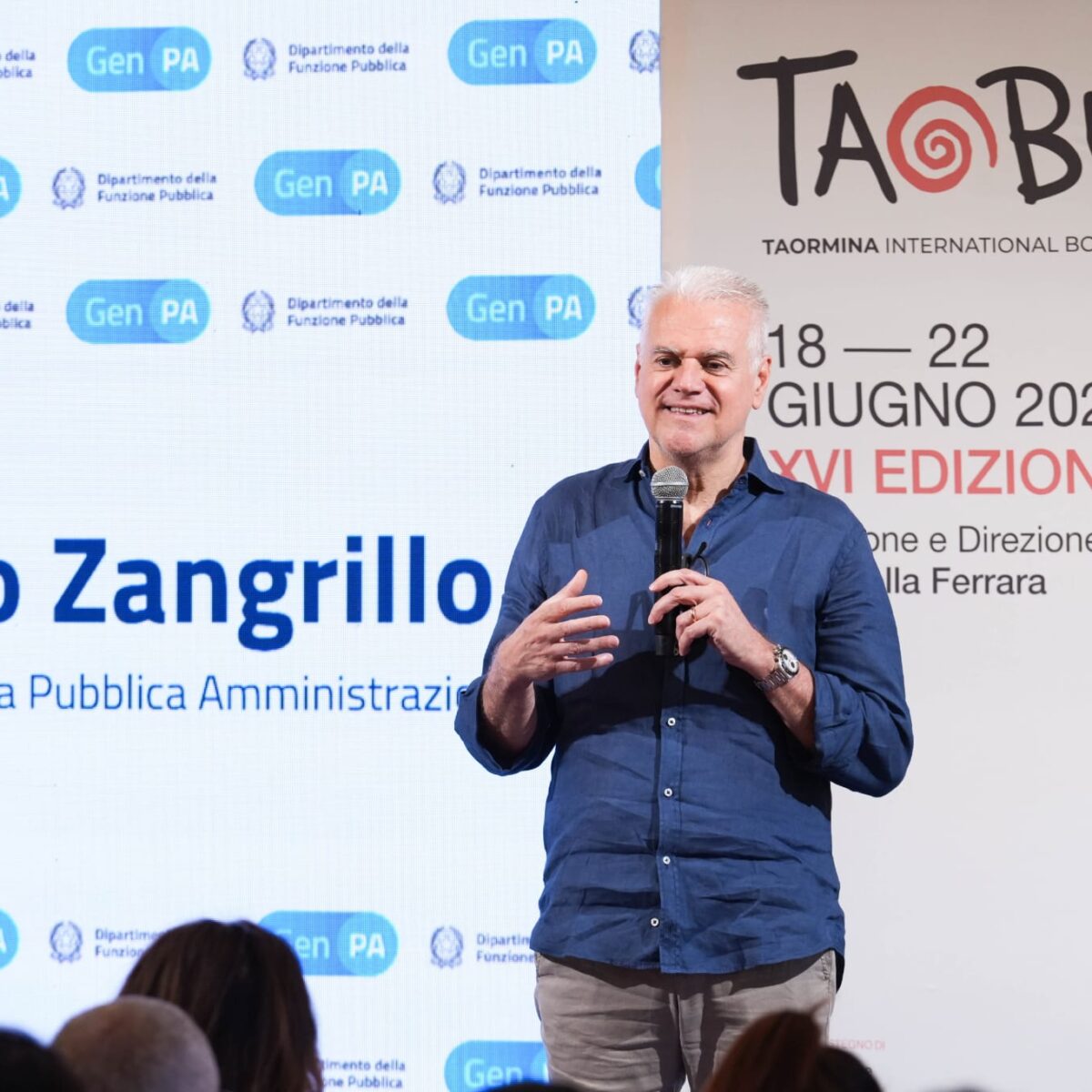
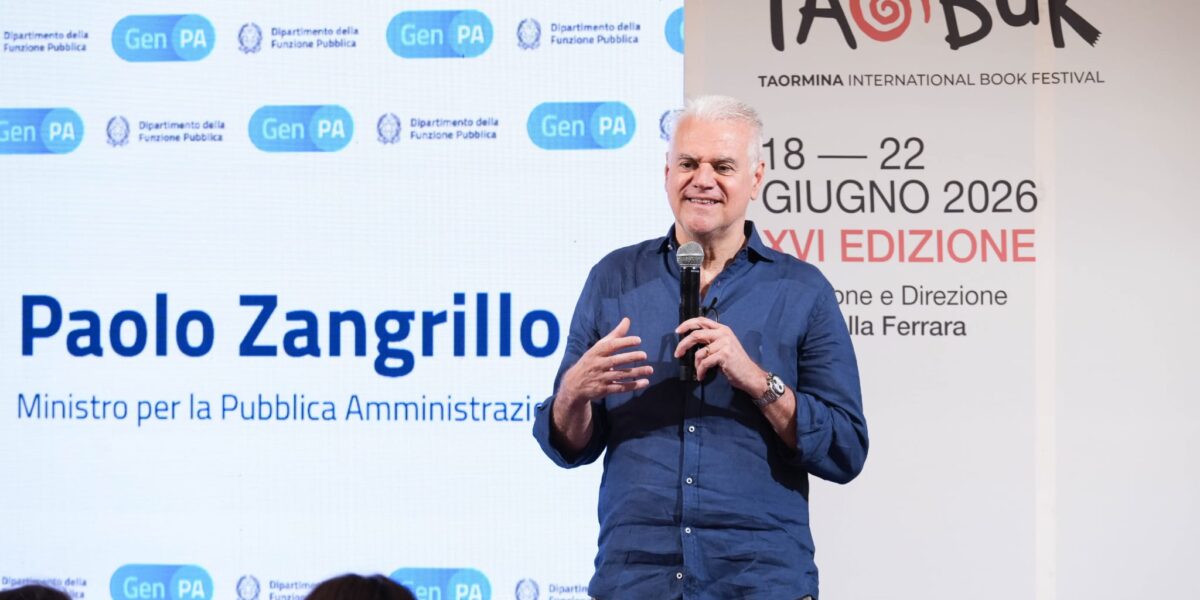
The Taobuk 2026 festival, with its claim “Trust”, offered an important framework for talking about trust in public administration, to bring the general public closer to an approach of participation, values and responsibility, with respect to topics often perceived as distant or in any case in a negative sense, between inefficiencies and consequent distrust.
This was done by the Minister for Public Administration Paolo Zangrillo, who after having been there last year returned to the festival in two moments, one more formal, in dialogue with the journalist Elvira Terranova in Piazza IX Aprile to illustrate the new DDL Merit and take stock of the results achieved and new objectives.
Another moment was entirely dedicated to young people and here the PA tried to change its voice: less office vocabulary, more direct and effective dialogue with those who in a few years will have to choose what to do with their future, and could find it precisely in the great world of state work infrastructures. In front of students from the schools and universities of Messina, the minister spoke about GenPA, the itinerant project of the Department of Public Function dedicated to young people and public work opportunities. Not a traditional conference, but a meeting built like a game and conducted by the journalist Natalia La Rosa, head of the GDS Academy of Gazzetta del Sud, with interactive questions that made it possible to discover often overlooked information about the public system in a fun way. With a declared objective from the beginning: to better understand public administration in order to be able to trust it more. In fact, the value of knowledge and the reliability of the source was reiterated right from the start, to be sure of having correct information and therefore being able to truly “trust”.
Girls and boys: citizens of today
The starting point was simple: girls and boys are not citizens of tomorrow, but citizens of today. They use public services, attend school, communicate with institutions that they often perceive as distant. Precisely for this reason, the meeting became “an exercise in citizenship”, a way to approach a system that does not only coincide with counters, forms and bureaucracy, but with services, rights, security, education, healthcare, innovation. Zangrillo immediately chose a direct tone. «I’m happy because I see so many young people. I’m used to being surrounded by boomers», he joked, before recalling that the public administration is «the largest Italian employer, with 3.4 million people. Not a gray universe but an organization made up of teachers, doctors, policemen, magistrates, technicians, digital experts, civil protection professionals, communicators, even Olympic athletes.”
The professions you don’t expect
The initial game worked precisely on this reversal of imagery. The students were shown some answers on PA job profiles, even little known ones – cyber security expert, registry official, civil protection resource, web and social channel expert, risk managerOlympic athlete – suggesting you guess the correct question. A light-hearted way to show the variety of public professions and the link between institutions and daily trust: protecting personal data, releasing documents, coordinating emergencies, communicating clearly, predicting risks, or being sporting talents. The minister picked up the thread of the game to broaden the discussion. “Public administration can be seen by you as a real job opportunity,” he said, also citing sports champions who belong to the police force, as an example of less obvious public paths.
Listen to the “grown-ups” but choose with your own head
But the heart of his speech was aimed at personal choices. He asked young people to listen to parents, teachers and people close to them, without however delegating their future to others. “Your life is yours, it is only yours,” he underlined. And again: “Do not transfer your life choices to someone else.” In Zangrillo’s reasoning, work should not become a sentence to be endured for forty years, but the space in which talents, passions and abilities can be recognized and put to the test. This is also why he invited students not to experience their professional future as a rigid line. Careers change, experiences transform, paths can open unexpected paths. It also applies to the public: no longer the immobile myth of the “permanent job”, evoked with irony through “Quo vago?”, the film by Checco Zalone, but a place in which to compete, grow, and stay as long as that experience continues to make sense.
Try, without being afraid of making mistakes: your career is not “linear”
The more political part of the speech concerned the contribution of young people to the modernization of the State. Zangrillo rejected the idea that those who join an organization must limit themselves to the silent apprenticeship for years: «Digital natives can immediately bring ideas, skills and courage. In a public administration with an average age of 48 years, committed to rethinking processes, services and relationships with citizens and businesses in a digital key, young people do not represent a future reserve, but an immediate resource”. Between musical quizzes on trust, real or invented bands and complex concepts addressed with simplicity, the dialogue thus tried to speak the language of the audience without emptying the message. In the end, the delivery was concrete: following the institutional channels, obtaining information from direct and reliable sources on the competitions, trying to gain experience without ever being afraid of make mistakes. In the next few years, a million positions will become available in the public administration, and it is worth looking for your opportunity.