

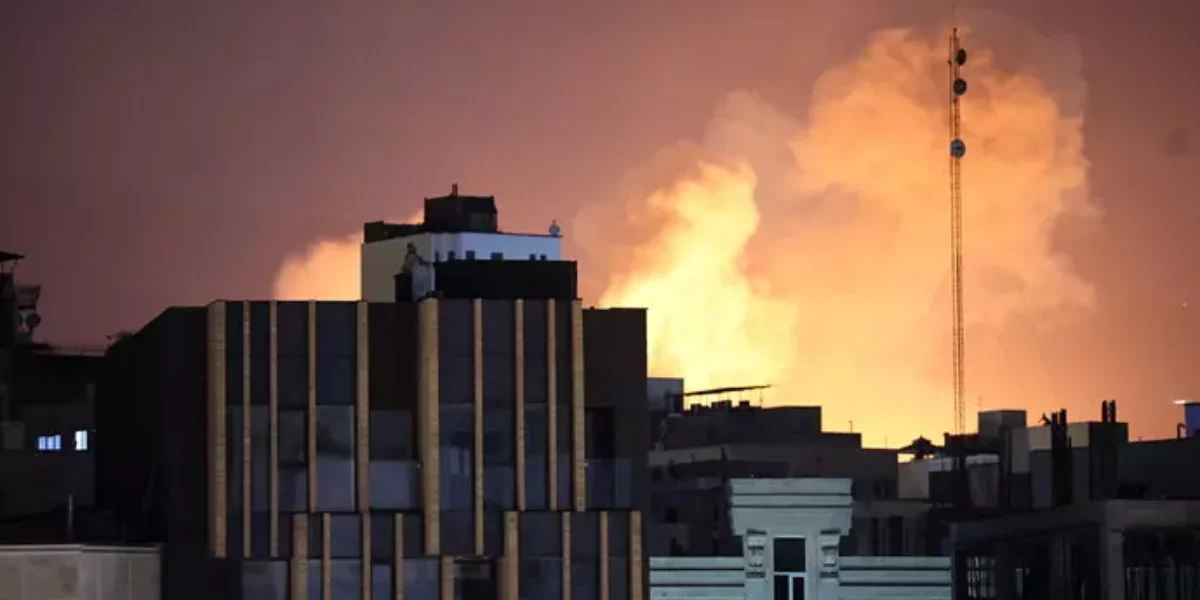
Explosions were heard in Tehran in the early hours of today and the Iranian capital’s air defense system went into action, in a new day of escalation between the United States and Iran around the Strait of Hormuz.
The versions of the Iranian agencies
According to the Tasnim news agency, the detonations affected the areas of Parchin and Pakdasht and were also felt to the west and east of the capital. The Fars agency instead attributed the explosions to the anti-aircraft fire coming into operation against some projectiles in the Pakdasht area. No details on any damage or casualties have been provided at this time.
Centcom confirms new wave of raids
Shortly thereafter, the US Armed Forces Central Command (Centcom) confirmed a new wave of attacks on Among the locations hit with precision munitions was Bandar Abbas.
Tehran’s response
The Iranian response was not long in coming. State television reported drone strikes against the US base in Al-Azraq, Jordan, where a radar, communications systems and fuel depots were reportedly hit; the Jordanian army announced that it had intercepted eight missiles launched by Iran, without casualties or damage. The Iranian military also claimed attacks against installations used by the Americans in Kuwait and Bahrain. None of the claims have so far found independent confirmation.
Tehran’s threat to the Gulf countries
The warning came after US President Donald Trump threatened to extend attacks on Iran’s strategic infrastructure, including power plants and bridges, if Tehran did not return to the negotiating table. Tehran has threatened to target Gulf countries’ infrastructure if the United States were to attack Iran’s. The spokesman for Iran’s military headquarters said that if the United States follows through on threats to strike bridges and power plants in Iran, “all infrastructure in the region” will be “destroyed under the steel hammer” of the Iranian armed forces. The escalation, which has flared up again for about a week, shows no signs of stopping: on Monday, Israeli Prime Minister Benjamin Netanyahu will be received at the White House.