

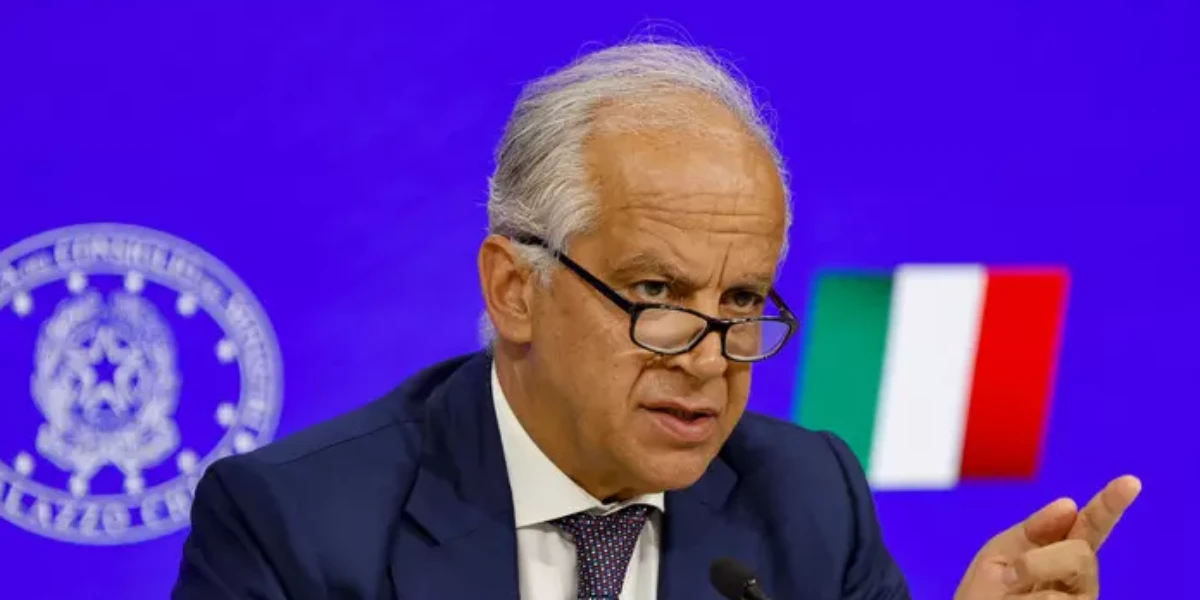
He defines Spain as a “sister” nation, hoping that the maritime and air border controls implemented after the Ceuta emergency can be revoked “as soon as possible” and, with data in hand, he dismisses the opposition’s controversies linked to the so-called “Dublinarians” as “sterile”. In an interview with ANSA, the Minister of the Interior Matteo Piantedosi ranges from the topic of migrants to issues of internal politics. Minister, the stop to the Schengen agreement with Spain will expire on September 1st, do you intend to extend it? «It is everyone’s hope, especially ours, that the reasons behind the provision will disappear as soon as possible. Spain is a sister nation, a friendly country that faces challenges not dissimilar to those that Italy also has to grapple with. On this front we will never fail to provide all our possible support and full collaboration.” These days the “Dublinanti” issue is at the forefront and how their return to Italy is a negative consequence of the New Asylum and Migration Pact…
«Someone has deliberately caused confusion or doesn’t know what they’re talking about. The new Pact maintains the “dublinants” mechanism – in force for decades – but introduces significant and positive innovations in terms of combating irregular immigration. All member states will finally have to shoulder the burden of migratory pressure, which is no longer placed only on the countries of first entry.” After Germany, Switzerland and Austria, Finland, Sweden and today the Netherlands have also made it known that they intend to send them back to Italy. What numbers are we talking about? «We are talking about very low numbers. Some members of our opposition have rejoiced at the hypothetical prospect that Italy will in the future be swamped by the sending of many ‘Dublinants’. But I’ll give you a number: out of around 50 requests that have been received so far, only three people actually showed up in Italy. Three people in two months: that is to say, if this continues, an average of twenty people a year.” The opposition speaks of a ‘boomerang’ linked to the Schengen ban, what is your response? «The reintroduction of controls at the border with Spain has no bearing on the possible pre-announced returns of the ‘Dublinants’ to Italy. They are completely separate issues. You can argue the opposite only to exploit and do a bit of propaganda.”
Italy had canceled the transfers due to its circular on which the European Court had made some findings. Don’t you think that the resumption of transfers is a response from EU countries to that provision? «My circular was based on the observation of a delicate phase for Italy’s reception system, which was experiencing an objective crisis. Today, thanks to what we have done, that is no longer the case.” Are you in contact with the European chancelleries? «Contacts with my EU colleagues are constant. We work in harmony and always in a climate of maximum collaboration. Soon we will meet again with my German counterpart.” In recent weeks he has spoken of over 2200 migrants recovered by German NGOs from January to 12 June, proposing the principle of ‘compensation’. Will you continue on this path? «Rescue at sea is an exclusive prerogative of the States. Precisely with our German colleague we shared an assessment that tends to consider the activity of NGOs in the Mediterranean as a pull factor towards irregular migration”. Italy is not the only landing country. Will other states such as Spain and Greece also find themselves in the same situation? «With the Mediterranean Member States we share the complexity of being countries of first entry across the maritime border. In September I will host a meeting in Italy of the 5 countries most exposed in the MED5 format – Cyprus, Greece, Italy, Malta and Spain – precisely to take stock of the situation”.
At the last summit of European Interior Ministers, EU hubs in third countries were relaunched. Have you identified any possible countries? «Italy has dictated the line on this matter, starting from the signing of the agreement with Albania. For the rest, we are available to share the development of these initiatives which are now seen by most countries as the solutions that will characterize the future of combating irregular immigration.” In GB there is controversy over the Burnham Labor government’s handbook for asylum seekers. Do you think this is the right approach? «Beyond the controversies over the communication tool itself and its contents, there is a theme of mutual respect that must exist between those who arrive and those who welcome». The situation in the League is effervescent, do you see Salvini moving closer to the Interior Ministry? «I am very sorry for the attacks that Matteo Salvini, a person and political leader to whom I am bound by a feeling of friendship and esteem, is unjustly subjected to. When he became secretary of the League he saved a party that was in crisis, guaranteeing it a centrality on the political and government level. It is unfortunate that many, who have benefited from his leadership, seem to have forgotten him without proposing particularly innovative political formulas. That said, Matteo Salvini, as he has already demonstrated, will be an excellent Interior Minister when this happens.”