

Add the Gazzetta del Sud as a source
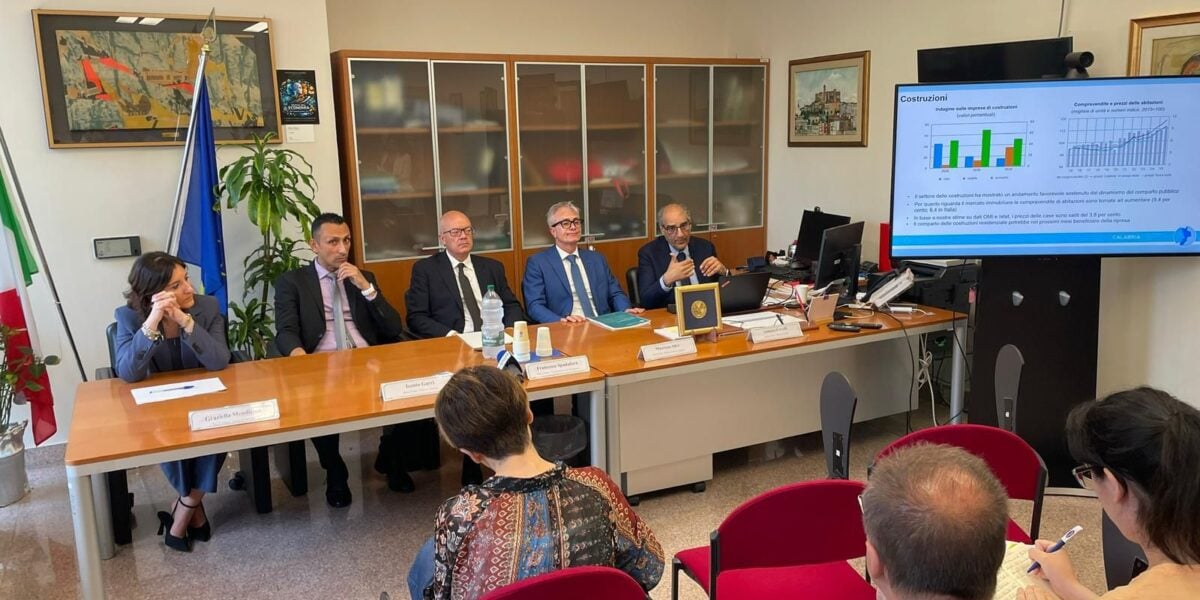
In 2025, Calabria’s GDP grew by 1.1%, a value higher than that observed in the South and in the country. This is what is revealed by the Bank of Italy’s annual report on the regional economy presented in the Catanzaro branch of the institute. However, warns Bank of Italy, “expectations for 2026 are affected by the effects deriving from the conflict in the Middle East, which has already led to a deterioration in the confidence of families and businesses”. Increase in exports which, with a growth of 10.8%, against -1.2% in the South and +3.3% in Italy, exceeded one billion euros. Since 2021, the incidence of exports on GDP – reports Bank of Italy – has risen from 1.6% to 2.5%, however remaining “still very limited” in comparison with the country, where it stands at 29%, while it is 13% in the South. The port of Gioia Tauro marks a new record with container handling, in 2025, of approximately 4.5 million TEUs, an increase of 14% on the previous year. This is – highlights the report – about a third of the total container transport in Italy. In industry, sales increased “moderately”, while investment activity “remained at the levels of the previous year”, still “favored by the extensive use of tax incentives, including those linked to the single SEZ”. The structural issues remain, such as a fabric polarized on micro and small businesses and one of the lowest patenting capacities in the country.
Svimez: the South is growing more than the North for the fourth consecutive year
For the fourth consecutive year the South grew more than the Italian average. The final data for 2025 show a GDP in the southern regions increased by 0.7%, compared to 0.5% in the Centre-North, with a growth rate, however, lower than in 2024 when it reached 1%. This is what Svimez announced, underlining that the greatest growth in the South for 4 consecutive years had not been recorded “since the post-war economic boom”.
However, the association still notes that Italy’s growth gap compared to the European Union is worrying. If in 2025 the national GDP grew by half a percentage point, even below the 0.8% of 2024, it remains stably lower than the EU-27 average, +1.5%. Spain continues its significant expansion +2.8%, France stands at 0.8%, Germany, however, after the recession of the previous two years, is stuck at a modest 0.2%.
In this context, the performance of individual regions appears highly variable. In the South, the figure for Abruzzo stands out, with +1.9% thanks to the driving force of industry and, in particular, construction. Campania also recorded a good result with a growth of 0.9%, Calabria did better than the national average with 0.8%. Many regions in the North are instead suffering from the weakness of exports, resulting from the geopolitical crisis, and this appears very evident in Lombardy and Veneto.
In 2025, gross fixed investments, Svimez notes, recorded a +3.5%, reflecting a trend consolidated since 2021, when the Superbonus first (private residential construction), and the Pnrr later (private non-residential construction and public works), gave a decisive boost to growth. The dynamics of spending on public works clearly highlights the impact of the investment cycle activated by the Pnrr from 2023 onwards. In the three-year period 2022-25, investments in public works almost doubled in both areas of the country: +88.3% in the South and +87.8% in the Centre-North. Furthermore, there is a certain variability between the individual Regions but in any case in a context of growth which for all, with the exception of Trentino Alto-Adige (Region with special statute) and Abruzzo (where the private component has “occurred”), was greater than 60%. The Regions which have recorded the most significant increases are Friuli Venezia Giulia, Valle d’Aosta, Lazio, Tuscany, Puglia and Calabria.