


Add the Gazzetta del Sud as a source
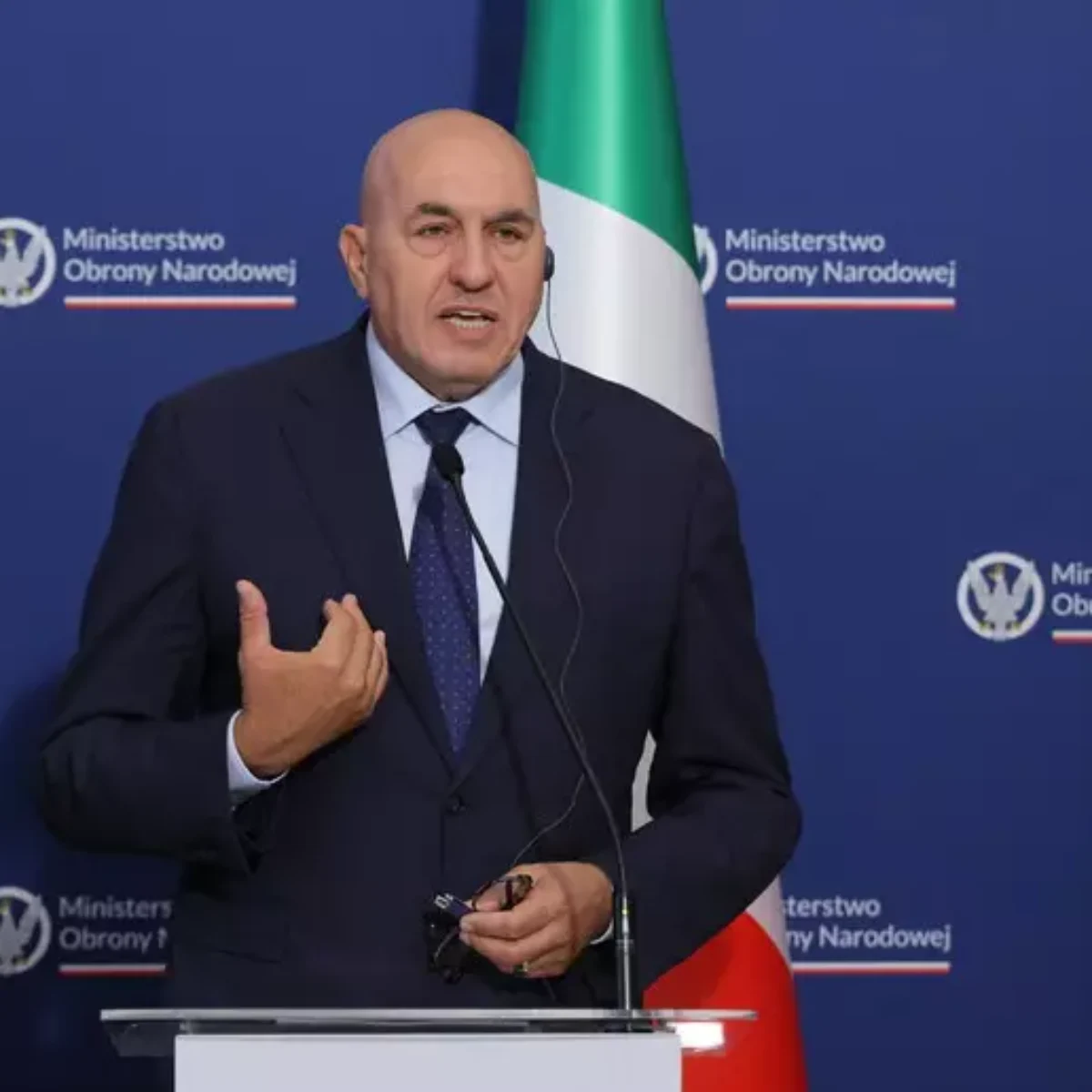
The ships cannot wait for the European bureaucracy: Italy is ready to decide autonomously to escort our country’s merchant ships into the Strait of Bab el-Mandeb in the Red Sea, once again in the sights of the Houthis of Yemen. In a political move that aims to speed up the restoration of navigation in that canal, Defense Minister Guido Crosetto announces that he has “decided, with the Chief of Staff, not to wait for Aspides to establish whether ships can pass or not”.
Then the announcement by the head of Defense from the forum on Sea Resources in La Spezia: “We will probably take action in such a way that Italian ships can start to pass without waiting for the European bureaucracy to add to ours because delaying the times in cases like that means delaying the economy, means worsening problems.” An acceleration which could be interpreted as a rebuke to the representatives of the Union in the Commission, if not a breach with the EU mission in which Italy, as well as the Greece is the only one to have used its own frigate. Crosetto therefore gave instructions to the defense leaders so that “in full coordination, they carry out a careful assessment of the operational and security situation in the Red Sea and prepare a plan to guarantee free transit through the Strait”.
The Bergamini frigate is currently stopped in the port of Djibouti but has in front of it on the horizon at least a dozen merchant ships with an Italian flag or owner who ask to be allowed to pass escorted: since the beginning of the summer there are still over 1,200 ships per month crossing the Strait of Bab el Mandeb, with an increase of 28% in ships and 43% in tonnage compared to the summer of 2025 but with traffic volumes of 39% below pre-crisis levels. In recent days there have been an average of 27 ships per day. The times for the departure of the Italian missile ship have not yet been decided but the announced operation would be considered technically possible: the frigate is Italian and, by lowering the European flag of the Aspides mission, it would have the possibility of removing itself, but only temporarily, from any directive of the operation for the time of escorting the ships of our country that request it. In particular, the government’s decision to possibly deploy another missile ship to Bebel el-Mandeb (it would take about two weeks to reach the strait) would represent more than a necessary step, a political gesture, given that the new mission decree would already allow the shipment.
The minister, however, asked to «verify whether the current legal framework allows, if necessary, to recall under national command the capabilities of the Italian Armed Forces already present in the area and currently employed in other operations, or whether a new and specific authorization from Parliament is necessary, also by virtue of the decisions already adopted by some allied and partner countries». Nothing has therefore been decided yet precisely because the cards on the table could change shortly: the Houthis would have guaranteed the US that they will only target Saudi naval assets and for this reason it cannot be ruled out that the High Representative for Foreign Affairs and Security Policy, Kaja Kallas, may provide new technical-political directives even if the final decision will then be up to the current commander of the mission, the Greek Admiral Gryparis. Meanwhile, the Bergamini frigate remains stationary in Djibouti, where there are also minehunters in port, waiting for the winds of war on the Hormuz side to calm down.
In the Horn of Africa there is also a contingent of around one hundred of our soldiers on the mainland. «Djibouti is now not affected by what the Houthis are doing, I am interested in restoring the traffic of Italian ships through the Strait of Bab el-Mandeb», reiterates Crosetto, who recalls: «when a sea route is interrupted, goods arrive late, costs increase and prices for families and businesses increase. And every economic crisis especially affects the most fragile people, putting the social cohesion and stability of the country at risk. Defending freedom of navigation also means defending the cables through which data, energy connections and essential infrastructures pass.”