

Google Discover

Preferred Sources
There are 36 parties participating in the electoral race for the renewal of the Knesset, the Israeli Parliament, but only fifteen will exceed the threshold of 3.25%.
Here’s who the main candidates are
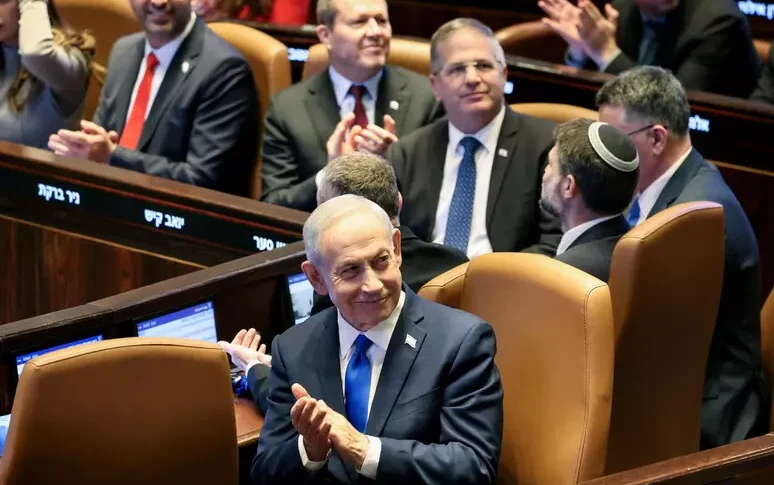
Benjamin Netanyahu: the country’s longest-serving prime minister, leader of the Likud, 77 years old. In the polls it stands at around 20 seats, losing 12 compared to its strength in the current Knesset. At the center of his campaign are security issues. In addition to the failure of October 7 and the controversies over the management of three years of war, Netanyahu is also being weighed down by the trials in which he is accused of fraud, breach of trust and corruption.
Gadi Eisenkot: former IDF Chief of Staff, 66 years old, leader of Yashar! (‘Dritò, ‘Onestò). He made his political debut in 2022. In the polls he narrowly surpasses the Likud with 22 seats. He claims to rule out an alliance with Arab and ultra-Orthodox parties, as well as with Netanyahu.
Naftali Bennett: former prime minister in 2021, 54 years old, is the leader of Beyachad (‘Together), which also unites the party of Yair Lapid, current opposition leader. Bennett, who was once leader of the Israeli settlement umbrella organization, was long seen as the poll favorite but has now dropped to 15 seats.
Avigdor Lieberman: 68 years old, leader of the right-wing party Israel Beitenu (‘Israel our home), born in Moldova and a leading exponent of the Israeli Russian-speaking community. A former longtime ally of Netanyahu, he is now his main antagonist. In the polls he has around 8 seats.
Yair Golan: 64 years old, former deputy chief of staff, partly under Eisenkot, leader of the left-wing party The Democrats. Among the opposition parties, it is the only one that does not rule out alliances with Arab parties. But he too does not see the prospect of a Palestinian state in the short term.
Yousef Jabareen: jurist, 54 years old, leads the ‘Unity List, a coalition of three Arab parties, Balad, Tàal and Hadash. The union between the three parties, which individually risked leaving Balad below the threshold, leads to a consensus of around 9 seats according to the polls. I am for the end of the Israeli occupation in the West Bank, the Palestinian state, against the definition of Israel as a Jewish state.
Mansour Abbas: 52 years old, leader of Ràam, the political expression of the Islamic Movement of Southern Israel. It recognizes the Jewish identity of the State of Israel as a “de facto reality”. It is estimated that around 5 seats could prove decisive for external support for a minority government of Eisenkot.
Itamar Ben Gvir: current Minister of National Security, 50 years old, leader of Otzmà Yehudit (‘Jewish Power), promoter of the law for the death penalty for terrorists and the tightening of prison measures, is the exponent of the sovereignist extreme right. In the polls it is given 8 seats.
Bezalel Smotrich: current Minister of Finance, 46 years old, leader of Religious Zionism, a far-right religious party, the leading exponent of the most extremist settlers. Smotrich is the main ideologue and proponent of the policy of expanding Israeli settlements in the West Bank. In the alliance with ‘Zehut Yehudit’ (‘Jewish Identity’), it is taken over around 6 seats.
Aryeh Deri: 67 years old, leader of Shas, the ultra-Orthodox party of Sephardic origin, an iron ally of Netanyahu. In the polls he obtained 8 seats.
Yaakov Asher: 61 years old, head of Yahadut Hatorà, an alliance between two Ashkenazi ultra-Orthodox parties. It maintains its political strength of 7 seats in the polls. There are two parties close to the threshold (3.25%) and which, with 4 seats each, could tip the balance in the event of a stalemate after the polls.
Amcha Israel (‘The People of Israel’), led by hawkish former general Ofer Winter, 55, who has expressed support for Netanyahu as prime minister. Milumnikim-economic party: it is an alliance between three small parties that express the demands of the reservists and economic demands against the high cost of living. It is the only party that does not rule out an alliance with both Eisenkot and Netanyahu.