

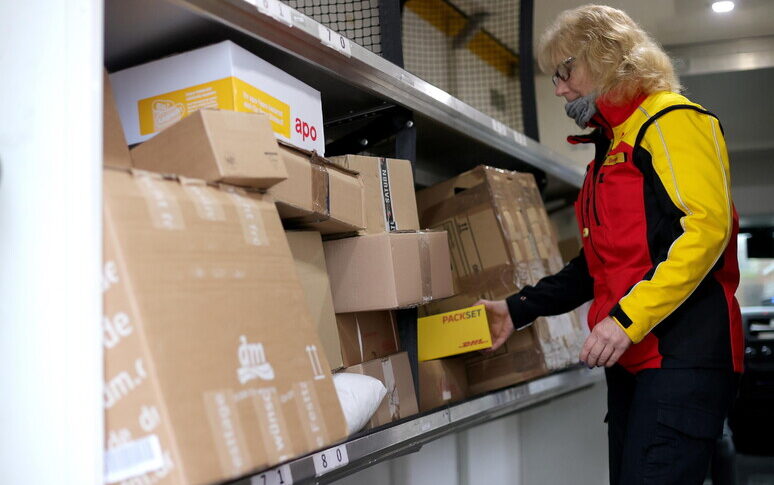
The duties are arriving to stem the flood of mini-parcels entering the EU, especially with orders on Chinese online platforms such as Shein and Temu. While awaiting the largest revolution in European customs since 2028, the Economy Ministers of the 27 have agreed at Ecofin to trigger a temporary fixed customs duty of 3 euros on parcels under 150 euros in value from next July, the current exemption which will be completely archived in two years when the European ‘Data Hub’ will be in place to sort and manage the mind-boggling figures of micro packages.
To get an idea of the impact, in 2024 it is estimated that 4.6 billion packages worth less than 150 euros entered the EU: if everyone paid the transitional duty, over 10 billion would enter the EU budget (75% of the proceeds).
The idea of bringing forward the reform as soon as possible was strongly supported by Italy and the Minister of Economy Giancarlo Giorgetti, to stem the competition from Chinese online platforms. The minister, among other things, instead spoke at the Ecofin Council to express caution on the reform presented a few days ago by the European Commission, which provides for the attribution to the European Financial Instruments Authority (Esma) of direct supervisory tasks on the main systemically important market infrastructures, including securities depository companies, and on providers of crypto-asset services.
As regards mini-parcels, the levy will be triggered on goods sold by non-EU operators registered with the Import One-Stop Shop (Ioss) system to collect and pay VAT to the EU: approximately 93% of e-commerce flows entering the Union pass through this channel. The idea is that the 3 euros are charged for each item, with some technicalities in the counts: a package with several t-shirts will pay a single duty of 3 euros, while a package with a t-shirt and a pair of shoes will pay two duties for 6 euros.
It must be clarified that the 3 euros on Chinese mini-parcels decided at Ecofin are duties: the proceeds go to the EU budget (75%, in fact), while the country of entry that collects them retains the remaining part for management (25%). Italy and other countries are introducing with budget maneuvers in approval of measures to collect 2 euros for small non-EU parcels which will directly generate revenue for the Italian budget, justified as ‘management costs’. From what we learn in Brussels, it will then be the implementations decided by the individual states that will establish how the two taxes can coexist or whether the 3 euros from the EU will ultimately also incorporate the 2 euros provided for in the amendment to the Italian budget.
The customs reform, within which the new European agency Euca will also be created – with Rome as a candidate to host it together with eight other EU cities – also provides for the introduction of a “handling fee”, but the amount is yet to be set. As for ESMA, according to Giorgetti it is “somewhat premature” to entrust it with direct supervision of the markets without an adequate common safeguard mechanism and without gradual operational strengthening, while recognizing that the reform proposed by the Commission goes in the right direction in terms of governance and convergence. A caution also shared by Belgium and Ireland, in favor of market integration but attentive to subsidiarity, costs and crisis management. Luxembourg, Sweden and the Netherlands are openly opposed to a strong centralization of supervision.