

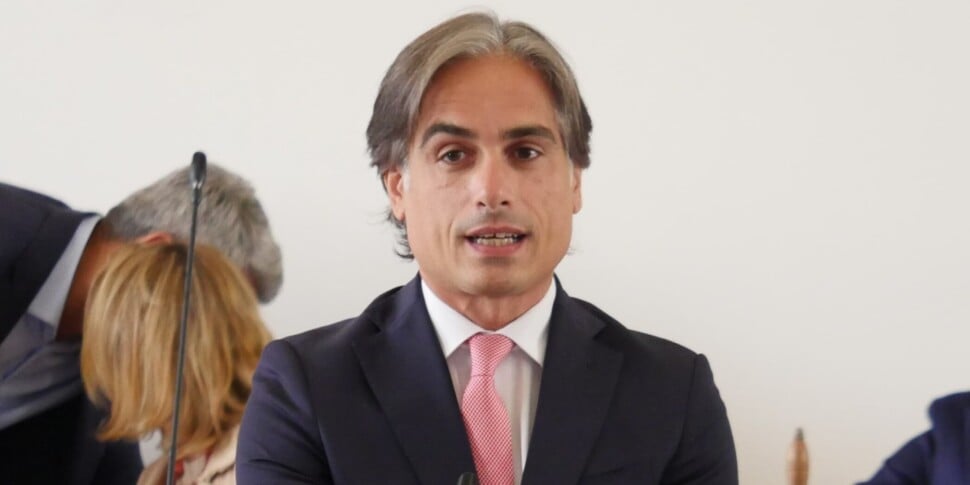
«For another two years the Calabrian healthcare system will be forced to proceed with stopgap interventions, asking for help from brave retired doctors to try to repair the enormous holes produced by the absence of real management and the absolute lack of cooperation between the various companies in the area, while the end of the commissionership is still late in arriving and nothing is known regarding the outcome and result of the recovery plan and the operational plan». Thus, Giuseppe Falcomatà, regional councilor of the Democratic Party, liquidates the debate in the chamber, at Palazzo Campanella, urgently meeting precisely to approve the provision that would like to bring retired doctors back to hospital wards so as to make up for the serious crisis in the regional health system. A confrontation, according to the Democratic Party exponent, in which “there was a series of lies, omissions and pathetic attempts by the centre-right to grasp at straws”.
The crux of hiring plans and data transparency
“Someone – said Falcomatà – should explain why a little hand removed this provision from the Milleproroghe decree, the natural place where, by default, all the documents expiring on 31 December of each year are approved”. Falcomatà raised the bar by analyzing the introductory report to the law under discussion which lacks data on staff coverage: “Without these numbers we are having a debate on nothing.” And again, addressing the presidency, he added: «Why don’t you tell us what stage the employment plans of the individual healthcare companies are at? Why has the employment plan of the Gom of Reggio Calabria been lying with the department for months and has not yet been authorised? In this way, we will also have to recall doctors who have been retired for 10 years now.” “Is this – he asks again – the reason for the progressive impoverishment of the spoke hospitals that we are witnessing?”.
Criticisms of the reorganization and management of the General Directors
In the same report, then, we read that “we are facing a phase of profound reorganization of healthcare”. Hence other questions: «How long does this phase last? How deep is it? You have been in government of the Region for 6 years, for 20 of the last 30. What does this reorganization consist of given that the healthcare companies and Spoke hospitals do not communicate with each other and it always relies only on the ethics and sense of responsibility of doctors and nurses”.
«Recently – continued Giuseppe Falcomatà – the notice for the identification of the general directors of the healthcare companies was finally published. Why only now? Why didn’t the previous one produce any effect? We went from extension to extension with the designation of the commissioners who, without any time horizon due to the precarious condition of their role, were unable to plan with seriousness and authority.” Another note is on the passage that identifies the implementation of a “rigorous control system”: «I hope it is a typo, otherwise it would mean that, up to now, there has been no rigor. Is it ever possible?”.
The failure to reach the LEAs and the deterioration of the emergency rooms
The truth, for the PD councilor, is different: «There is a lack of regional healthcare management, there is a lack of a regional healthcare system that allows the various companies to cooperate». «The Gimbe foundation – the PD councilor recalled – tells us that, once again, Calabria has not achieved the maintenance of LEAs in the prevention, district and hospital care sectors. And in the Gom emergency room, a few days ago, a patient was left waiting for 2 days attached to an IV drip stuck to the wall with scotch tape given the absence of the appropriate supports for intravenous therapy. This is a snapshot of the state of health of the hospitals and of an emergency room that is swamped also due to the problems of the facilities in Polistena and Locri, where citizens are right to protest and where the Patient’s Rights Tribunal is right to provide valuable input on incentives for doctors, accommodation for staff and mobility to disadvantaged locations.” On the modification of the national sector contract, Giuseppe Falcomatà again urged the Government that “it can modify it by sitting down with the social partners and the interested categories”.
The comparison with Puglia and the reduction of waiting lists
Finally, Giuseppe Falcomatà reported some “good news”: «As many as 16 thousand citizens were called back for urgent and check-up visits, anticipating the waiting times compared to what was expected. It is excellent news which, however, comes from the Puglia Region and is the first measure taken by President Antonio Decaro, to whom we wish him well in his work”.