

Add the Gazzetta del Sud as a source
The fragile truce between the United States and Iran suffers a new blow. Tehran launched missiles and drones against several Gulf countries overnight in response to a new wave of American raids, carried out after the Iranian attack on a merchant ship in the Strait of Hormuz, forced to be abandoned by the crew while it was on fire. The new escalation is accompanied by the Iranian announcement of a renewed closure of the Strait of Hormuz, further worsening the crisis between the two enemies, who in recent days have continued to exchange threats of revenge and total destruction despite the ceasefire theoretically still in force.
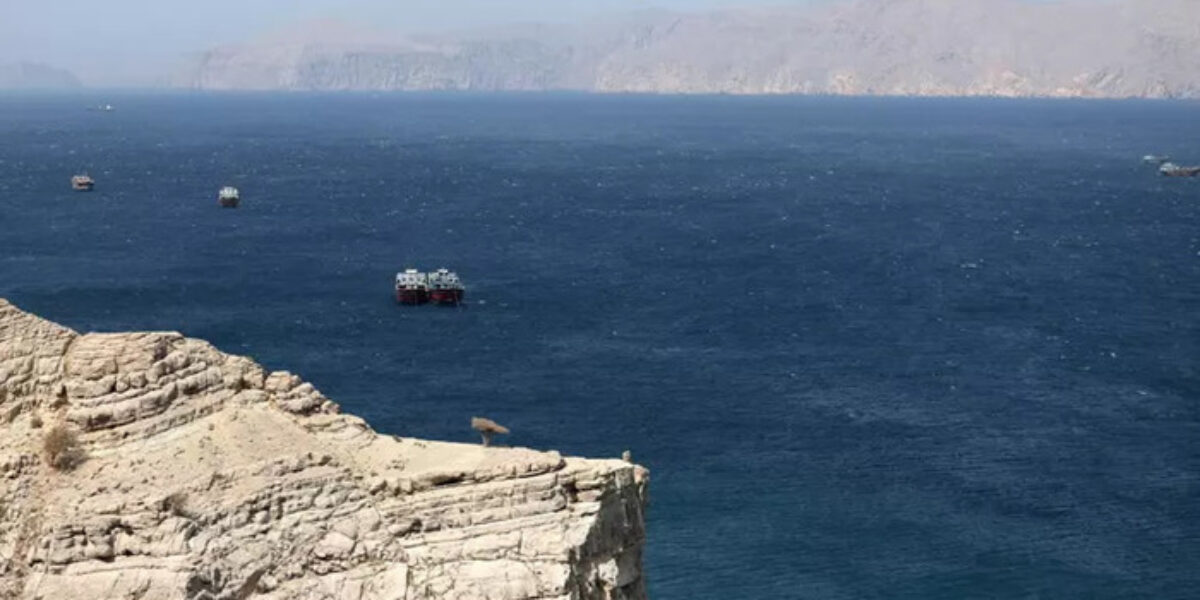
The United Arab Emirates has announced that it was the target of a missile and drone attack, according to the Ministry of Defense. At the same time, Bahrain activated anti-aircraft warning sirens, while explosions were heard in Qatar, probably linked to interceptions of some missiles in the sky south of the capital Doha. Shortly before, Iran had announced the closure “until further notice” of the Strait of Hormuz, through which under normal conditions about a fifth of the world’s hydrocarbon trade passes, after opening fire on a ship. The Guardians of the Revolution, the Pasdaran, had also threatened to strike “severely” the American bases in the Gulf countries in the event of a military response from the United States. “Numerous vessels attempted to use an unauthorized route while ignoring our warnings,” the Guardians said in a statement.
“A ship that had endangered maritime safety by deactivating its systems was hit with warning shots and stopped,” they added. According to the British maritime safety agency Ukmto, the attack occurred about nine nautical miles, equal to about 17 kilometers, east of the Musandam peninsula, belonging to the Sultanate of Oman. The action caused a fire on board and “the crew abandoned ship in a lifeboat,” the agency reported. In response, Centcom, the US Central Command announced that it had conducted approximately 140 strikes against military targets in Iran, the third series of bombings since last Tuesday. The operations targeted missile and drone sites, naval vessels, ammunition depots, communications networks and coastal surveillance posts. Iranian media reported explosions in the south of the country, in the areas of Bandar Abbas, Sirik, Jask, on the island of Qeshm and in the province of Khuzestan, on the border with Iraq, without immediately reporting casualties.
«Iran made a wrong choice. Now he pays the price,” US Defense Secretary Pete Hegseth wrote on X. «The era of unilateral agreements is over. We told you: keep your word or pay the price. Reality is knocking”, was the indirect reply of the Iranian chief negotiator, Mohamed Bagher Ghalibaf. According to Centcom, the ship hit by Iran is the Gfs Galaxy, a container ship flying the Cypriot flag. The American command has specified that a civilian member of the crew is missing and that the vessel is no longer able to continue navigation due to the fire and the serious damage reported to the engine room. The Revolutionary Guards reiterated that «the Strait of Hormuz will remain closed until further notice and until the cessation of American interventions in the region; no ship will be authorized to cross it.” So far Tehran only allows a shipping corridor along its coasts and excludes a return to the pre-war situation, when transit through the Strait was free, a position contested by the United States.
Washington had already bombed Iran on the night between Tuesday and Wednesday and the following night, attributing responsibility for the attacks against commercial ships to Tehran. In response, the Islamic Republic had struck targets in Kuwait, Bahrain and Qatar. On June 17, the United States and Iran signed a memorandum of understanding accompanied by a ceasefire, giving themselves sixty days to seek a definitive solution to the conflict that broke out on February 28 with an Israeli-American attack on Iran. Since then, American President Donald Trump has claimed several times that the ceasefire was now “over” due to Iranian attacks against commercial ships, while authorizing the continuation of negotiations with Tehran.
On the Iranian front, tension was further fueled by the statements of the Supreme Leader Mojtaba Khamenei, who yesterday defined “revenge” as an “inevitable” prospect after the funeral of his father and predecessor Ali Khamenei, killed at the beginning of the Israeli-American attacks. “I say to our martyr Leader that we swear to avenge his pure blood and that of all the martyrs of these two wars,” wrote Mojtaba Khamenei, designated Supreme Leader in March but never appeared in public since. “This revenge is the will of our nation and must inevitably be carried out.” “These criminals, whose names appear on a list, will take with them to the grave the desire for a peaceful death in their own bed,” he added. On Friday, Donald Trump accused Iran of planning his assassination, promising once again to “completely decimate and destroy all regions of Iran” if Tehran attempted to carry out such a threat.