

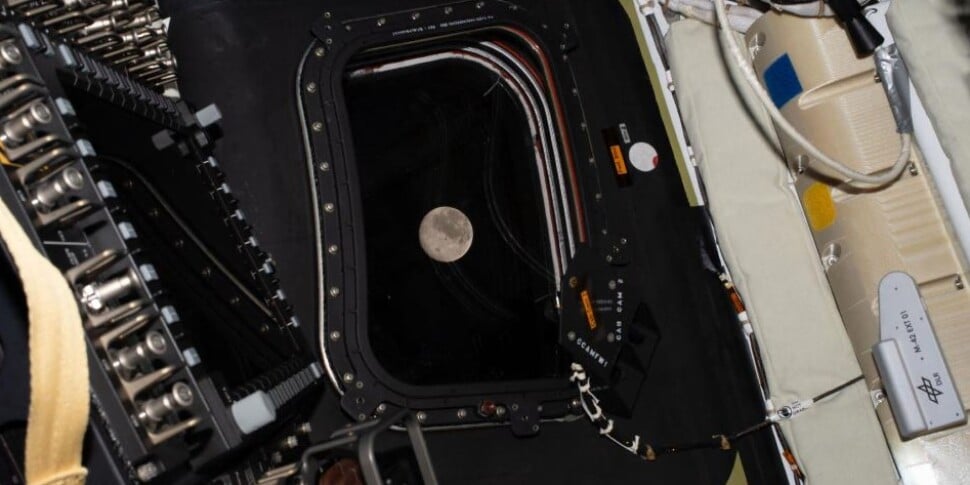
After 56 years, the astronauts of the Artemis II mission broke the record for the greatest distance from Earth so far held by the crew of the Apollo 13 mission in 1970. On the Orion shuttle, astronauts Reid Wiseman, Victor Glover, Christina Koch and Jeremy Hansen reached the distance of 400,171 kilometers reached by Apollo 13 during its emergency return to Earth. The flight program envisages that at 1.02 am Italian Orion will move further away, until it reaches 406,777 kilometers from Earth, the maximum distance from Earth ever for a space mission with astronauts.
The preparations actually began very early, around 7.00 am Italian time, when the engine of the European Service Module (ESM) turned on to refine Orion’s trajectory towards the Moon. “Hi, Artemis 2, I’m Apollo astronaut Jim Lovell. Welcome to what was once my area”: was the message that woke up astronauts, recorded by the Apollo 8 pilot in 2025, shortly before his death. “It’s a historic day and I know how busy you will be, but don’t forget to enjoy the view.”
The astronauts also performed a new test of pressure suits, custom-made and called OCSS (Orion Crew Survival System), capable of guaranteeing survival for up to six days. They are fundamental both during the dynamic phases of flight, for example during launch and re-entry, and in the event of cabin depressurisation and after ditching. The astronauts wore them to check both their tightness and freedom of movement, for example when sitting on the shuttle seat and for eating and drinking. The day continued with preparations for the observation of the lunar surface, which will keep them busy for around seven hours: from 8.45pm Italian time on 6 April to 3.20am Italian time on Tuesday 7 April. There are 35 points to study and photograph, including the sites where the Apollo 12 and Apollo 14 missions landed. There is also the Eastern Sea, a crater with a diameter of over 900 kilometers which is located on the border between the visible and hidden sides of the Moon and which will be completely illuminated when Orion passes. On the far side of the Moon, astronauts will have to observe, in particular, the Hertzsprung crater, with a diameter of about 600 kilometers. It is in this period, exactly at 1.02 am Italian time, that Orion’s closest approach to the lunar surface is expected, at 6,550 kilometres, and five minutes later the spacecraft should set the new record for the maximum distance from Earth. When Orion leaves the far side of the Moon, astronauts will see Earth rise and communications will be re-established. A little later, at 2.35 am Italian time, they will witness an eclipse because the Moon will obscure the Sun. At 3.20 am Italian time, the observations of the lunar surface will be completed and at 8.25 am (Italian time) Orion will exit the sphere of influence of lunar gravity: it will be the beginning of the return journey to Earth.