

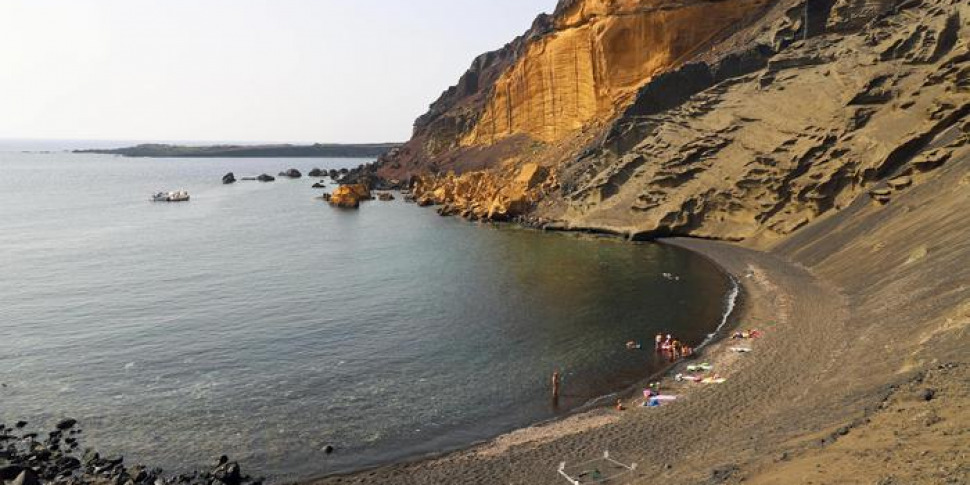
Not a festival like the others, but a collective act of repair and rebirth. Last January 20th, Cyclone Harry hit Linosa with great violence, devastating coasts, killing animals, trees and plants, the unique ecosystem of the small volcanic island, just over 400 inhabitants and a life that takes place mainly in the summer months. But Linosa didn’t stop: «Ricucire 2026» was the response born from the island community and from those who, despite coming from outside, have a visceral connection with the island.
The initiative that brought volunteer work and cultural debate to the island for two weeks will end tomorrow. Not separate events, but a single gesture: rebuilding with hands and spirit.
Volunteers working to rebuild the island
The volunteers worked on three fronts: cleaning up debris, replanting trees and Mediterranean scrub, restoring paths and areas. The project was born from the collaboration between the naturalist biologist Dario D’Emanuele, founder of Nereidee Linosa APS and creator of a project to protect the island ecosystem financed by the San Lorenzo Foundation, and the Palermo writer Claudia Lanteri, who dedicated her successful debut novel to Linosa The island and time (Einaudi, 2024).
The islanders’ committee also supported the initiative, with part of the resources collected during the crowdfunding campaign in the aftermath of the cyclone. About a hundred people on the island, including volunteers and artists, gave their contribution, and many cultural festivals became sponsors and supporters (Fuoriluogo in Biella, L’isola dei libri in Carloforte, Una Marina di libri in Palermo, Grisù 451 in Ferrara), as well as some publishers.
Culture as part of rebirth
Work during the day, meetings, shows, workshops and photographic exhibitions in the evening. Among the guests were writers Giosuè Calaciura, Rosanna Turone, Filippo Ronca; the actor and director Gianluigi Gherzi, co-author of the novel with D’Emanuele The Berte boyset right in Linosa; the actress Lia Ceravolo; the Lero Lero by Alessio Bondì and Fabio Rizzo; the artists Blanche Bonnet, Piero Zambuto, the photographer Alessandra Klimciuk.
«Linosa is not a place that tourism can strip and throw away – says Lanteri –, it has a culture of hospitality and encounters that arises from its own history. The festival is not an event. It’s a participatory plot.” A beautiful collective novel: «Ricucire Linosa».