

Add the Gazzetta del Sud as a source
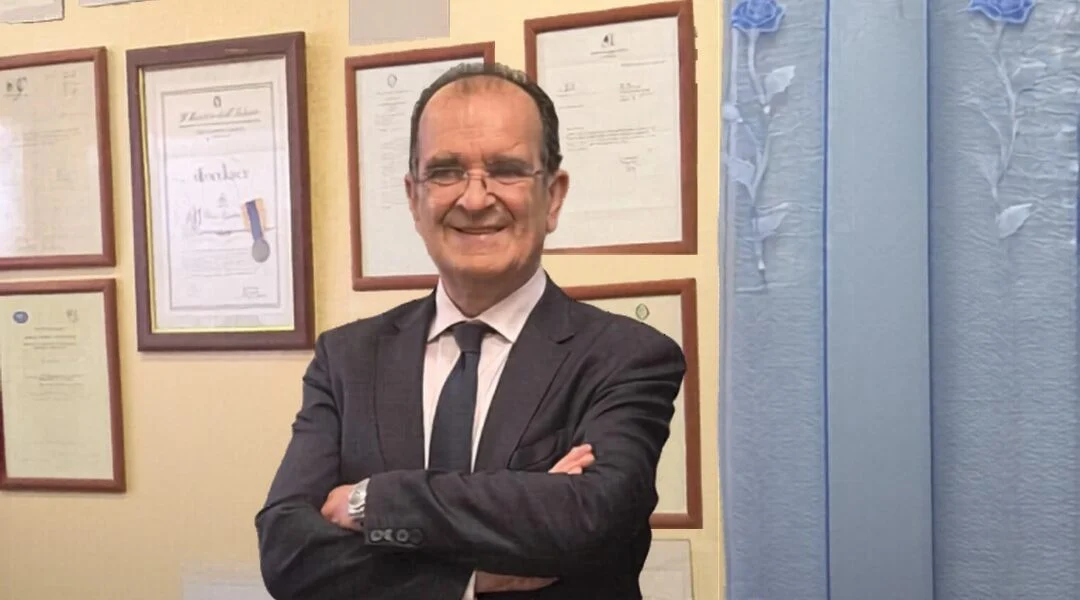
«This bill is the result of the experience I have gained in recent years dealing with the purification system, also as a regional official. It is a battle that arises from direct knowledge of this sector and from the belief that Calabria needs a new vision in the management of water resources.”
Thus regional councilor Enzo Bruno, group leader of Tridico Presidente, speaking today in the Fourth Commission, where he illustrated the proposed law on the reuse of urban waste water, a provision that aims to fill a regulatory gap that still characterizes Calabria.
Bruno recalled how the idea of the law was also born from a reflection shared with the former provincial doctor Luigi Lazzaro, who during the presentation of a volume dedicated to purification summarized the topic with a statement destined to leave its mark: «The sea can only receive rainwater. Anything that is not rainwater can represent a form of pollution, including purified water.” From that consideration arose the need to build a legislative instrument capable of changing the cultural approach even before the administrative one.
The technical-regulatory analysis and the regional legislative void
«The most important aspect that also emerged from the technical-regulatory analysis of the legal area of the Regional Council – underlined Bruno – is the recognition that this proposal contributes to filling the absence of an organic regional regulation on the reuse of waste water, through provisions of a programmatic nature consistent with national and European legislation. For me this represents a fundamental point.”
An innovative model inspired by the circular economy
The proposal introduces an innovative model for governing the water cycle inspired by the principles of the circular economy, environmental sustainability and administrative efficiency. The objective is to move from management based on emergencies to planning capable of valorising a resource that is still too often missing today.
The qualifying points of the text
Among the qualifying points of the text include the progressive separation of the networks intended for wastewater and rainwater, the census of existing infrastructures, the transformation of purification plants into water resource recovery centers, the reuse of refined water for irrigation, industrial, civil, environmental and fire-fighting uses in full compliance with European Regulation 2020/741 and the most rigorous health safety standards.
The proposal also addresses the issue of recovery of nutrients contained in sewage sludge, promotes the energy efficiency of plants, encourages the use of phytopurification in internal areas and small towns, provides systems for accumulating refined water and strengthens the control system, attributing a central role to the protection of public health.
Environment and economy: non-conflicting interests
«Too often the environment and the economy are considered opposing interests – stated Bruno –. Instead, I believe that an environmentally correct system must also be economically sustainable. Only in this way can it produce lasting benefits for communities.”
The coordinated text and the observations of the legislative area
During the investigation, the regional councilor also announced that he had already prepared a coordinated text which fully incorporates the observations made by the legislative area of the regional council. «The findings do not call into question the structure of the proposal nor its constitutional legitimacy, but contribute to improving its coordination with the current legislation and the technical quality of the text».
No burden on the regional budget
Finally, Bruno reiterated that the proposal does not entail new burdens on the regional budget, operates in full compliance with the constitutional competences between State and Region and aims to create the conditions to use the national and European resources allocated to the sector more effectively.
A strategic choice for the future of Calabria
«We are not simply regulating a technical sector – concluded Bruno – but proposing a new vision of water resource management. In a context marked by climate change and growing water scarcity, the reuse of waste water represents a strategic choice for the development of Calabria. I hope that the discussion in the Commission can further enrich the text and allow the Regional Council to finally provide our region with a modern, organic law capable of tackling one of the most important environmental, economic and social challenges of the coming years”.