

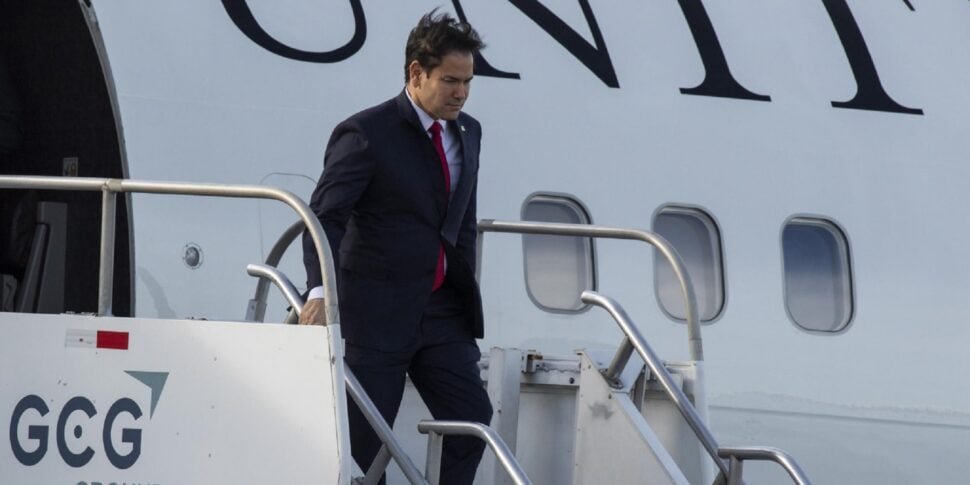
US Secretary of State Marco Rubio has arrived in Geneva for a new round of talks on the US peace plan for Ukraine. Ukrainian and European officials are also at the table: the Kiev delegation should be led by presidential advisor Andriy Yermak, with Security Council secretary Rustem Umerov, while Rubio is joined by presidential envoy Steve Witkoff.
The document under discussion is a 28-point plan that Washington has asked Kiev to evaluate by November 27. The US administration now presents it as a reference framework for opening negotiations, not as a definitive proposal, suggesting room for revision.
However, the draft raised strong doubts among Ukraine’s allies because it was deemed too close to Russian requests, especially due to the hypotheses of territorial transfers and the limitations on Kiev’s military capabilities. According to rumors reported by the American press, the United States is looking for a less penalizing compromise at least on the most contested points, so as to make the security guarantees promised to Ukraine credible.
Rubio, speaking publicly, claimed American authorship of the plan: he explained that the text was drawn up by the United States by collecting elements from both Moscow and Kiev and indicated it as the basis for continuing the discussion. With these words he rejected the idea that the document is merely a list of Russian demands passed on to Washington.
European resistance remains clear. On the sidelines of the G20 in Johannesburg, a group of allied countries stressed that the proposal “requires further work” and that, in its current state, it risks leaving Ukraine exposed to new aggression in the future. In this climate, French President Emmanuel Macron announced a videoconference meeting of the countries that support Kiev for Tuesday, reiterating that without credible deterrent measures Russia could attack again. Along the same line was the French Minister for the Armed Forces, Alice Rufo, who insisted on the non-negotiability of Ukraine’s dignity and freedom and on the need for Europe to be an essential part of any lasting agreement.
The Geneva talks, therefore, open with a double objective: to clarify to what extent Washington intends to modify its negotiating scheme and to verify whether there is common ground between Kiev and its European allies to present a coordinated position. The format and final location of the meetings remain fluid, but the stakes are high: transforming a contested draft into a negotiation path that does not compromise Ukraine’s future security.