

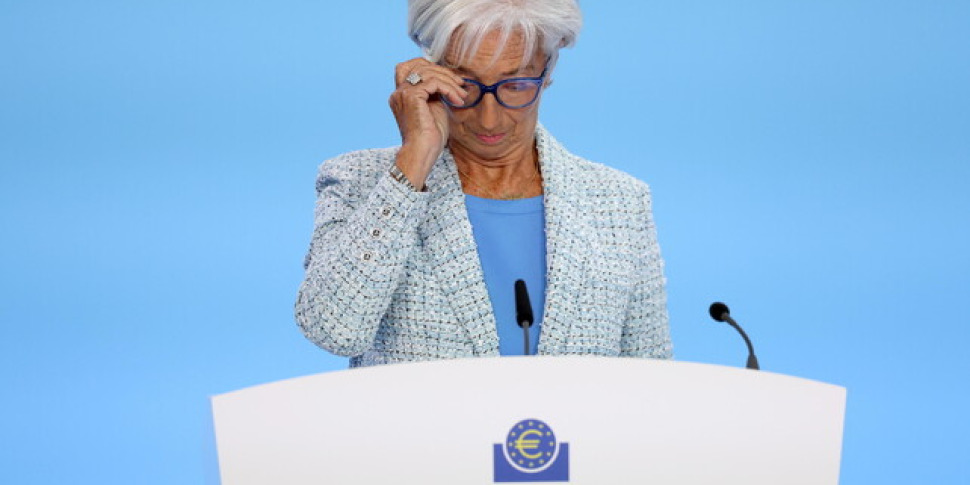
An increasingly concrete stagflation scenario. It is a dilemma to be resolved for the ECB, which this Thursday seems oriented towards raising rates by 25 basis points to 2.25% despite the fact that growth in the euro area has stopped: even more worrying is the risk of an inflationary spiral, which if it got out of control would end up requiring even higher rates. This is how the dilemma – as the ECB called it in the reports of the April meeting – seems destined to resolve itself for the governors who will meet again in Frankfurt on 10 and 11 June.
The members of the Board of Directors traditionally considered ‘hawks’ are asking for it, most recently the German Isabel Schnabel or the Dutch Frank Elderson. Even the Greek Yannis Stournaras spoke of “limited damage” from a prudent rate hike. While governor Fabio Panetta, in the Bank of Italy’s final considerations, opened up to a “recalibration” of rates without tying his hands about the future. The economists on the panel heard by Bloomberg estimate two rate increases this year, one next week, in fact, and one by the end of the year.
It is the effect of the war launched by the USA and Israel on Iran, with the prospects of peace seeming to fade in the chaos of the Middle East, and of the energy shock. Goldman Sachs expects the second increase in September, which would bring the ECB rate to 2.5%, because “the latest data points in the direction of significantly higher inflation and weaker growth” than in the ECB forecasts last March. The Bloomberg panel estimates inflation for 2026 at 3.5% (it reached 3.2% in May) and growth at 0.6%. Lorenzo Codogno of LC Macro explains that «in May there were clear signs that inflation is going beyond energy and is spreading to the rest of the economy». An anathema for the ECB, because «once the inflation genie comes out of the bottle, it is difficult to get it back». There is no shortage of those who evoke the risk of a ‘remake of the mistake of 2008 and 2011, when the then ECB president Jean-Claude Trichet raised rates only to have to cut them shortly thereafter due to the economic crisis. But that era of low inflation, even deflation, linked to galloping globalization and unbridled Chinese exports, seems very distant in Trump’s world. A report from the World Economic Forum, Deepening Divides, speaks of the two-year period 2025-2026, that of tariffs, wars and the anti-European rhetoric that is spreading in Washington, as a “turning point for global trade and finance”. A turning point in the sign of economic and financial fragmentation not only between traditionally hostile blocs, but also between old friends such as the USA, Europe, Japan, which will cost, in the main scenario, between 213 and 307 billion dollars a year to the world economy. And Econ a bill that could rise to 6,900 billion dollars, 6.4% of global GDP, in the worst case scenario.