


Google Discover

Preferred Sources
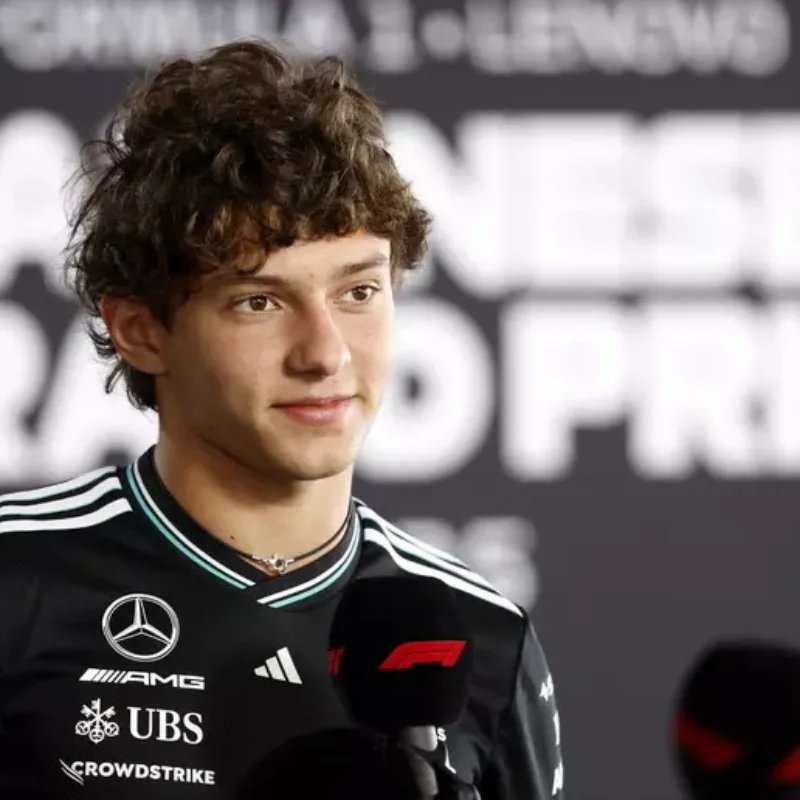
From Kimi Raikkonen to Kimi Antonelli. Italy returns to rejoice in a Formula 1 drivers’ world championship after 19 years of abstinence. Andrea Kimi Antonelli brings the tricolor back to win the championship in Formula 1 73 years after Alberto Ascari (dutiful asterisk for Mario Andretti, who recently reclaimed his origins, despite the press considering him American). According to official data, he is the third world champion from the Bel Paese, adding Nino Farina, winner of the first Formula 1 world championship in history, in 1950, with Alfa Romeo. At 20 years old, the Bolognese is the youngest world champion ever. He stole the scepter from Sebastian Vettel, champion at 23 years old, in 2010. But if on the one hand the German found himself winning that championship in daring circumstances, occupying first position in the standings for the first time only at the end of the last race, in a world championship finale that still saw four different possible world champions, Antonelli’s was an overwhelming domination, from every point of view.
He destroyed every opponent who stood before him, with the comeback in Monza as a manifesto of the overwhelming superiority, of Mercedes, of course, but also of his. Yes, Monza, a temple of speed which that Sunday took on the appearance of a theater of the absurd, with the fans dressed in red standing in the stands to applaud every pass of a driver from the enemy team. He doesn’t do statistics, but this was an undertaking within an undertaking, of which the only regret is not having been able to ask Drake for an opinion.
It is fair to ask what goes on in the head of the “Saturday lightning bolt”. This is how George Russell was called, due to his skill in qualifying in karts. The Briton started behind his teammate 11 times out of 19 races, with the emblem of his inferiority in the Monaco Grand Prix, where he had to realize that he had actually been lapped, on a circuit where in theory, with the current dimensions of the cars, it would be impossible to overtake.
But for someone who wears the number 12 on his car, in honor of Senna, the impossible is a relative concept. And so it is natural to close the world championship more than a month early, on the track where Sir Lewis Hamilton won it twice. In common with the seven-time world champion, Kimi also has managed to win the title in the second season of his career. Besides the two of them, in the modern era, only Jacques Villeneuve has done the same.
In the words of his mother, who declared that what makes her most proud is hearing good things about her son’s human side, and in the testimonies of those who live everyday life in close contact with him and see him wash their car himself in a car wash in San Marino, lies Kimi’s most powerful message: the demonstration that you can be the best without the need to be characters. And in a historical period in which the new generations are constantly invaded by pseudo-models of perfection, this is his greatest victory.