

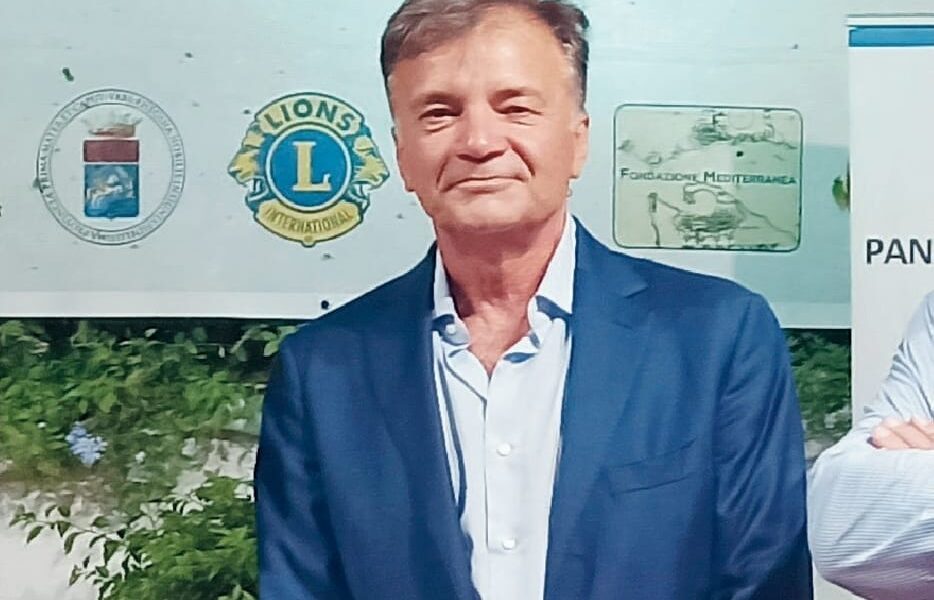
The city of Reggio was his birthplace, Rome and Turin consecrated him in the profession. There are fairy tales that become reality and realities that become fairy tales. As a boy Giuseppe Smorto aspired to be a journalist. His parents, however, wanted him to become a psychoanalyst. At a distance he was right. The newspaper “La Repubblica”, which celebrated its fiftieth anniversary, was his cradle and his second home. Having entered in 1980, winner of a scholarship, he climbed all the steps until he became responsible for the sports pages and held the position of deputy director with responsibility for the integration between the paper edition and the digital platform. He worked alongside the myths of sports literature such as Gianni Brera, Gianni Minà, Gianni Clerici and Gianni Mura, to whom he dedicated his latest book entitled «I 4 Gianni», published by Minerva. A tribute to nostalgia, a work that is becoming popular in the charts and which, after several presentations in the central north, will arrive on Monday at the Reggio Calabria Tennis Club for the «Literary Cafés» of the Rhegium Julii.
The book reconstructs the history of an editorial team that didn’t exist but which then became a battleship of sports information. A paradox, which the author explains like this: «When announcing the first issue, in January 1976, Scalfari said that the newspaper would not deal with sport».
Consistency is a value but this does not mean that we must put a brake on the progress of an idea…
“Indeed. They will realize that it was impossible to exclude from the panorama a phenomenon that unites millions of enthusiasts and generates a value of several billions.”
The evolution was gradual, the newspaper did not have a Monday edition…
«That will arrive in 1994. However, since 1978 sport began to occupy an increasing number of pages. Scalfari observed that, to win the challenge, it was necessary to hire the best, to focus on the quality and originality of the technical and historical-social analysis. If you get a Maradona that’s always worth the price of the ticket. And so it was that, thanks to the diplomatic work of Mario Sconcerti (to whom I owe so much), the editorial team became a national team of sports journalism with the arrival of Brera, Clerici, Minà and Mura. As a student I devoured their articles in the “Giorno”, the newspaper which, together with the “Gazzetta del Sud”, entered our house in Reggio in the S. Anna district every morning”.
You have lived in the shadow of giants, combining tradition and innovation. In the book we capture the charm of how we were but also the anxiety of how we will be. With the risk of artificial intelligence, will journalism be able to give up its ethical values and its historical roots?
«I don’t make a difference between print and online. New technologies help, but every progress must be governed by man with his ethics and responsibility. Newspapers are weakened, there has been a lack of protection with adequate laws, circulation is decreasing, newsstands are closing, but if we return to focusing on quality, journalism will never fade away.”
The crisis into which Italian football has fallen, the impasse linked to the appointment of the technical commissioner, Infantino’s billionaire circus ideas: what would the four Giannis have written today?
«They would have used fiery words. Brera would have remembered that history repeats itself twice, the first in farce, the second in tragedy. Clerici would be satisfied because as a young man he abandoned football articles to focus on tennis and today we are at the top of the world in this sport, after having rebuilt the youth sector. Mura and Minà would have recalled the lesson of the Leopard: everything must change as long as nothing changes. Malagò and Mancini will have to fight against the hostility of the big clubs, who don’t care about the national team. In fact they hate it. They denied Gattuso the suspension of the championship before the play-off against Bosnia…”.
Among the many protagonists you have met, if you had to point out a myth?
«Pietro Mennea for moral principles and coherence. For this reason he was disliked by the powers that be. But I also remember Lee Evans, Velasco, Eduardo Galeano.”
A photograph of the four Giannis, considered alpha colleagues, that is, number ones. All so different but also so equal, so independent and so good at interpreting sport as a key to understanding society…
«Brera would receive you around eleven and slice the salami. He had his questions dictated in the morning for his readers’ mail but wrote in the evening. He said that the questions first had to be… incubated. Minà had the gift of listening and the cult of friendship. He also looked for the scoop at the table between the first and second courses. It is no coincidence that one evening in a restaurant in Trastevere he managed to bring De Niro, Cassius Clay, Sergio Leone and Gabriel Garcìa Marquez to the same table. Clerici was brilliant in finding particular aspects of a match regardless of the result. Mura made reservations at a restaurant with a different name and brought his own wine. He was curious, he corrected typos on the menus.”
Curiosity aside, what remains is the richness of the human and cultural heritage that the four Giannis left behind. Smorto delivers it, with love, to the readers’ memory. Sport has new idols, new languages. But it’s a fair delivery. Otherwise, in the digital age, everyone risks passing as unknown in the eyes of the new generations.