

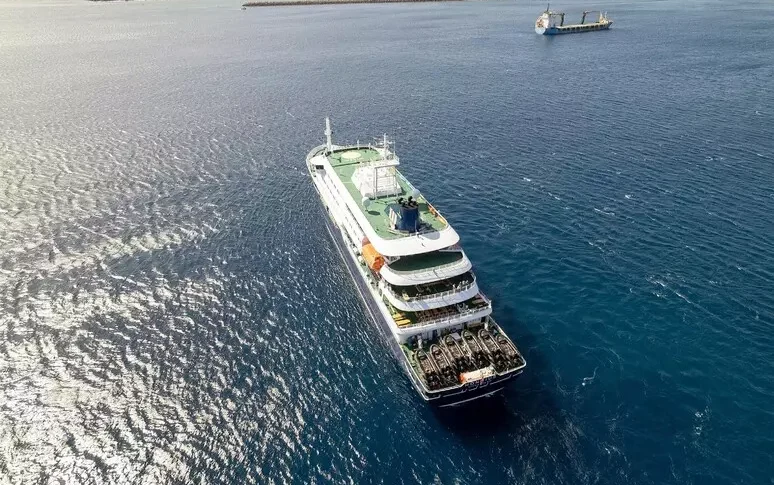
The Netherlands will lead the repatriation of two sick crew members on board the vessel mv Hondius, anchored off the coast of Cape Verde. The Dutch cruise company Oceanwide Expeditions made this known in a press release, as reported by the Dutch agency ANP.
Three passengers on board the ship died. According to the World Health Organization, at least one of them tested positive for hantavirus, a family of viruses that can cause hemorrhagic fever.
At the moment, the authorities in Cape Verde have not authorized the disembarkation of people to receive medical assistance, the cruise company reports. However, medical personnel boarded the ship to assess the patients’ conditions.
The intention is also to bring the body of one of the deceased passengers back to the Netherlands, together with a close relative. This second person shows no symptoms of illness.
A spokesperson for the Dutch Ministry of Foreign Affairs confirmed that a Dutch citizen felt ill on board and died in mid-April during the crossing from Argentina to Cape Verde. A second Dutch citizen, who also fell ill, was transferred to South Africa, where he died.
The expert: “Cruise ship passengers infected before boarding”
Passengers with the suspected hantavirus would have been infected before boarding the cruise ship, due to the long incubation period of the virus. This is written by the BBC, which quotes an epidemiologist, Michael Baker, consulted for the MV Hondius case.
On board the cruise ship three people died (including a Dutch married couple aged 70 and 69), while a 69-year-old British citizen is hospitalized in intensive care in Johannesburg and two crew members remain in serious condition on board. According to the epidemiologist, it is rare for humans to contract hantavirus and it is “very unusual” for the disease to develop on a cruise ship.
“It’s the worst possible place to get seriously ill,” Professor Baker said. It also said anyone on board with symptoms should be “rapidly evacuated” and taken to hospital in intensive care to increase their chances of survival.
Asked what measures should be taken next, Professor Baker replied that the outbreak needed to be “thoroughly investigated” to see if there were preventable factors, including travel itineraries to ascertain whether passengers had been exposed to high-risk environments.