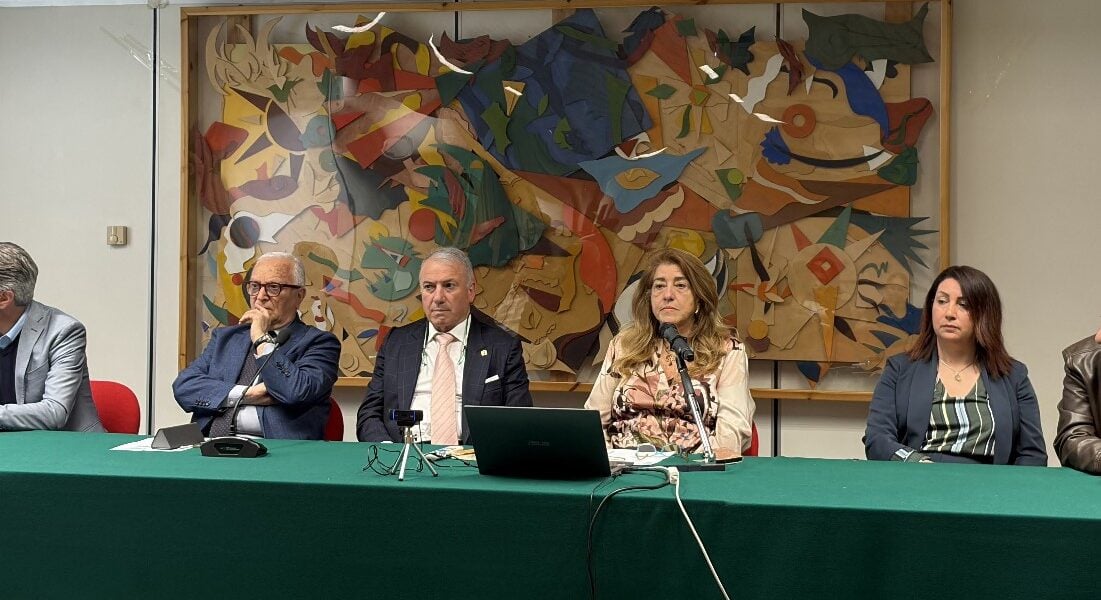
“Agri-food, Tourism and Territory. Calabrian excellence between protection, valorisation and development”: this is the title of the seminar-debate held in the “Sorrentino” room of the Campus and dedicated to the growth prospects of the regional agri-food sector and the strategic role of tourism in the promotion of Calabrian territorial identities.
The initiative, promoted as part of the academic activities of the courses of study in Tourism Sciences, brought together institutional representatives, protection consortia, sector operators, scholars and students, confirming the centrality of the dialogue between universities, businesses and the territory. The meeting was opened by Antonella Reitano, dean of the Unified Council of Study Courses, who introduced the theme of the conference by highlighting how certified agri-food production today represents not only an economic value, but also a tool for the cultural and tourist promotion of Calabria. Reitano underlined the need to build integrated strategies capable of combining sustainability, innovation and valorisation of local traditions. The institutional greetings were entrusted to Tullio Romita, coordinator of the Unified Council of the study courses involved in the initiative. The prof. Romita recalled the importance of strengthening the relationship between university research and the regional production system, promoting development paths based on quality, territorial identity and the competitive capacity of the agri-food supply chains. Ample space was dedicated to the interventions of the representatives of the protection consortia, protagonists of a detailed discussion on the critical issues and opportunities of the sector. Luigi Blotta, teacher at Ipseoa in Castrovillari, highlighted the role of professional training in building new skills related to hospitality and food and wine culture. Of particular importance were the interventions of the representatives of the Consortium for the Protection of Clementine di Calabria PGI, Maria Salimbeni and Giovanni Francesco Mastrangelo, who illustrated the identity value of the Calabrian clementine as a symbolic product of the territory and a tourist attraction. Benito Scazzota and Antonio Massarotto, for the Consorzio di Tutela Liquirizia di Calabria DOP, instead focused on the need to consolidate the internationalization and protection strategies of certified productions. The debate also involved the regional wine and olive oil sectors. Demetrio Stancati and Barbara Fasano, representing the Consorzio di Tutela Vino Terre di Cosenza DOP, highlighted the growing interest in wine tourism as a tool for territorial valorisation. Massimo Magliocchi, president of the Consortium for the Protection of Calabria PGI Oil, reiterated the role of oil as an identifying element of Mediterranean culture, while Vito Pace, president of the Consortium for the Protection of Caciocavallo Silano PDO, drew attention to the need to defend and promote the historical productions of the Sila area.
Also significant were the interventions by Antonio Andreoli, founder of Enoturismo Festival and Magliocco Day, and Fabio Vaccaro, URCHET strategic development and relations manager, who explored the potential of territorial networks and integrated communication in the promotion of tourist destinations linked to agri-food excellence. The meeting was concluded by the interventions of the students, who actively participated in the debate with reflections on experiential tourism, sustainability and new local development prospects. The conference thus confirmed the strategic value of agri-food as a cultural and economic heritage, capable of contributing to the construction of a territorial development model based on quality, identity and innovation.