

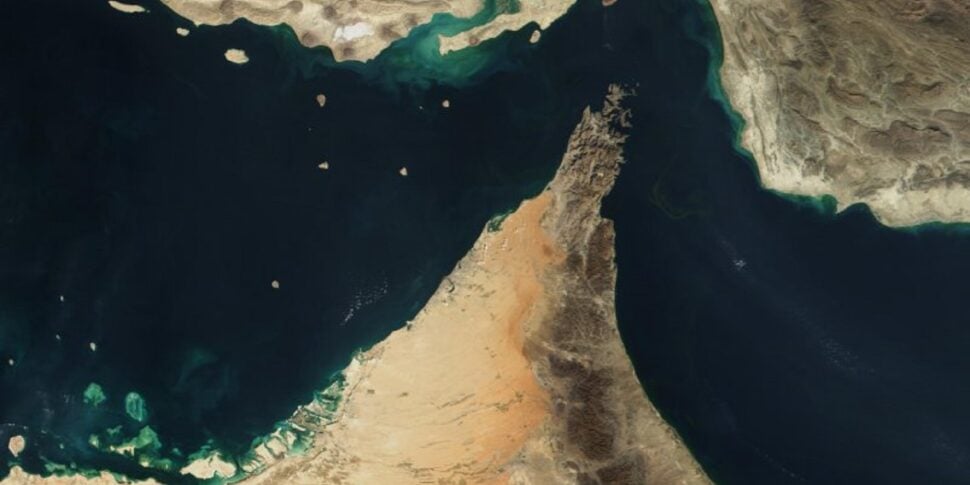
The Gulf of Oman is a stretch of the Arabian Sea, between the coast of Oman and the southernmost coast of Iran. About 30% of the world’s oil passes through here. The Gulf of Oman is separated from the Persian Gulf by the Strait of Hormuz and extends for 560 kilometers, reaching a maximum width of 320 kilometers.
In practice it is an arm of the sea, a little wider and a little less long than the Adriatic. This is where the war between Iran and Israel could be played out with the USA, as has often happened in the past. The Strait of Hormuz is the key point of the region, it is from here that we pass from the Gulf of Oman to the Persian Gulf, which is overlooked by various states, primarily Iran, which constitutes the entire northern coast (about 2,400 km), followed by Iraq, Kuwait, Saudi Arabia, Bahrain, Qatar and Oman.
The heart of Hormuz is the world’s crossroads for oil by ship. From a geopolitical point of view, the Persian Gulf is the only area that separates Iran from the Gulf monarchies and, consequently, from the US bases present on their territory. But, above all, it is among the largest oil and gas reserves in the world and, therefore, one of the main hubs for global hydrocarbon trade.
On average over 20 million barrels pass through the Strait of Hormuz on a daily basis. The game being played in this area is therefore of primary economic and geopolitical importance. At present it is only possible to hypothesize the various sides into which the Persian Gulf is divided today while Israel and the United States oppose Iran in the Gulf of Oman. Furthermore, Iran may want to reassert its control over the Strait of Hormuz, the very important checkpoint through which approximately 30% of oil traded by sea transits. At this point, after the raids by Israel and the US, Tehran could close or interrupt the Strait, as it has threatened to do in the past in the event of an attack, thus interrupting the waterway that separates Iran from the Gulf states.
Last June, after the Israeli attack on Iran, the first economic consequence was the jump in the price of crude oil with Brent which returned above 74 dollars a barrel to close at +7%. It was a daily surge not seen since 2022, when Russia invaded Ukraine.
Last June, JP Morgan estimated that if the passage were blocked, prices would jump up to 120 dollars a barrel with very important consequences on everyday life on a global level. But not only crude oil passes through the Strait of Hormuz. Cargoes loaded with LNG pass through that stretch of sea from Qatar to Europe, Middle East Asia and China. And Beijing, which is the second largest economy in the world after the United States, is a large buyer of Iranian oil (around 1.5 million barrels per day). If these supplies were to stop, China would be forced to source elsewhere, at higher prices with knock-on consequences for global inflation.