

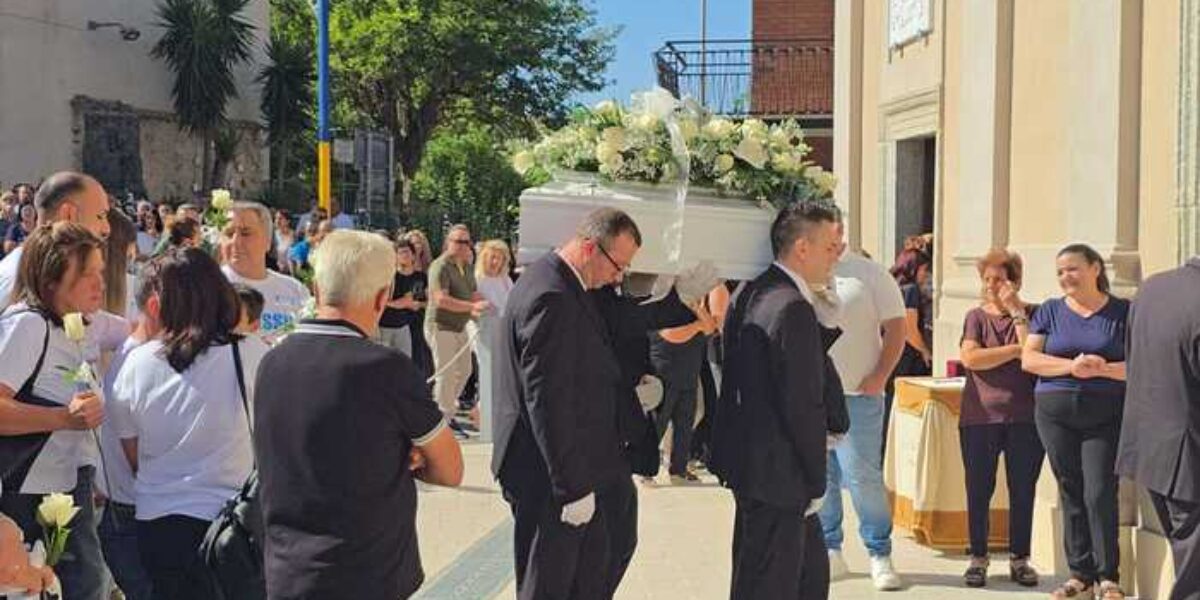
The death of the one and a half year old child, Alessio Pio Coppolino, occurred due to HHV6 meningoencephalitis, i.e. the sixth disease with concomitant and subsequent staphylococcus aureus bacteremia.
This is what Professor Isabella Aquila, director of forensic medicine at the Dulbecco University Hospital of Catanzaro, who performed the autopsy on behalf of the prosecutor, writes in a note sent to the medical directors of all the health and hospital companies in Calabria «in consideration of the relevance and impact that the case has from a public health perspective, also in order to assist the diagnosis of other potential cases in agreement with the Public Prosecutor’s Office of Catanzaro”.
The cause of Clostridium difficile is excluded
The cause of Clostridium difficile, which had initially been hypothesized, was therefore excluded. The microbiological findings, evaluated with the macroscopic findings that emerged during the autopsy examination, it is written in the note sent to the companies “allow us to believe that” the death “is related to meningoencephalitis secondary to HHV-6, with Staphylococcus aureus bacteremia, which caused severe bilateral pneumonia and myocarditis, with evolution into sepsis and multiple organ failure.
The causal chain of events
Regarding the causal chain of events – he continues – it is highly probable that the initial gastroenteritis, caused by Escherichia coli and, to a small extent, by Clostridium difficiles, specifying that positivity to the toxin was not detected and caused a reduction in the immune response in the child, simultaneously aggravated and compromised by the HHV-6 infection. The latter would have been able to overcome the blood-brain barrier and cause devastating meningoencephalitis, an event described in the literature, but rare for HHV-6. In this context, the Staphylococcus aureus bacterium, coming from outside, would have had easy access, causing systemic bacteremia, myocarditis and pneumonia, with widespread sepsis and terminal Cid”. The autopsy was performed by the team of the Institute of Forensic Medicine of the Magna Graecia University of Catanzaro, under the direction of Professor Aquila. The subsequent microbiological investigations were conducted by the Microbiology Unit of the Magna Graecia University of Catanzaro. Multidisciplinary work and synergy between the different specialists would therefore have made it possible to reconstruct the pathological picture and the causal sequence that led to death.