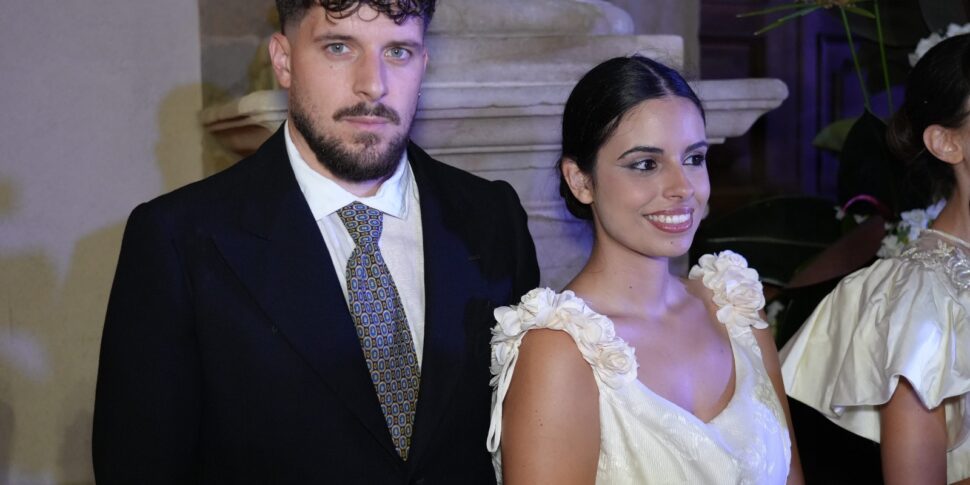
In the foreground the historical collections “in white” exhibited at the Museum of Palazzo Cupane in Mirto. History and crafts on stage in a magical atmosphere between lights, music, models and many local testimonials, all together in a night of fashion and elegance.
Thursday, the Piazza del Duomo di Mirto has turned into an open -air stage for “brides, a century of elegance”, an event that enchanted a large and participatory audience.
The event was not only a parade, but a real, story of traditions, emotions and culture, promoted by the Municipality of Mirto and supported by the regional department of local autonomies and public function.
The event offered a fascinating journey into the history of the wedding dress in Sicily, thanks to the precious collections of the Museum of Costume and Sicilian Fashion kept at the Palazzo Cupane in Mirto.
The clothes on stage have narrated eras, stories of love and families, from the early twentieth century until the seventies, with an exciting focus on a plain dress of the Albanians dating back to before the nineteenth century, never presented before and witness of the rich Arbëreshe tradition.
The mayor of Mirto, Maurizio Zingales, underlined the importance and value of this cultural institution. “The Museum of Costume and Sicilian fashion represents an invaluable treasure for our community, for the whole of Sicily and beyond,” he said. “It is a place where history and craftsmanship merge, preserving and passing on a unique heritage that speaks of identity and beauty. Events such as ‘brides, a century of elegance’ allow us to enhance this heritage even more and to make it accessible to everyone.”
The public was able to admire popular clothes that were once not only whites, but also colorful, made by the most important Sicilian tailors for the families of the island, testifying to an artisan and cultural heritage that still enchants today.
The director of the museum, architect Giuseppe Miraudo, has enriched the experience of those present with some of his moments. “Each dress tells a story, an era, a piece of our culture,” explained Miraudo after each parade. “Our goal is precisely to revive these narratives, offering the public not only the aesthetic beauty, but also the profound historical and cultural meaning of each piece exposed.”
On stage, a special moment was dedicated to the wedding creations of the famous Mimma Ferraro, “A Madama”, a Messina by adoption and considered a high fashion pioneer in Sicily. Ferraro entertained contacts with international style icons such as Coco Chanel, Balenciaga and Dior, and was loved by the bourgeoisie of the time for the refinement of his creations.
The last part celebrated the large signatures that marked the rise of fashion houses in the seventies, revolutionizing the tastes of brides and opening the way to a new concept of “elegance in white”.
The evening was conducted by the journalist Patrizia Casale, a guest of honor the talented singer Alessia Di Bella, already known for her collaborations with Riccardo Fogli, rich and poor, and Rickki Portera who interpreted “The Hymne à L’Amour” by Edith Piaf, “The snowfall of ’56” by Mia Martini and “Never Say Canbye” by Gloria.
The grand finale gave an explosion of joy: an exciting wedding march with a marriage in front of the church and then the joyful exit of a group of children who involved the entire audience with their innocent joy, who participated with enthusiasm in this event that celebrated the great fashion of the Museum of Costume and Sicilian fashion kept at the Palazzo Cupane in Mirto.