


Add the Gazzetta del Sud as a source
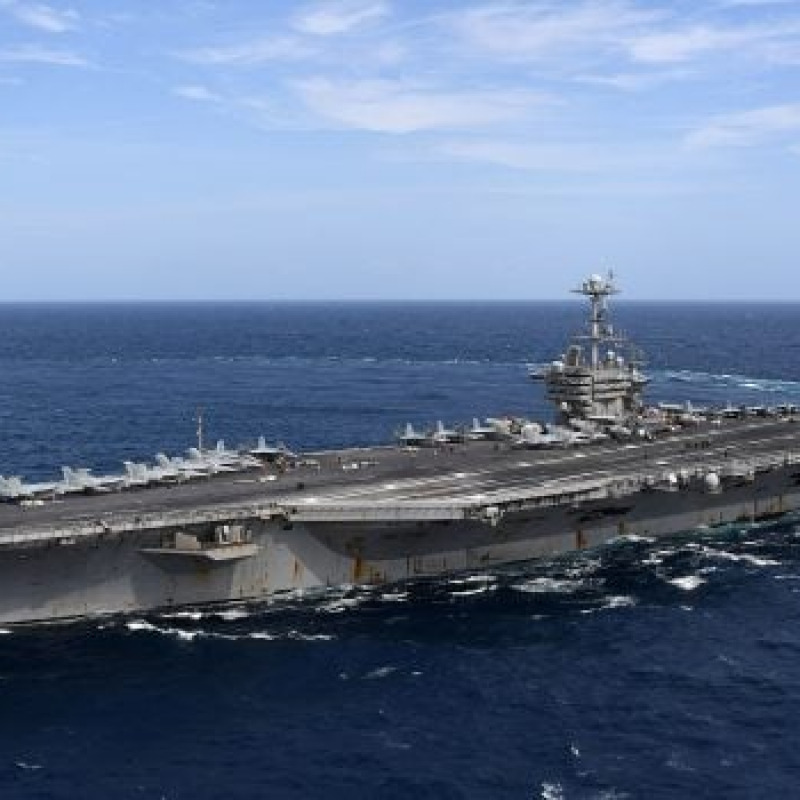
Tensions skyrocket between Iran and the United States along the Strait of Hormuz, while negotiations remain at a standstill. Although negotiations continue closely and both sides are talking about progress, Washington has decided to launch an attack in southern Iran, hitting a missile launch site and some mine-laying ships. A “self-defense” raid to protect the troops, the American command in the Middle East was quick to point out. But for Tehran it was a real “flagrant violation” of the ceasefire which, he warned, will not be left “without response”.
The crux of the negotiations and Tehran’s threats
The sudden American raid in the area of Bandar Abbas, a port city home to an Iranian naval base, follows days of great nervousness, especially on the part of American President Donald Trump who in recent days had announced the imminent signing of an agreement. A signature that hasn’t happened yet, with an agreement that doesn’t seem to be within reach at the moment: positions in fact remain divergent on several points.
Thus the sudden raid is also read as yet another attempt by the US president to put pressure on Tehran to speed up. “America will no longer have a safe haven for its misdeeds and for the installation of military bases in the region”, threatened the Iranian supreme leader, Mojtaba Khamenei, with Tehran reiterating that its response this time would go well beyond the region.
Frozen assets: the role of diplomacy in Qatar
The memorandum of understanding on which we continue to work provides, in principle, the extension of the truce for 60 days, the reopening of the Strait of Hormuz and lays the foundations for negotiations on the Iranian nuclear program. However, there are many issues to be resolved, primarily the disbursement of part of the Iranian assets frozen abroad.
The president of the Iranian Parliament and chief negotiator, Mohammad Bagher Ghalibaf, had a series of meetings in Qatar on the possible release of the funds. Around 12 billion dollars of Iranian assets are frozen in the country: Tehran would aim to obtain them as part of an overall allocation of 24 billion. The visit was “overall positive”, Ghalibaf said, without revealing anything about the talks in Qatar. A country which, in recent days, has taken on a key role in the negotiations together with Pakistan, without neglecting the behind-the-scenes role played by China.
The nuclear dossier and the dismantling of uranium
In addition to the funds to be released, there is the issue of nuclear power. Donald Trump assured that the enriched uranium “will be immediately delivered to the United States to be brought into the country and destroyed.” The president also opened the door to the possibility of working with Iran to destroy uranium “on site or in another acceptable location.” The Atomic Energy Agency or an equivalent body would act as a ‘witness to this process’. For now, Tehran has not publicly accepted any of the American requests on nuclear power, reiterating several times that the issue is postponed to a second phase.
The clash over transit taxes in Hormuz
Complicating the negotiations is the issue of the Strait of Hormuz. “It will be opened one way or another,” clarified the US Secretary of State, Marco Rubio, downplaying the new American attack in southern Iran. “An agreement is still possible,” he assured.
The Trump administration wants the immediate reopening without tolls of the important crossroads which has been blocked for months. Iran is not on the same page, and would aim to impose a tax on “shipping services”, a term that would allow it to circumvent the ban on transit tolls imposed by international naval law. “We are ready to reach a dignified framework” to end the war, explained the Iranian president, Masoud Pezeshkian, after hearing the presidents of Egypt and Turkey, Abdel Fattah al-Sisi and Recep Tayyip Erdogan.
Summit at Camp David and the specter of mid-term elections
To take stock of Iran and the impact of the war on the economy, Trump meanwhile gathers his government at Camp David. Harshly criticized by Democrats and Republicans for negotiations and an agreement that has the flavor of a defeat, the president knows that time is not on his side.
An extension of the 60-day truce would push him close to the mid-term elections, when he would find himself with his hands practically tied for possible punitive action if the nuclear talks do not bring the desired results.