

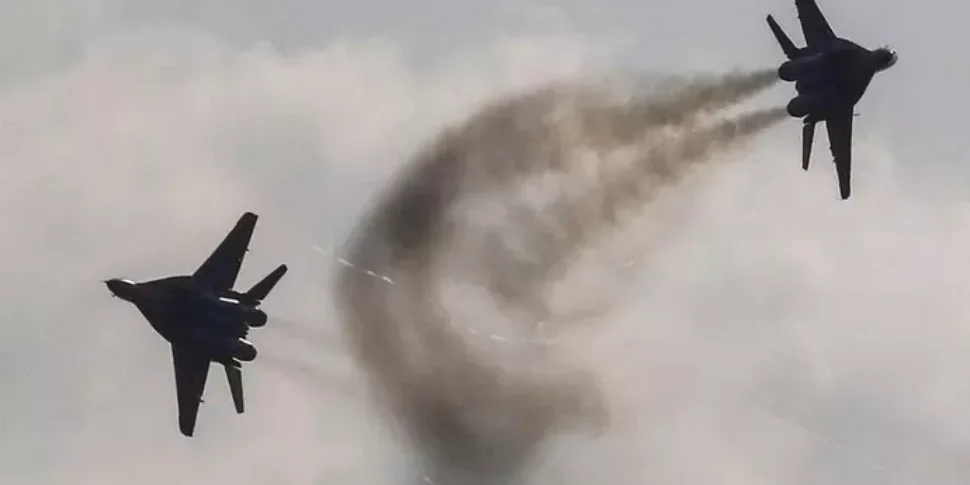
On November 24, 2015, at 7:24 in the morning, a Russian war plane Sukhoi Su-24 was shot down in the province of Latakya, near the border between Syria and Turkey by a Turkish Jet F16. Pilot and co -pilot activated the emergency procedure through expulsion from the vehicle. The pilot Oleg Peshkov was captured and killed by a militia of the Turkophone minority active in the area against the Damascus regime. The Copilota Konstantin Murakhtin was rescued in an operation in which, however, a soldier is lost on board one of the helicopters of the special Russian teams, who ended up in the sights of the artillery of local militias. An event that caused the relationship between the Turkish president Recep Tayyip Erdogan and his Russian colleague Vladimir Putin, to historical minimums.
Russia had been doing its entry into the Syrian civil war and the Moscow aeronautics in September had started to bomb with the aim of annihilating the rebels and putting its hands in the country of the ally Bashar al Assad.
Turkey had instead focused everything on the opposition, hosted the representatives, financed the rebels and aimed at the fall of the regime in order to guarantee the return of the refugees who already flowed to hundreds of thousands. The demolition of the Sukhoi and the death of the two soldiers represented the crack of a divergence of strategies that seemed incurable. The Turkish government at first defended itself, asserting that the reaction had arrived following “numerous invasions of the airspace” that took place in the previous weeks and that the nationality of the aircraft was unknown. The sukhoi demolished had been warned “ten times” and “the respected engagement rules”. The audio were also published, but denied by Putin himself, according to which there was no encroachment or notice. The excuses awaited from the Kremlin did not arrive, but justifications that did not brak the resentment of Moscow. Today Erdogan and Putin have excellent relationships. The two leaders shared tables on Syria and Nagorno Karabakh, concluded important energy partnership agreements, discuss the Ukrainian crisis and have a convergent vision also on hot themes such as the Middle East. It seems incredible but just ten years ago between the two they blowing winds of war and threats of heavy retaliation.
“It is obvious that our plane did not constitute a threat” said Putin “it is a stab behind a friendly country, an act that will have heavy consequences”.
However, there were no: Moscow and Ankara would unleash themselves in a series of reproach – from the genocide of the Armenians to the massacres made in Central Asia and the Caucasus – and diplomatic relations reached the historical lows so as to cancel a visit by the foreign minister Lavrov in Türkiye. To soften the language of the Turkish government, however, the message with which the Kremlin asked its entrepreneurs to abandon Turkey and its citizens to boycott the Turkish coast as a holiday destination (the Russians are the first for tourist presence in Turkey). Circumstances that involved the loss of tens of billions of dollars in a few months and the anger of the hoteliers of the South Costa, an area in which the economy literally collapsed, hand in hand with the consent against Erdogan’skp.
A message that Cremlin himself, through the spokesman Dimirty Peskov, declared that he intended to transform into penalties that would have hardly hit the precarious Turkish economy. “These are illegal sanctions, that plane has been struck because it boundlessly. Let’s sit and speak, we can fight terrorism in Syria side by side, “said the then Turkish Foreign Minister Mevlut Cavusoglu. Business between the two countries are too important, also for energy supplies and contracts that see the giants Gazprom and Rosatom engaged in the construction of nuclear gas pipelines and power plants. Crucial projects for a country like Turkey, located in a strategic but poor position of natural resources.
It was Ankara who abandoned the rhetoric of the wall against wall and launching the first signs of rapprochement and it is the reason why the Turkish government abstained from applying sanctions to Russia following the invasion of Ukraine. On June 14, 2016, 8 months after the demolition of the plane, Erdogan sent a letter to Putin on the occasion of the Russian National Day; Erdogan himself and the Russian leader spoke on the phone on June 29 in what was considered the dialogue of reconciliation. A dialogue in which, probably, the apologies of Türkiye that Putin demanded.
Since then the two countries have acted in Syria coordinating their interests without ever weighing their feet. Erdogan kept silent in the only episode in which the Russians hit Turkish outposts (in Idlib in February 2020), met Putin numerous times and activated agreements ranging from trade to energy, from diplomacy to international crisis management. No leader born today dialogues with Putin, except Erdogan, despite 10 years ago the two were on the verge of a war.