

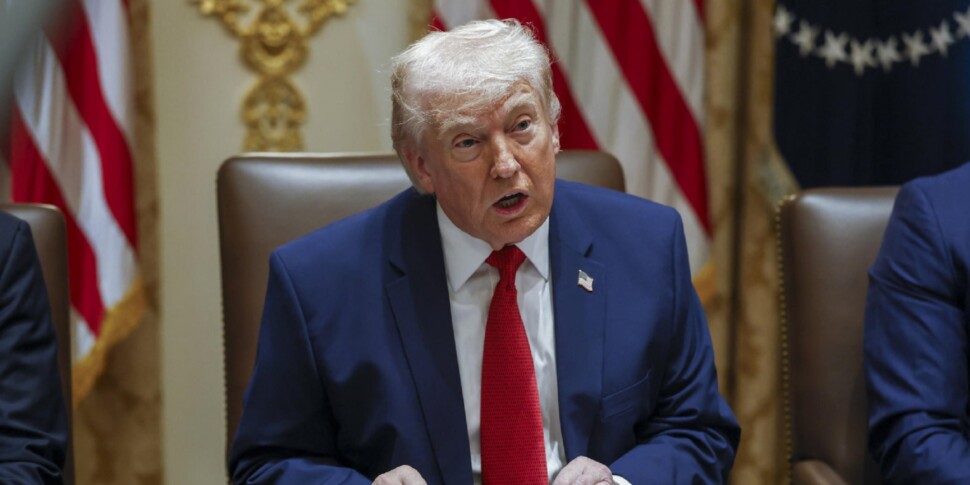
“I want an agreement with Iran that lasts, I’m in no hurry” said American President Donald Trump, responding to the White House on the possible duration of the conflict. “They have new leadership, they are like cats and dogs, let’s see,” he added. «They are under pressure, not us. I’m in no hurry, we have plenty of time. Iran must not have a nuclear weapon” continues Trump, who excludes the use of nuclear weapons by the USA.
Trump underlines that the US controls the Strait of Hormuz, which will reopen only with an agreement. US President Donald Trump was asked during a press conference how long he was “willing to wait in negotiations with Iran”, and he replied: “Don’t rush me”. He then recalled past years-long wars, stating: “I’ve been dealing with this for six weeks and their army is completely defeated. Part of the problem is that they have new leadership and they are fighting like cats and dogs over the question of who should govern, because we have created real chaos for them. Iran cannot be allowed to have nuclear weapons. They don’t have to have an atomic bomb. We hit about 75% of our targets. We stopped a little early because they wanted some peace, and we have a 100% effective blockade of the Strait.”
Military escalation: USS George HW Bush arrives
The Pentagon, however, has moved its heaviest pawns: the aircraft carrier USS George HW Bush has officially arrived in the Middle East, strengthening an already massive military presence. The move follows reports from Axios that the Revolutionary Guards planted new mines in the Strait this week. Donald Trump’s response was not long in coming. Through social media, the President sent a peremptory order to the Navy: «Destroy enemy minelayers. There must be no hesitation: shoot down every vessel, no matter how small, that lays mines in Hormuz.”
The naval blockade and Tehran’s “tolls”.
The tug of war is also played out on a commercial level. The American naval blockade of Iranian ports continues to operate with rigor: according to Centcom, 31 ships have already had to reverse course. The Department of Defense also confirmed the second boarding in a week of a ship carrying Iranian oil in the Indian Ocean. On the other hand, Tehran claims the first successes of its counter-strategy. The vice president of Parliament, Hamidreza Hajibabaei, announced that the first revenues deriving from the forced tolls imposed on civilian vessels from “hostile countries” have already been deposited at the Central Bank. Despite the tension, some ships (including one from the German Hapag-Lloyd) managed to transit, marking a precedent carefully monitored by Kepler analysts.
Diplomacy at a standstill in Islamabad
While the Pakistani capital, Islamabad, remains under lockdown awaiting a second round of negotiations, signs of a turning point are non-existent. Tehran refuses to send delegations, fearing an American bluff. Trump, for his part, belittled the Iranian leadership by speaking of “internal fighting between hawks and presumed moderates”. The response from the IRNA agency, however, was one of total unity under the Supreme Leader: “We will make the aggressor repent.”
Israel and the shadow of total conflict
In this “armed truce” scenario, Israel is eagerly watching. Defense Minister Israel Katz confirmed that the IDF has already identified objectives to “complete the elimination of the Khamenei dynasty” and return Iran “to the Stone Age.” The signs of a resumption of hostilities are already in the air: late yesterday evening, explosions and the activation of anti-aircraft guns were reported in Tehran to deal with hostile activities. It is the first time this has happened since the start of the ceasefire on April 8.
The deadline is May 1st
Time is also running out for the White House. The 60 days within which Trump can act militarily without a vote from Congress will expire on May 1. After that date, the Commander in Chief’s strategy could end up under the crossfire of internal vetoes, making the next few hours decisive for the fate of the conflict.