

Add the Gazzetta del Sud as a source
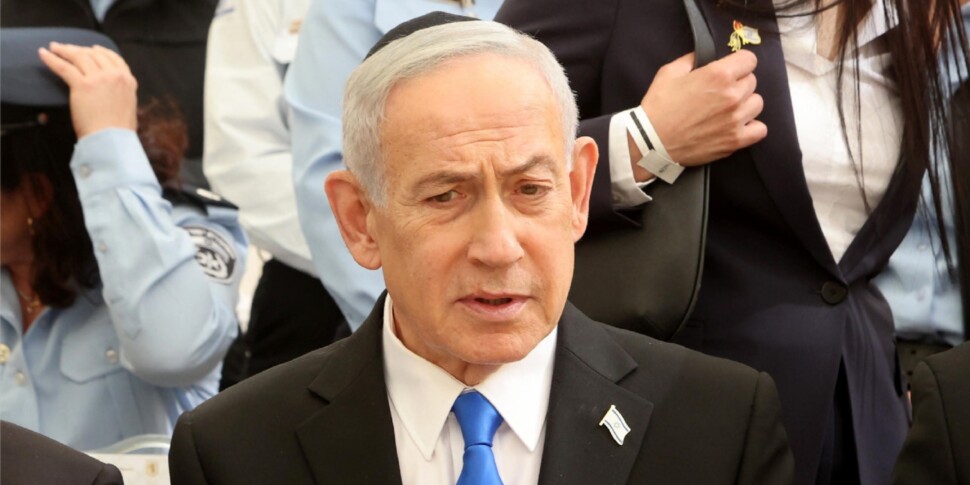
In the aftermath of the video announcement, the Israeli prime minister issued a new statement to confirm that «the operation in Lebanon is intensifying: the IDF is with large forces on the ground and is conquering dominant strategic positions. The security zone is being strengthened to protect the communities in the north.” Not only that: “In parallel, we are carrying out a huge national effort to promote creative and innovative solutions against explosive drones.”
Benjamin Netanyahu’s words came on Tuesday evening, in response to the pounding of unmanned aircraft launched by Hezbollah over the Galilee, and after 24 hours earlier the opposition had fired nothing at him – from Lieberman to Lapid, to Gantz and Golan – accusing him of having failed in the promise of security for the population of the Galilee, of being a puppet in the hands of Donald Trump, of seriously damaging Israel by accepting the US diktat in the Memorandum with Iran. And above all that he was “no longer able to govern” because he was “old and ill”.
The prime minister was also bitterly accused of the fact that since the announcement of the “armed truce”, 11 Israeli soldiers have been killed in Lebanon and nothing has been done to counter the Shiite militia’s drones, keeping the population in a constant state of war and insecurity. As Israeli analysts have noted, most oppositions practically overtake Netanyahu on the right. But on Tuesday, after the resumption of hostilities, no one said a word. There were no fiery declarations, neither from the right nor from the left. A silence which, in the upcoming electoral scenario, does not mean assent, but rather preparation for the next moves.
Netanyahu’s video and the start of the air raids
On Monday evening the prime minister, before going to the Hadassah hospital in Jerusalem for what his office defined as ‘a minor dental procedure’, posted a video, changing the cards on the table. “We are at war with Hezbollah, let’s not lower our guard, we will intensify the attacks and we will hit them head-on.” In fact, the air raids began almost immediately after the announcement.
Residents of Hezbollah’s southern Beirut suburb-stronghold, Dahieh, rushed into the streets in long columns of cars to escape the bombing. But the IDF air force struck elsewhere, in the Beqaa Valley and in southern Lebanon. Confirming, at least for the moment, that the red line drawn by the US president on the capital of Lebanon cannot be touched.
Lebanon’s role in US-Iran negotiations
Because, in the historic negotiations underway between Washington and Tehran, the Land of Cedars has a crucial part: it is intrinsic to the negotiation, as is the dramatic issue of terrorist organizations financed by Iran. As Hezbollah leader Naim Qassem indirectly confirmed on Sunday evening in a speech in which he rejected US-mediated talks between Israel and Lebanon (the meeting at the Pentagon between the two military delegations will be held on May 29, the diplomatic one in early June).
Soon, the reaction of US Secretary of State Marco Rubio who accused Qassem of wanting the “overthrow” of the Lebanese government confirmed how high the dossier is on the Trump administration’s agenda.
Washington’s position and the global threat
“Hezbollah has ignored repeated calls to cease fire against Israel, including a recent ultimatum,” a senior US official told the Times of Israel. “Israel will never be expected to passively suffer attacks against its forces and civilians.”
The source, who seems to report the thoughts of the Commander in Chief, observed that “the Iranian-backed terrorist group considers the talks between Israel and Lebanon in Washington as «an existential threat». Enough to understand that the danger posed by Hezbollah does not concern only Israel but the entire architecture of the negotiations between the United States and Iran.