

Add the Gazzetta del Sud as a source
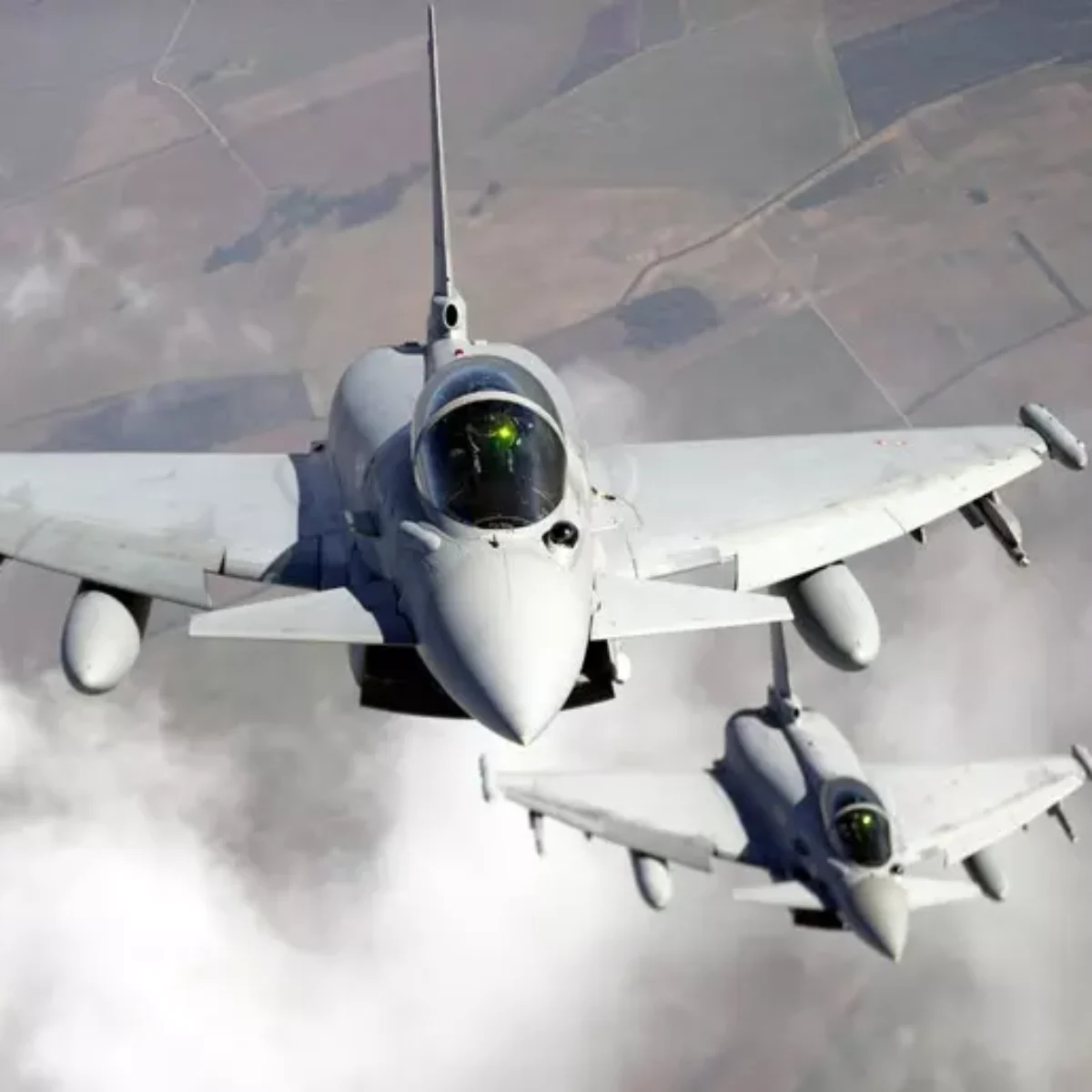
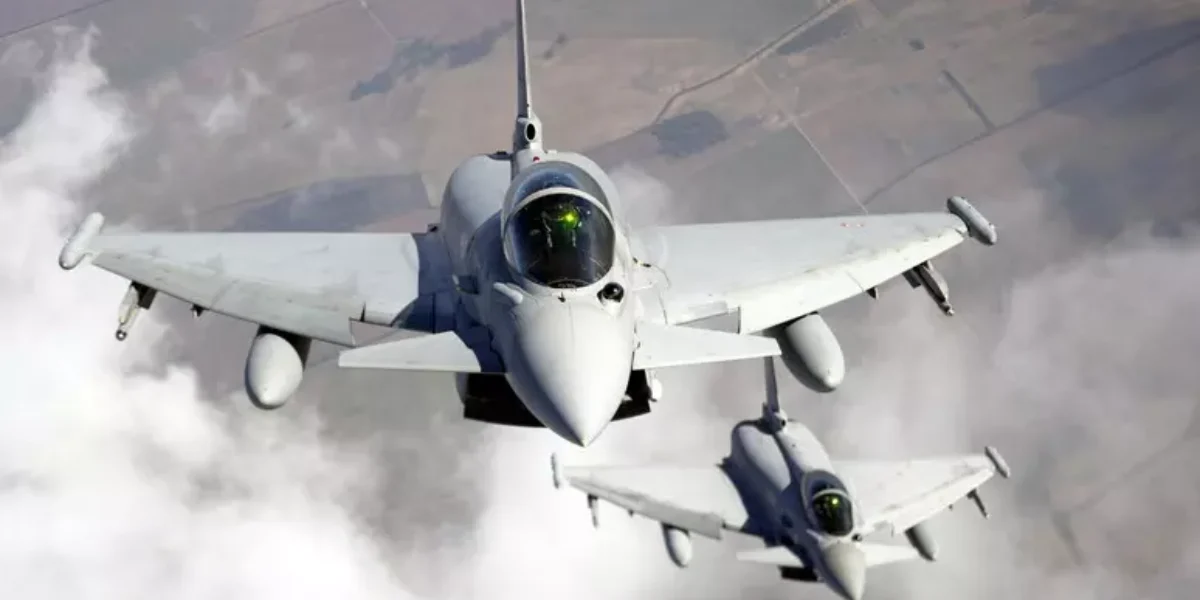
Two Italian fighters from the Air Task Force ‘Baltic Thunder III’, as part of the NATO air defense mission of the Eastern flank, intervened in the Lithuanian skies after the violation of the airspace by two Russian military jets.
It is one of Vladimir Putin’s increasingly frequent “provocations”, as Giorgia Meloni defined them in the same hours in Oslo, convinced that the Russian leader is seeking escalation to “shift attention from the field, where the war is not going as he promised”, and that Europe “should not react”. And he should instead think about choosing an envoy on Ukraine to speak with one voice, so as to “strengthen his position” at the negotiating table.
A double message to the European allies starts from the short press conference that follows the meeting between the prime minister and the Norwegian prime minister Jonas Gahr Store. European chancelleries are studying reports on Moscow’s hybrid threats, including scenarios of an attack on Romania at the beginning of 2027. An escalation is only convenient for Putin, Meloni’s analysis in the face of a “delicate” situation in which Europe must go beyond “the multiplication of formats, events and interlocutors”.
The envoy, she underlines, has been proposing it for some time, and it can be the expression of a “medium-sized” nation, aligned with Ukraine, which knows Russia and has good relations with the United States”. Like Norway. Some might think of Jens Stoltenberg, former prime minister and former secretary general of NATO. But Meloni’s is not an endorsement, it is assured.
The lack of enthusiasm with which Meloni comments on the proposals launched by Ursula von der Leyen 24 hours earlier does not go unnoticed. Judgment is suspended on the European Security Council, with one concern: “The only thing to avoid is duplicating work, I have to understand what is different in von der Leyen’s proposal compared to Article 4 of NATO”. On Canada, an associate member of the EU, a turning point that unleashed the wrath of Donald Trump, FdI’s position is expressed by Nicola Procaccini, MEP and Meloni loyalist: “A mistake, rather than making the association with Canada, it is being made against the USA”. The Prime Minister must be more diplomatic: “Not the details, but serious and reliable partners who can help us towards strategic autonomy must be involved”.
Decidedly charged up in the aftermath of the decree on car-motorcycle tax, the prime minister also answers a question about Elly Schlein’s proposals on how to use flexibility for energy.
“I will delve deeper without the prejudices that the opposition has. From a very quick reading – the jab – I am happy there is an implicit recognition of the government’s work”.
From the official visit to Oslo, the first by a Prime Minister after almost 15 years, Meloni returns with the conviction of having established “a solid 360° partnership on security, at a technological, political and industrial level” with Norway.
The two leaders line up the dossiers on which cooperation can be strengthened. At the top there is the energy sector, which is also crucial because Norway “provides Italy with 10% of the gas it uses”, as the host reminds us.
Defence, shipbuilding, critical materials, submarine space, space domain are the dossiers also explored in depth during the dinner with some large Norwegian and Italian companies, including Leonardo, Fincantieri and Saipem. The prime minister describes a collaboration that goes from Africa (through the Mattei Plan) to the Arctic, on whose prospects Store hopes to have information through “Italy’s diplomacy”.